
Short answer: sometimes, for a specific outcome and a specific preparation. There is no sound scientific basis for saying that essential oils work as one broad category. A pleasant fragrance, a laboratory result and a clinically useful treatment are three different things.
The question needs a target
“Do essential oils work?” is rather like asking whether medicines work. The answer depends on which product, dose, route, person and outcome are being discussed. Lavender inhalation before a procedure, tea tree oil in a finished acne product and peppermint vapour for postoperative nausea are not versions of the same intervention.
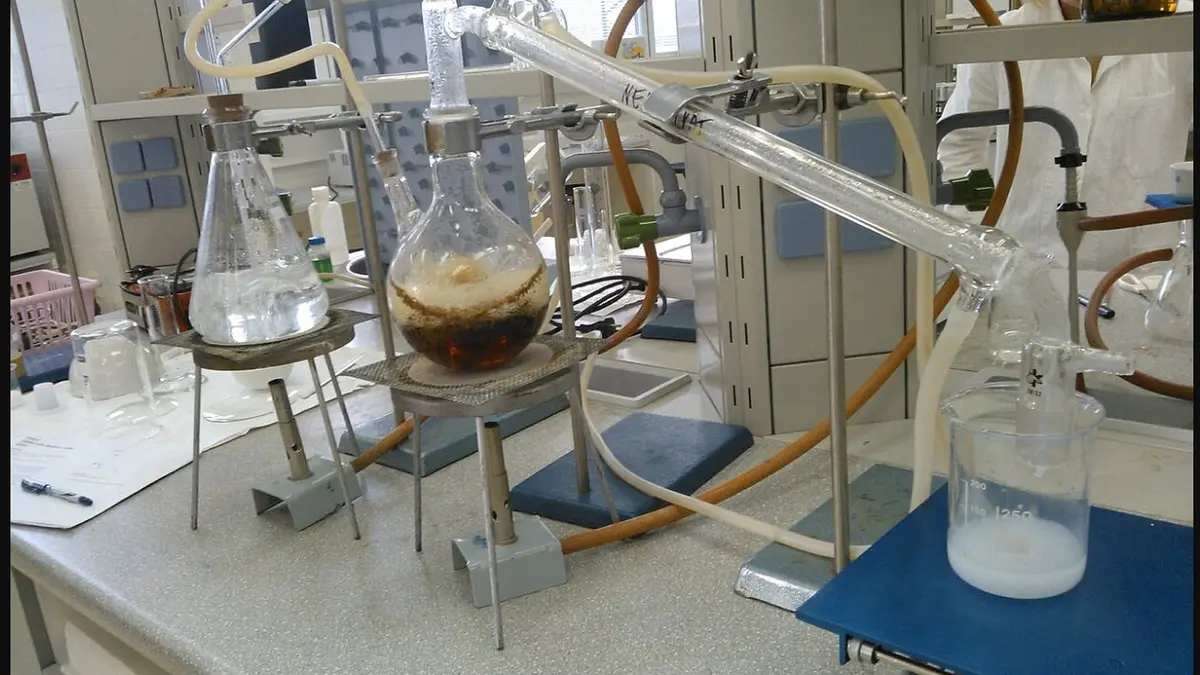
An essential oil is a concentrated mixture of volatile compounds obtained from a botanical material, usually by distillation or mechanical expression. The chemical profile varies with species, plant part, growing conditions, extraction, storage and oxidation. Evidence for a tea, food, solvent extract or isolated molecule does not automatically support the distilled oil.
What counts as “working”?
A study can find a small change on a questionnaire without showing that people feel or function noticeably better. It can also measure a short-lived effect in a clinic that does not answer whether home use changes a chronic condition.
I look for a result that is relevant to the claim being made. Useful questions include:
- Was the exact oil and batch identified?
- Was it inhaled, applied to skin, swallowed or used in a finished product?
- Did the control group receive the same attention, massage or expectation?
- Was the outcome important to patients, not only a laboratory marker?
- Was the study large and long enough to detect benefit and harm?
Where human evidence looks encouraging
Short-term anxiety in a defined clinical setting is one of the more frequently studied uses. A 2020 systematic review of 20 randomised trials involving 1,717 adults reported lower preoperative anxiety with aromatherapy than with placebo, usual care or no intervention. The trials used different oils, routes, session lengths and operations, so the pooled result does not prove that any retail bottle treats an anxiety disorder.
A later systematic review comparing essential oils for anxiety likewise found positive pooled results, but the underlying trials remained diverse. These reviews justify further study and cautious discussion of short-term anxiety. They do not justify replacing psychological therapy or prescribed treatment.
Some narrow symptom studies are also worth taking seriously. A double-blind trial of 100 pregnant women reported lower nausea and vomiting scores on two of the four treatment days after lemon inhalation. That is a relevant human result, but one small trial does not establish lemon oil as a general anti-sickness treatment or settle safety for every pregnancy.
Where results are mixed or disappointing
Postoperative nausea shows why the detail matters. A Cochrane review found no overall reduction in nausea severity more than three minutes after aromatherapy compared with placebo controls. More participants were nausea-free at the end of treatment and fewer used rescue medicine in some analyses, but peppermint oil did not reduce nausea severity at five minutes in the pooled result. Evidence quality was low.
A treatment can therefore look promising under one measure and unconvincing under another. Reporting only the favourable line would give a distorted answer.
The US National Cancer Institute’s evidence summary on aromatherapy describes a small placebo-controlled trial in children and adolescents receiving stem-cell transplants in which bergamot inhalation did not reduce nausea, anxiety or pain. This is not proof that bergamot never affects mood. It is evidence against a confident claim in that setting.
Why laboratory research is easy to overstate
Many essential oils inhibit microbes in a dish or change cells at a high concentration. Those experiments can identify mechanisms and candidates for product development. They do not show that inhaling a diffuser treats an infection, that a home spray disinfects a room or that applying an oil reaches the same concentration safely in human tissue.
A laboratory result becomes clinically useful only after researchers define a safe formulation, compare it fairly in people and measure a relevant outcome. Products promoted to treat disease must also meet the applicable regulatory requirements. The US Food and Drug Administration explains that therapeutic claims can make an aromatherapy product a drug; the important point for readers is that “natural” does not waive the need for evidence.
Massage, attention and aroma
Aromatherapy trials often combine an oil with massage, a quiet room, personal attention or a familiar ritual. All of these can affect stress, comfort and expectation. A good control needs to separate the contribution of the fragrance from the rest of the experience.
This does not make enjoyment unreal. A scent can be personally comforting without being a medical treatment. HealthWatchlist distinguishes that subjective use from claims to alter hormones, cure infection, detoxify organs or reverse disease.
Safety is part of whether something works
An intervention that produces a modest short-term change can still be a poor choice if the route or concentration creates avoidable harm. A systematic review of published aromatherapy adverse-event reports found reactions ranging from mild to severe, with dermatitis the most common. Case reports cannot estimate how often harm occurs, but they identify risks that efficacy trials may be too small to detect.
Common problems include skin irritation, allergy, phototoxic reactions from some expressed citrus oils, accidental poisoning and respiratory irritation. Children, pets, pregnancy, asthma, medicines and household storage can change the practical risk. Read the HealthWatchlist safety guide before topical or diffuser use, and do not swallow a retail oil on the strength of an online testimonial.
How to read an essential-oil claim
- Name the outcome. “Supports wellness” cannot be tested properly. “Reduces nausea intensity within ten minutes” can.
- Match the preparation. Check the species, plant part, extraction and finished formulation.
- Match the route. Evidence for a capsule or mouthwash does not prove an inhaled oil works.
- Look for human comparison groups. A cell study, animal experiment or before-and-after testimonial is an early step.
- Read limitations and harms. Small samples, weak blinding, subjective outcomes and missing safety data reduce confidence.
My assessment
Essential oils have established fragrance uses and some specific health-related uses with encouraging human evidence. The evidence is not uniform, and broad claims that essential oils cure disease, balance hormones or replace standard care are not supported.
The honest answer is neither “all oils work” nor “all aromatherapy is fake”. It is a set of claim-by-claim answers. That is why HealthWatchlist publishes separate oil profiles, condition guides and evidence reviews instead of one universal verdict.
Sources
- US National Center for Complementary and Integrative Health: aromatherapy
- Systematic review of aromatherapy for preoperative anxiety
- Systematic review of essential oils for anxiety
- Cochrane review of aromatherapy for postoperative nausea and vomiting
- US National Cancer Institute: Aromatherapy With Essential Oils
- Systematic review of adverse-event reports
- US Department of Veterans Affairs evidence map: aromatherapy and essential oils