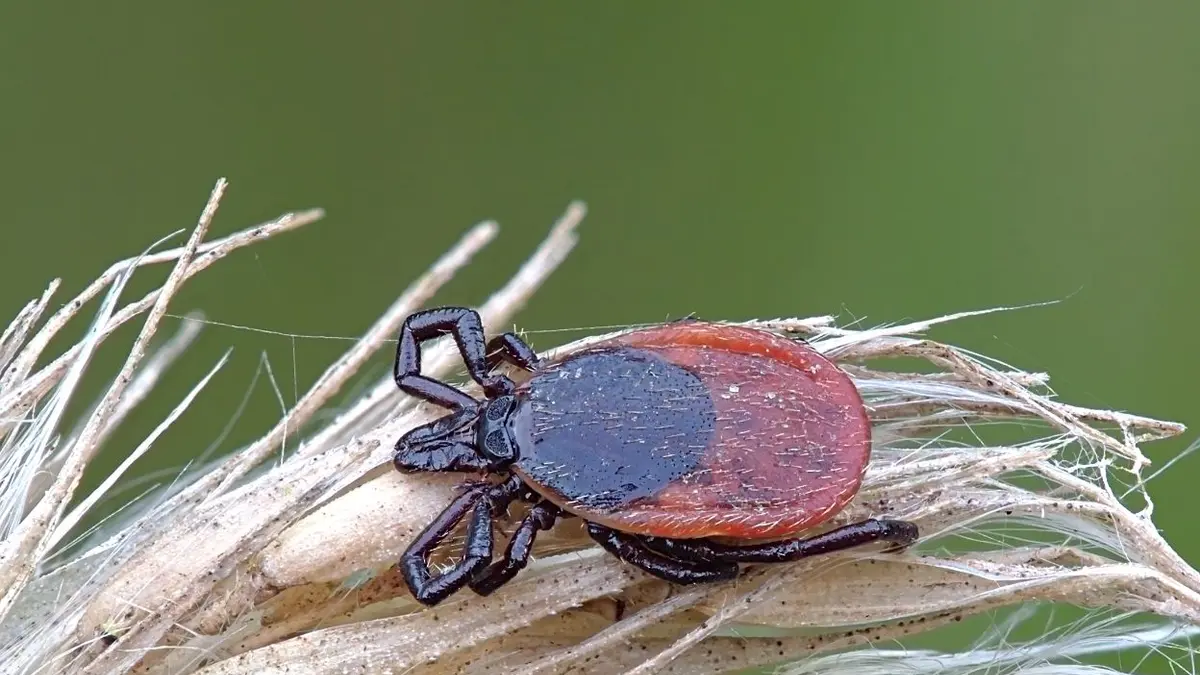

Bottom line: Essential oils have not been shown to cure Lyme disease in people. Two much-shared studies found activity against Borrelia in laboratory cultures; neither tested an oil as a treatment in a patient. Lyme disease needs timely clinical assessment and, when diagnosed, an appropriate antibiotic course.
After a tick bite, seek medical advice if an expanding rash, flu-like illness, facial weakness, severe headache, joint swelling or other worrying symptoms develop. Do not wait for a “bullseye” or use an oil instead of assessment.
The real-world question is not a test-tube question
NHS Lyme guidance explains symptoms, tick removal and antibiotic treatment. An erythema migrans rash can look different from the familiar textbook target and does not occur in everyone. NICE NG95 explains when diagnosis is clinical, how tests are interpreted and which antibiotic regimens apply. A negative result very early on may not rule out infection; a clinician should judge the whole history.
Feng and colleagues’ 2017 study tested selected culinary-herb oils against stationary-phase and biofilm Borrelia under laboratory conditions. A 2018 follow-up screened more essential oils in vitro. Neither established an effective oral, inhaled or skin dose in humans, or showed that an oil reaches bacteria in tissues safely.
“Kills persisters” in a dish is not evidence that swallowing concentrated oregano, garlic or cinnamon oil helps a person with Lyme disease. Culture conditions, concentrations, exposure time, absorption and toxicity all differ. There are no persuasive clinical trials showing essential oils clear human Lyme infection or prevent its complications.
Clove, coconut, tea tree and vetiver: reading the actual Lyme studies
These four claims involve different materials and markedly different results. Laboratory findings, supplement observations and evidence of clinical treatment should be assessed separately.
Clove and Lyme disease
A 2017 culture study screened 34 essential oils against stationary-phase Borrelia burgdorferi, the bacterium associated with Lyme disease. Clove bud oil was among the more active oils. After exposure at 0.1%, researchers detected no growth when the treated culture was transferred into fresh medium. At the lower 0.05% concentration, however, bacteria grew again. The stronger result should not be reported without that limitation.
The investigators also found that some oils interfered with fluorescence measurements, so they checked results by microscopy and used subculture to assess regrowth. Different methods did not always give the same apparent survival estimate. This makes a simple claim that an oil “kills all Lyme bacteria” particularly misleading.
These were direct exposures in culture, not doses tested in people. They do not establish whether a safe amount of clove oil could reach an infection in the body, whether it improves symptoms, or whether it treats symptoms continuing after antibiotics. We did not locate a controlled human trial of clove essential oil for Lyme disease. Clove bud oil, clove leaf oil and isolated eugenol should not be treated as the same intervention. Do not swallow essential oil or substitute it for medical assessment and prescribed treatment.
Related: Clove profile.
Coconut and Lyme disease
Coconut oil is a fixed oil rather than an essential oil. It also is not interchangeable with monolaurin, a separate compound often used to support coconut-related claims. In a 2019 screen of oils and fatty acids, coconut oil did not meet the study’s threshold of killing at least 90% of bacteria at the maximum tested concentration of 1%, for either of the two Borrelia species or growth phases assessed. This is a relevant negative finding, rather than a successful coconut-oil treatment experiment.
Monolaurin laboratory findings are mixed. A 2015 study reported activity against several cultured bacterial forms, including biofilms. A later combination study found enhanced activity with another fatty acid. However, a study combining monolaurin with doxycycline classified their interaction as indifferent rather than synergistic, and a 2020 botanical screen found little or no monolaurin activity against its stationary-phase cultures. The organisms, preparations and tests differed; none establishes a dependable effect in a patient.
There is also a small human observational report, so it would be inaccurate to describe the entire related literature as laboratory-only. Seventeen people with continuing symptoms after previous antibiotic treatment took a six-component supplement containing monolaurin, several plant compounds and kelp/iodine for six months. Some reported improved functioning. There was no randomised comparison group, and the study could not separate the ingredients’ effects from other influences or natural changes in symptoms. It did not establish that coconut oil, or monolaurin alone, treats Lyme disease.
Animal findings from the same report must also remain separate from the human observations. Symptom improvement is not proof that a supplement has eradicated infection. We did not locate a controlled human coconut-oil or monolaurin-alone Lyme-treatment trial. Eating coconut oil, applying it to skin and taking a formulated supplement are different exposures, and none should replace appropriate clinical care.
Related: Coconut profile.
Tea tree and Lyme disease
Tea tree oil was included in the 2017 screen of 34 oils against stationary-phase Borrelia burgdorferi. Its apparent activity was greater at the highest tested concentration and substantially weaker as the concentration fell. Microscopy still found surviving bacteria at 0.5%, while the lower-concentration screening results did not put tea tree among the strongest candidates.
The paper’s later low-concentration subculture experiment selected other oils; it did not establish that tea tree prevented regrowth at those concentrations. Headlines about oregano or clove from the same paper cannot be transferred to every oil that appeared in the initial screen.
No people with Lyme disease received tea tree oil in this experiment. We did not locate a controlled human trial establishing it as a Lyme treatment. Antimicrobial activity during direct contact in a dish does not establish effective delivery to infected tissues or improvement in symptoms after treatment. Do not swallow tea tree oil or use it to delay assessment after a possible tick exposure.
Related: Tea tree profile.
Vetiver and Lyme disease
Vetiver is not simply an untested name in this literature. A 2018 laboratory screen included vetiver root oil among 35 oils and blends tested against stationary-phase Borrelia burgdorferi. However, microscopy indicated more than 70% residual viability at both 0.2% and 0.1%. Vetiver was not among the leading oils selected for the subsequent low-concentration regrowth tests.
The screening table also illustrates why the measurement method matters: at 0.2%, the plate-reader estimate suggested considerably less survival than microscopy did. The authors used microscopy because oils could interfere with the fluorescent assay. Selecting the more favourable reading alone would overstate this result.
We did not locate a controlled human vetiver-oil trial for Lyme disease. Neither this culture experiment nor separate research about fragrance and relaxation establishes infection clearance, prevention of complications or treatment of persistent symptoms. A preferred scent can be a personal comfort choice, but it should not be described as an antibacterial treatment in the body.
Related: Vetiver profile.
What this means in practice
Seek an urgent GP appointment or NHS 111 advice if possible tick exposure is followed by a round or oval rash or flu-like illness. When Lyme disease is suspected, clinicians assess the need for antibiotics. Persistent symptoms after treatment deserve follow-up; their cause cannot be inferred from bacterial behaviour in a culture dish. The NHS notes that the reasons some people have continuing symptoms are unclear. See NHS guidance.
Search limitations: Targeted Europe PMC and web searches used common and botanical names with Lyme disease, Borrelia, monolaurin, PMS, premenstrual symptoms, relaxation and anxiety, followed by citation checks, completed 16 September 2026. This is an editorial review, not a systematic review or exhaustive unpublished-trial search. The 2017 and 2018 Borrelia screens, 2019 oil screen, 2020 botanical screen and supplement report, both cinnamon animal reports and AROMA_dent were checked in full. Other studies were appraised from indexed abstracts, limiting assessment of methods and adverse effects. Failure to locate a trial does not establish that none exists.
References for these comparisons
- Feng J, Zhang S, Shi W, Zubcevik N, Miklossy J, Zhang Y. Selective Essential Oils from Spice or Culinary Herbs Have High Activity against Stationary Phase and Biofilm Borrelia burgdorferi. Frontiers in medicine. 2017;4:169. DOI:10.3389/fmed.2017.00169.
- Goc A, Niedzwiecki A, Rath M. Anti-borreliae efficacy of selected organic oils and fatty acids. BMC complementary and alternative medicine. 2019;19:40. DOI:10.1186/s12906-019-2450-7.
- Goc A, Niedzwiecki A, Rath M. In vitro evaluation of antibacterial activity of phytochemicals and micronutrients against Borrelia burgdorferi and Borrelia garinii. Journal of applied microbiology. 2015;119:1561-1572. DOI:10.1111/jam.12970.
- Goc A, Niedzwiecki A, Rath M. Reciprocal cooperation of phytochemicals and micronutrients against typical and atypical forms of Borrelia sp. Journal of applied microbiology. 2017;123:637-650. DOI:10.1111/jam.13523.
- Goc A, Niedzwiecki A, Rath M. Cooperation of Doxycycline with Phytochemicals and Micronutrients Against Active and Persistent Forms of Borrelia sp. International journal of biological sciences. 2016;12:1093-1103. DOI:10.7150/ijbs.16060.
- Feng J, Leone J, Schweig S, Zhang Y. Evaluation of Natural and Botanical Medicines for Activity Against Growing and Non-growing Forms of B. burgdorferi. Frontiers in medicine. 2020;7:6. DOI:10.3389/fmed.2020.00006.
- Goc A, Gehring G, Baltin H, Niedzwiecki A, Rath M. Specific composition of polyphenolic compounds with fatty acids as an approach in helping to reduce spirochete burden in Lyme disease: in vivo and human observational study. Therapeutic advances in chronic disease. 2020;11:2040622320922005. DOI:10.1177/2040622320922005.
- Feng J, Shi W, Miklossy J, Tauxe GM, McMeniman CJ, Zhang Y. Identification of Essential Oils with Strong Activity against Stationary Phase Borrelia burgdorferi. Antibiotics (Basel, Switzerland). 2018;7:E89. DOI:10.3390/antibiotics7040089.
- NHS. Lyme disease. Accessed 16 September 2026.
What evidence-based treatment looks like
NICE’s Lyme guideline recommends antibiotic treatment tailored to presentation and age. The IDSA/AAN/ACR clinical guideline also gives defined antibiotic options for erythema migrans. A randomised trial of antibiotic duration for early Lyme disease helps answer a treatment question in actual patients; the oil studies do not. Follow the regimen prescribed locally rather than borrowing a dose from a different country’s study.
Some people continue to feel unwell after treatment and deserve careful follow-up. Persistent symptoms do not make an untested essential-oil cure valid. Discuss new or ongoing symptoms with a clinician to consider Lyme-related and other possible explanations.
Tick prevention and oil safety
Use fine-tipped tweezers or a tick-removal tool close to the skin and pull steadily as the NHS advises. Do not coat an attached tick with essential oil or heat it. Cover skin in long grass, check clothing and skin after outdoor activity and use a tick repellent with directions and evidence for that use. A home-mixed citronella or eucalyptus scent should not be assumed to provide the same protection as a tested, labelled repellent.
Do not swallow concentrated oils or apply them to the bite or a rash. Essential-oil contact allergy can make skin inflammation worse. Our safety guide and rash-care review explain why it matters to distinguish skin irritation from an infection needing care.
My verdict
Essential oils are not evidence-based Lyme treatment. The often-quoted lab findings deserve to be read in full, with their human-treatment gap made explicit. Remove ticks promptly, seek clinical advice for relevant symptoms and use guideline-based antibiotics when indicated.
References
- NHS: Lyme disease symptoms, tick removal and treatment
- NICE NG95: Lyme disease
- NICE NG95: Recommendations on diagnosis and treatment
- IDSA/AAN/ACR: Lyme disease clinical practice guideline
- CDC: Clinical treatment of erythema migrans
- Wormser and colleagues: randomised early-Lyme antibiotic-duration trial
- Feng and colleagues (2017): Borrelia stationary-phase and biofilm laboratory study
- Feng and colleagues (2018): further essential-oil screening in vitro
- NHS: Insect bites and stings, including tick bites
- NCCIH: Aromatherapy overview and evidence boundaries
- de Groot and Schmidt: Essential Oils, Part IV — Contact Allergy
- Posadzki and colleagues: adverse effects of aromatherapy
Cinnamaldehyde activity remains laboratory evidence
Evidence update: 14 September 2026.
The cinnamon bark oil screen and follow-up cinnamaldehyde experiments concern bacterial cultures. Neither establishes a human dose, safe tissue exposure or clinical recovery. Cinnamon leaf oil also cannot inherit results from bark oil or an isolated constituent. Persistent symptoms deserve clinical assessment and support.
Related evidence review: Cinnamon Oil for Lyme Disease: What the Laboratory Studies Can Tell Us.
Related evidence review: Oregano Oil for Lyme Disease: Laboratory Findings Explained.