
HealthWatchlist verdict: Oregano oil has activity against Borrelia in laboratory cultures. The research identified here does not establish that it treats Lyme disease in people, reaches an effective safe concentration in the body or resolves persistent symptoms.
What did the widely shared experiment find?
Feng and colleagues screened 34 essential oils in 2017. The experiments used stationary-phase cultures of Borrelia burgdorferi, including forms that can tolerate antibiotics under laboratory conditions.
Oregano, cinnamon bark and clove bud oils were among the strongest performers. Under the tested conditions, cultures exposed to these oils did not regrow during subsequent subculture. Carvacrol was an active oregano component; other tested components did not show the same activity.
These are meaningful microbiology findings. They are not observations of recovery in patients. The authors called for further safety, pharmacokinetic and in-vivo research before clinical use.
Why a culture result does not provide a human dose
Researchers can place an oil directly in contact with bacteria in a dish. An oral product must be absorbed and distributed through the body while remaining tolerable. A concentration that suppresses a culture may never be reached safely in the relevant tissues.
Culture models also cannot reproduce the full immune response, different causes of ongoing symptoms or the clinical complexity of a person who has already received antibiotics.
A separate 2019 study by Goc and colleagues investigated selected oils and fatty acids. Its leading findings concerned bay leaf and cassia oils and their components. It adds laboratory research, not clinical confirmation that oregano treats Lyme disease.
Does this explain persistent symptoms?
Finding antibiotic-tolerant bacteria in an experimental culture does not show that every person with persistent symptoms has an active infection of that kind. Nor does it show that an oregano supplement will address their symptoms.
CDC guidance describes antibiotic treatment for Lyme disease. Some people take longer to recover. Continuing symptoms deserve clinical reassessment, including consideration of other explanations and supportive care.
Do not substitute oregano oil for prescribed antibiotics or use a positive laboratory headline to decide on further antimicrobial treatment yourself.
Product and safety differences
Culinary oregano, concentrated essential oil and commercial supplements are different exposures. Product names do not guarantee identical amounts of carvacrol or other ingredients.
The LiverTox oregano review describes variable supplement preparations and limited clinical evidence. An absence of reported liver injury is not proof that a product is effective, suitable in pregnancy or free of other harms.
Discuss supplements with a pharmacist or clinician, especially alongside medicines. Do not swallow a bottle sold for aromatherapy or apply undiluted oil to a tick bite. Irritation is not evidence of infection being treated.
When to seek help
NHS advice is to seek medical assessment after a possible tick exposure if you develop a spreading rash or flu-like symptoms. The rash is not always a classic bullseye, and not everyone remembers a bite.
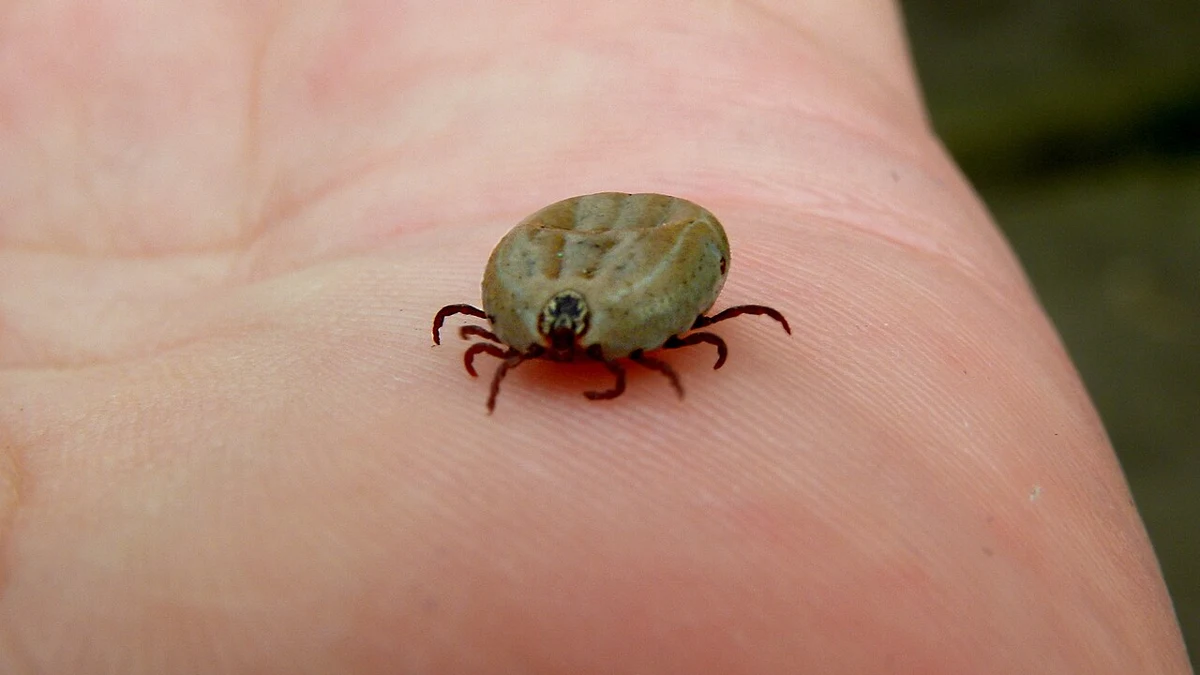
A photograph of a tick, including the one illustrating this article, cannot tell whether it carries Borrelia. Timely assessment matters more than trying to disinfect a bite with essential oil.
Evidence assessment
Not adequately tested in people; laboratory evidence. Oregano is a research lead. A safe, effective human treatment regimen and benefits for persistent symptoms have not been established by the studies reviewed here.
How this review was researched
Research checked on 14 September 2026. Targeted web searches used the oil name, botanical or ingredient names, the condition and clinical-trial terms. We checked accessible primary reports, PubMed records and the guidance cited below. This is an editorial review, not a systematic review. Some full texts were inaccessible; absence from these searches does not prove that no study exists. Different preparations and laboratory results are identified explicitly.
Related reading
References
- Feng J et al. (2017). Selective Essential Oils from Spice or Culinary Herbs Have High Activity against Stationary Phase and Biofilm Borrelia burgdorferi. Frontiers in Medicine 4:169.
- Goc A et al. (2019). Anti-borreliae efficacy of selected organic oils and fatty acids. BMC Complementary and Alternative Medicine 19:40.
- CDC. Treatment and intervention for Lyme disease.
- LiverTox (2023). Oregano.
- NHS. Lyme disease.