
Bottom line: tea tree oil has limited human evidence for athlete’s foot, but that does not make neat oil a reliable treatment for ringworm elsewhere on the body. Proven antifungal medicines are the safer first choice.
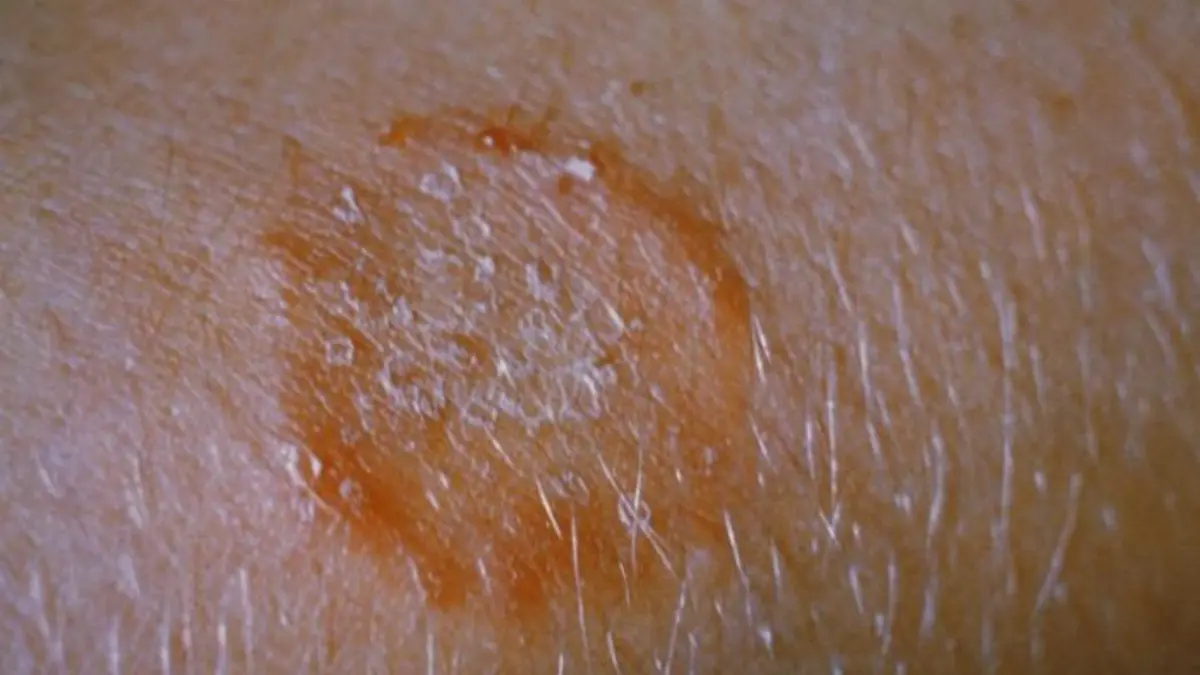
Ringworm is a fungal skin infection, not a worm. Similar-looking rashes can have different causes, so diagnosis matters when the appearance or response to treatment is uncertain.
What counts as ringworm?
Ringworm is caused by dermatophyte fungi. It can affect skin on the body, scalp, groin or feet; athlete’s foot is tinea pedis, one form of the same broad family of infections. Site matters because evidence and treatment are not interchangeable.
NHS guidance describes a scaly, dry, swollen or itchy rash and recommends asking a pharmacist to help identify it and choose an antifungal medicine. Scalp ringworm usually needs prescription tablets and shampoo.
What has tea tree oil actually been tested for?
A randomised trial tested 10% tea tree cream in 104 people with athlete’s foot. Symptoms improved, but the fungal cure rate was no better than placebo. That is evidence about a prepared cream on feet, not neat oil on ringworm anywhere on the body.
A later trial compared 25% and 50% tea tree solutions with placebo in 158 people with athlete’s foot. Both active groups had better clinical responses, and the 50% solution produced a higher fungal cure rate. Four participants developed moderate or severe dermatitis.
A clinical review of tea tree oil judged these findings promising but limited. Different formulations, concentrations and endpoints make it difficult to turn the trials into a safe home recipe.
Why laboratory antifungal activity is not enough
Tea tree, oregano, thyme, lemongrass and clove oils can inhibit fungi under laboratory conditions. In a dish, the oil is placed directly against an organism at a controlled concentration. Human skin introduces absorption, evaporation, irritation, formulation and adherence.
A laboratory result cannot tell us that an oil will clear an infection in a person, or that the concentration required will be tolerable. It is also no substitute for checking whether the rash is fungal.
What has better-established evidence?
Over-the-counter antifungal creams, gels, sprays or powders contain medicines with established dosing and quality controls. The NHS recommends pharmacy antifungals for athlete’s foot and notes that treatment usually takes several weeks.
Keep the affected skin clean and dry, wash towels and bedding regularly, and avoid sharing them. Follow the product instructions for the full course even if the rash starts to look better.
Safety and common mistakes
Do not apply neat essential oil. Irritation can worsen discomfort and make the rash harder to assess. A systematic review found dermatitis was the most frequently reported aromatherapy adverse event.
Do not use a steroid cream on a suspected fungal rash unless a clinician or pharmacist recommends the specific combination. Steroids can alter the appearance and allow an infection to spread.
Keep tea tree and other essential oils away from children and pets, and never swallow them. “Therapeutic grade” is a marketing description, not a guarantee of clinical effectiveness or skin tolerance.
When to get medical advice
See a GP if pharmacy treatment has not worked, the infection is widespread, or it involves the scalp. Seek advice sooner for a young child, pregnancy, diabetes or a weakened immune system.
A painful, hot or rapidly spreading area may be a different or additional infection. A clinician may take a skin scraping when the diagnosis is unclear or treatment repeatedly fails.
My verdict
Tea tree oil is not wholly evidence-free: two controlled athlete’s-foot trials reported some benefit from specific prepared concentrations. The studies do not establish neat oil as safe, do not cover every form of ringworm and do not outperform the practical case for licensed antifungal treatment.
I would use a pharmacy antifungal first and reserve medical review for uncertain, persistent, scalp or higher-risk cases. Essential oils should not delay treatment or be used to improvise a strong topical solution.