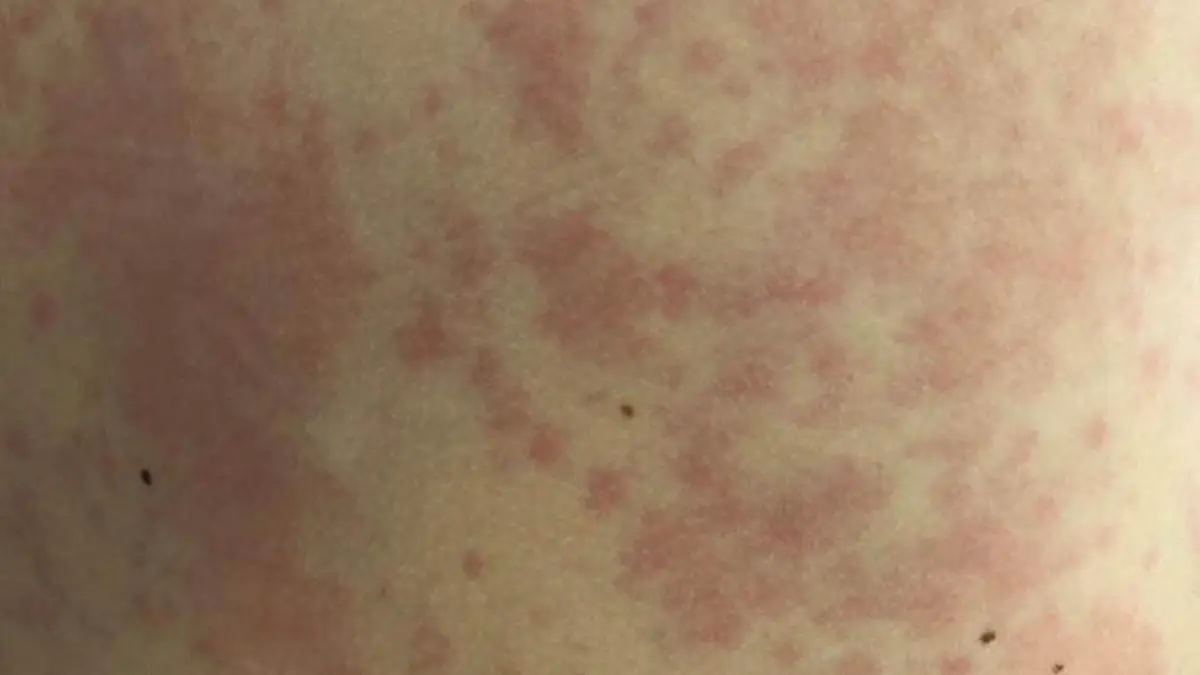

Bottom line: I found no clinical trial showing that an essential oil treats hives. Fragranced oils can irritate skin or trigger allergy, so applying them to an unexplained raised rash may make matters worse.
Hives, also called urticaria, are raised itchy patches or bumps. Sudden swelling of the mouth or throat, breathing difficulty, fainting or severe dizziness can indicate anaphylaxis and requires a 999 call.
What hives are
Hives appear when histamine and other chemicals are released in the skin. The rash can sting, burn or itch, and individual raised areas can change shape or move around.
The NHS says hives often settle within a few days. Possible triggers include foods, medicines, infections, heat, cold, pressure, plants, animals and chemicals. Sometimes the trigger remains unknown.
Hives are not the same as every red or itchy rash. Contact dermatitis, eczema, fungal infection and other conditions can need different care. A photograph or internet list cannot always distinguish them.
Where essential-oil claims come from
Lavender, chamomile, tea tree and peppermint are commonly recommended online. The argument usually starts with a laboratory anti-inflammatory result or a traditional use, then jumps to treating hives in people.
I found no randomised human trial showing that a named essential oil shortens an episode of acute hives, controls chronic urticaria or prevents dangerous swelling.
The international urticaria guideline reviews diagnosis and evidence-based treatment. Its treatment pathway uses antihistamines and specialist medicines when needed, not essential oils.
Having no trial evidence does not prove that every oil has no biological effect. It means there is no dependable basis for choosing an oil, concentration or route that improves hives more than the rash’s natural variation or established care.
An oil can itself become the trigger
Essential oils contain many small fragrance chemicals. Some irritate skin directly. Others can produce allergic contact dermatitis after the immune system becomes sensitised.
A review of essential-oil contact allergy documented reactions to many oils, including tea tree, ylang-ylang, clove and citronella. Reactions were more often associated with pure oils or high concentrations.
Contact dermatitis is not identical to hives, but a new itchy rash after applying an oil is still a reason to stop. Reapplying the suspected trigger to “calm” the skin can worsen exposure.
A review of contact urticaria explains that immediate contact reactions can remain local or become part of a wider reaction. This is another reason not to patch-test an oil on someone who is already reacting.
What established guidance recommends
A pharmacist can advise about an antihistamine for uncomplicated hives and check whether it is suitable for the person’s age, health conditions and medicines. Not every antihistamine is suitable for every person.
NHS advice says to seek urgent GP help or NHS 111 when hives are spreading, keep returning, accompany fever or include swelling beneath the skin. Symptoms that do not improve after two days also justify advice.
Chronic hives last or recur for more than six weeks. The updated international guideline describes a stepwise treatment approach and specialist options. Random allergy testing is not always helpful without a suggestive history.
When it may be an emergency
Call 999 if the lips, mouth, tongue or throat suddenly swell, breathing becomes difficult, the throat feels tight or swallowing becomes hard.
Severe dizziness, confusion, blue or unusually pale lips, or fainting can also signal a serious allergic reaction. Use a prescribed adrenaline auto-injector immediately if the person has one, then call 999.
Do not delay emergency help while looking for a trigger or applying a topical product. A rash can be present during anaphylaxis, but the breathing and circulation symptoms make it an emergency.
Practical skin care
Avoid a suspected trigger when it is clear and safe to do so. Keep the skin cool, wear loose clothing and try not to scratch. A pharmacist can suggest suitable symptom relief.
Stop new fragranced products until the rash has settled and its cause is clearer. This includes essential oils, perfume blends, fragranced bath products and homemade balms.
Photographing the rash can help show how it changes, especially because individual wheals may fade before an appointment. Note recent medicines, foods, illnesses and exposures, but do not deliberately repeat a suspected trigger to prove the connection.
A systematic review of aromatherapy adverse events found dermatitis was the most frequently reported problem. Published reports cannot measure every reaction, but they disprove the idea that these products are automatically gentle.
My verdict
There is no good human evidence that an essential oil treats hives. The known possibility of irritation or allergy makes topical experimentation a poor choice on an active, unexplained rash.
Use pharmacy or medical advice for ordinary hives and remove suspected triggers. Treat swelling of the mouth or throat, breathing difficulty, severe dizziness or collapse as an emergency.
References
- NHS: Hives
- Zuberbier and colleagues: International guideline for urticaria
- Zuberbier and colleagues: Updated international urticaria guideline
- Kulthanan and colleagues: Clinical practice guideline for urticaria
- de Groot and Schmidt: Essential oils and contact allergy
- Giménez-Arnau and colleagues: Contact urticaria syndrome
- Bizjak and colleagues: Contact urticaria and related conditions
- Posadzki and colleagues: Adverse effects of aromatherapy
- NCCIH: Tea tree oil