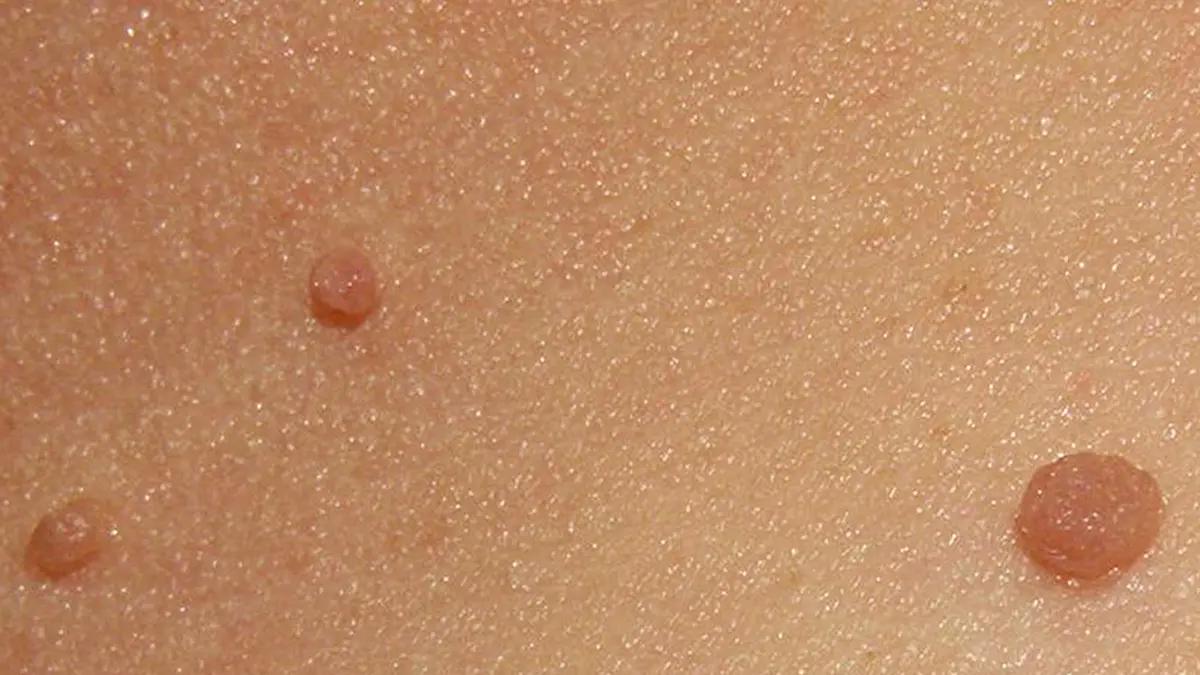

Bottom line: I found no clinical trial showing that an essential oil safely removes skin tags. Tea tree oil and other fragranced oils can irritate skin, cause allergy and delay diagnosis if the growth is not a skin tag.
Do not cut, burn or tie off an uncertain skin growth. Ask a pharmacist, GP or dermatologist about anything that changes, bleeds repeatedly, looks unusual or is close to the eye.
What a skin tag is
Skin tags, or acrochordons, are common soft growths that usually hang from a short stalk. They often appear where skin rubs, including the neck, armpits, groin and beneath the breasts.
DermNet describes skin tags as harmless fibrous growths. They become more common with age and are associated with friction, obesity and pregnancy. Having several may also accompany insulin resistance.
A photograph cannot always confirm the diagnosis. Warts, moles, seborrhoeic keratoses and some skin cancers can be mistaken for a tag. The American Academy of Dermatology warns that home removal can conceal a cancer diagnosis.
What the essential-oil evidence shows
Online recommendations usually name tea tree, oregano or frankincense oil. The proposed explanation is often that an oil will dry the stalk until the tag falls off.
I found no randomised controlled trial comparing any essential oil with placebo or established removal for skin tags. I also found no reliable evidence defining a safe concentration, application schedule or success rate.
Antimicrobial activity does not solve this gap. A skin tag is not a bacterial or fungal infection. Laboratory findings about microbes therefore do not show that an oil removes the fibrous tissue inside a tag.
NCCIH says the evidence for tea tree oil remains limited across many proposed uses. Its research summary does not identify skin-tag removal as an established application.
Why home treatment can go wrong
Essential oils are chemically active mixtures. Applying a concentrated oil repeatedly to one small area may cause irritant dermatitis, allergic dermatitis, blistering or pigment change.
A review of essential-oil contact allergy found reactions to nearly 80 oils. Pure oils and highly concentrated products were responsible for many reported reactions.
A tea tree oil safety review records irritation and allergic reactions after topical exposure. Oxidation during storage can increase the sensitising potential of the oil.
The problem is not limited to mild redness. A systematic review of aromatherapy adverse events found dermatitis was the most commonly reported harm. Published case reports cannot calculate its frequency, but they confirm that serious reactions occur.
Trying to destroy a tag can also cause bleeding or infection. Products may damage normal skin around the growth. A treatment near the eyelid creates an additional risk to the eye.
How skin tags are removed properly
Skin tags do not usually require treatment. Removal may be reasonable if a tag catches on clothing, becomes sore or causes cosmetic concern.
A dermatologist may remove a confirmed tag by freezing, controlled heat or sterile snipping. The method depends on its size, position and the person’s health.
The clinical review in NCBI Bookshelf describes excision, cryosurgery and electrosurgery as standard options. These methods allow a clinician to control bleeding and reconsider the diagnosis when necessary.
Removal can leave temporary soreness, a small wound or a change in skin colour. A clinician can explain scarring and aftercare before treatment, particularly for a large tag or a visible site.
A tag that has twisted may become dark and painful after losing its blood supply. That change can still warrant advice rather than an attempt to finish the removal at home.
Do not assume that a shop-bought remover is suitable for every growth. Do not use a wart treatment on a presumed tag unless a qualified professional has confirmed what it is.
When to seek advice
Arrange an assessment if a growth changes colour or shape, grows quickly, becomes persistently painful, bleeds without being caught or looks unlike your other skin marks.
Ask for advice before removal if you take anticoagulants, bleed easily, heal poorly or have reduced sensation. Diabetes and poor circulation can make a seemingly minor skin wound more consequential.
Numerous new tags do not diagnose diabetes. However, the clinical review notes associations with obesity, insulin resistance and metabolic syndrome. A clinician can decide whether any wider health check is appropriate.
If an oil has already caused redness, itching or blistering, stop using it and wash the area gently. The NHS advises medical review for persistent, recurrent or severe contact dermatitis.
My verdict
Essential oils are not proven skin-tag removers. The absence of clinical evidence matters because repeated concentrated application can injure skin and an assumed tag may be another type of lesion.
Leave an uncomplicated tag alone or have the diagnosis and removal method confirmed professionally. That is more predictable than trying to make a growth fall off with an irritant.
References
- DermNet: Skin tags
- American Academy of Dermatology: Skin tags
- American Academy of Dermatology: Risks of home removal
- NCBI Bookshelf: Skin tag clinical review
- NCCIH: Tea tree oil
- de Groot and Schmidt: Essential oils and contact allergy
- Hammer and colleagues: Tea tree oil toxicity and safety
- Posadzki and colleagues: Adverse effects of aromatherapy
- NHS: Contact dermatitis