
Bottom line: I found no clinical evidence that an essential oil removes varicose veins or repairs faulty vein valves. Massage or fragrance may feel pleasant, but neither substitutes for assessment of pain, swelling, skin damage or bleeding.
Bleeding from a varicose vein needs immediate medical help. Sudden one-sided leg pain or swelling, especially with chest pain or breathlessness, may indicate a clot and requires urgent assessment.
What varicose veins are
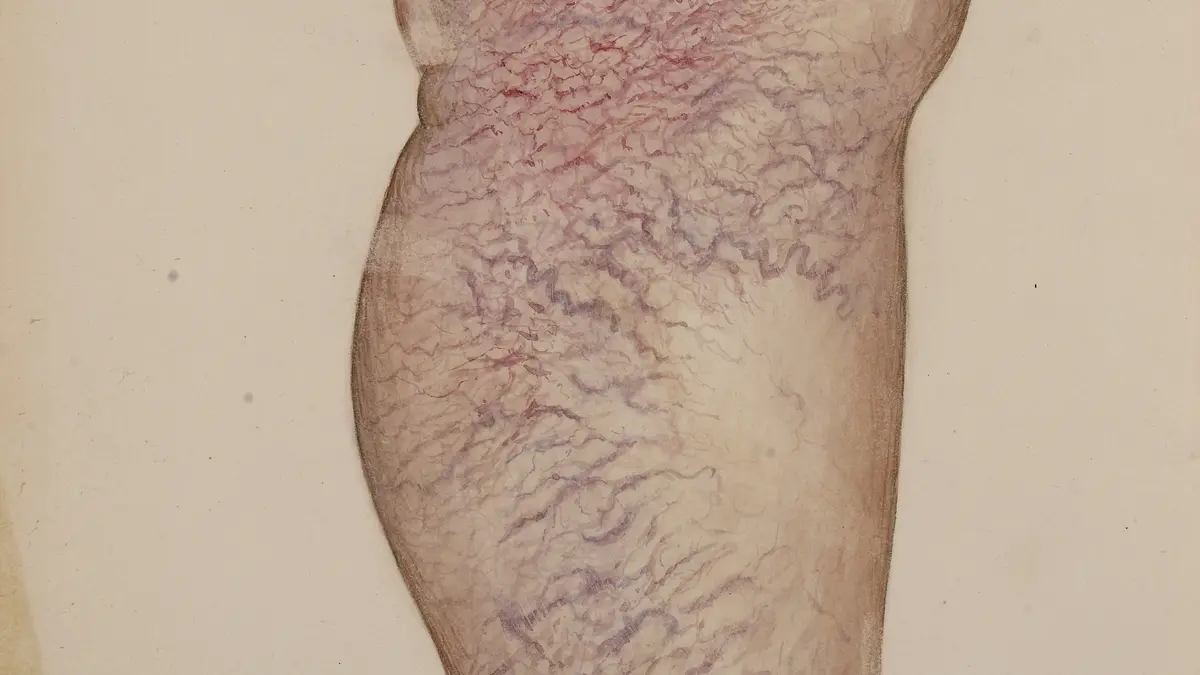
Varicose veins are enlarged, twisted veins beneath the skin, usually in the legs. They develop when valves do not keep blood moving effectively towards the heart.
Some cause no difficulty. Others produce aching, heaviness, itching, swelling, skin changes or ulcers. The NHS explains when symptoms or complications justify specialist referral.
An oil rubbed onto the skin cannot be assumed to close an abnormal vein or restore its valves. A warming, cooling or relaxing sensation is a different outcome.
Spider veins are smaller surface vessels and are often mainly cosmetic. Varicose veins are larger and may reflect deeper reflux. Appearance alone does not show how the underlying veins are working.
What evidence exists for essential oils
Cypress, rosemary, lavender, peppermint and yarrow commonly appear in online lists. I found no robust randomised trial showing that any of them shrinks varicose veins, prevents complications or changes the underlying venous reflux.
A 2024 journal letter proposed adding rosemary oil to massage for uncomplicated varicose veins. It did not test rosemary oil in patients, so it is a research suggestion rather than treatment evidence.
This distinction matters because a plausible mechanism cannot establish clinical benefit. Changes in laboratory inflammatory markers or surface blood flow do not prove that a product corrects faulty valves.
Massage studies also create a separation problem. If massage, rest, attention and an aromatic product are delivered together, improvement cannot automatically be attributed to the essential oil.
Short follow-up creates another problem. Temporary relief from heaviness is not evidence that reflux has improved, that a visible vein has closed or that future ulcers are less likely.
Horse chestnut is not an essential oil
Some lists cite horse chestnut research as support for essential oils. The studied product is a standardised seed extract taken in capsules, not a volatile oil rubbed onto the leg.
A Cochrane review found possible short-term symptom improvement with horse chestnut seed extract. The reviewers also highlighted limitations and the need for larger, rigorous trials.
The corresponding systematic review covered chronic venous insufficiency. It cannot be used to claim that cypress, lavender or another essential oil treats visible varicose veins.
What established care looks like
NICE guidance recommends duplex ultrasound to confirm varicose veins and plan treatment. For confirmed truncal reflux, options include endothermal ablation, foam sclerotherapy and surgery.
The correct option depends on symptoms, scan findings and suitability. The NHS decision tool compares compression with procedures that close or remove affected veins.
NICE recommends immediate vascular referral for bleeding varicose veins. Symptomatic veins, skin changes, superficial-vein thrombosis and a venous leg ulcer are also referral criteria.
Endothermal ablation uses heat inside the affected vein. Foam sclerotherapy closes it with an injected agent. Surgery removes or ties off the vein. None resembles topical aromatherapy.
Regular activity, avoiding long periods of standing or sitting, and elevating the legs may ease symptoms. Compression stockings should be fitted appropriately because they are not suitable for every circulation problem.
Do not assume that compression prevents progression or replaces a recommended procedure. The decision tool explains benefits, recovery and possible complications so treatment can reflect the person’s priorities.
Safety around massage and oils
Do not massage a leg with sudden pain, warmth or one-sided swelling. The NHS lists these as possible signs of deep vein thrombosis.
Avoid essential oils on ulcers, broken skin, inflamed eczema or a bleeding vein. Fragrance can irritate damaged skin and complicate wound care.
A tender hard vein beneath red skin may be superficial-vein thrombosis. It needs medical advice because symptoms can overlap with other venous problems and treatment depends on its extent.
A systematic review of aromatherapy adverse events identified dermatitis as the most frequent reported reaction. This does not quantify risk for every product, but it rules out assuming that topical oils are harmless.
Call 999 if bleeding is heavy or will not stop with firm pressure. Seek urgent help if leg symptoms accompany chest pain, breathlessness or coughing blood.
My verdict
Essential oils have not been shown to remove varicose veins, restore damaged valves or prevent ulcers and clots. An oil may change sensation without changing the disease.
Use medical assessment for troublesome veins, particularly when pain, swelling, skin changes, ulcers or bleeding are present. Proven procedures address the abnormal vein directly and have a much stronger evidence base.
References
- NHS: Varicose veins
- NICE CG168: Varicose veins
- NICE: Varicose-vein recommendations
- NHS England: Varicose-vein treatment decision tool
- NHS: Deep vein thrombosis
- Shanmugam and colleagues: Aromatherapy proposal for varicose veins
- Cochrane: Horse chestnut seed extract
- Pittler and Ernst: Horse chestnut systematic review
- Posadzki and colleagues: Adverse effects of aromatherapy