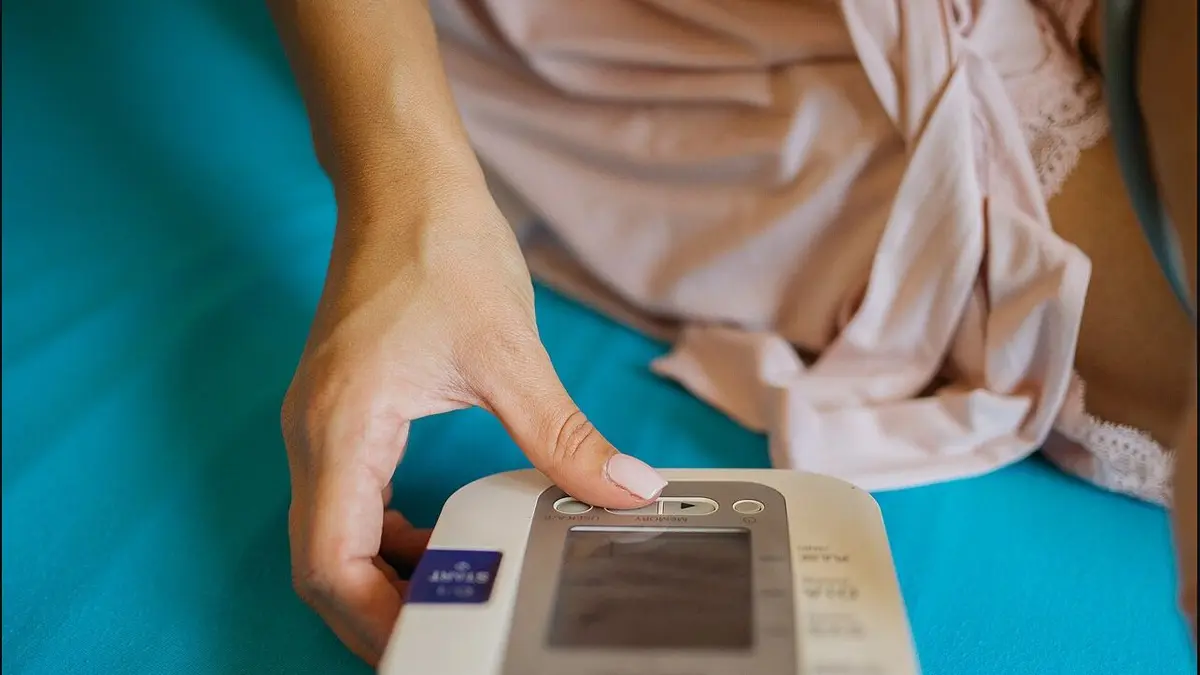

HealthWatchlist verdict: Essential oils have not been shown to control high blood pressure or prevent its complications. Some aromatherapy studies report small, short-term changes, but these do not justify replacing prescribed treatment.
Do not stop or reduce prescribed blood-pressure medicine because of an essential-oil claim. Call 999 for persistent chest pain, severe breathing difficulty or signs of a stroke.
Why a relaxed reading is not the same as treated hypertension
Blood pressure changes from minute to minute. Rest, posture, conversation, pain, anxiety, caffeine and the measuring method can all affect a reading.
A calming scent might help someone settle before a measurement. That would not show that the oil has changed the underlying condition or reduced long-term cardiovascular risk.
The NHS explains that high blood pressure usually causes no symptoms. Diagnosis therefore depends on properly taken readings, often repeated at home or over 24 hours.
A clinic reading can be higher because someone feels anxious, while some people have normal clinic readings but higher pressure elsewhere. Repeated home or ambulatory measurements help clinicians recognise these patterns.
One unusually high or low number is therefore not a sound test of an aromatherapy session. The useful question is whether a reliable series of readings changes enough to improve long-term risk.
What the aromatherapy research found
A systematic review found one randomised trial and four non-randomised controlled studies. The results favoured aromatherapy, but the reviewers judged the evidence unconvincing because the studies were weak and prone to bias.
A broader overview of ten aromatherapy reviews reached a similar conclusion. Evidence was not convincing for hypertension or any of the other conditions assessed.
A later meta-analysis pooled 11 small trials and reported average immediate reductions of about 4.7 mmHg systolic and 2.4 mmHg diastolic. The authors considered the result positive, but the analysis did not establish lasting control or fewer cardiovascular events.
Many trials combine scent with rest, massage or slow breathing. These ingredients can affect stress and the measurement itself. Short follow-up, difficult scent blinding and varied oil mixtures make the independent effect of an oil hard to judge.
Which oils are usually mentioned?
Lavender, bergamot, ylang-ylang, rose and blends appear frequently in small studies. No individual essential oil has the evidence needed to act as a hypertension medicine.
Animal experiments and isolated-vessel studies may suggest that a fragrance chemical affects nerves or smooth muscle. They do not tell us whether normal inhalation safely lowers a person’s blood pressure over months or years.
Product chemistry also varies by species, growing conditions, storage and formulation. A result from one controlled mixture cannot be transferred to every bottle carrying the same common name.
What effective blood-pressure care involves
NICE guidance covers accurate diagnosis, cardiovascular-risk assessment, lifestyle measures, treatment targets and medicines. The World Health Organization hypertension guideline likewise treats reliable measurement and proven medicines as the foundation of risk reduction. The plan depends on the readings, age, other conditions and overall risk.
The NHS recommends a balanced diet, less salt, regular activity, weight loss where appropriate, not smoking and keeping alcohol within recommended limits. Medication is often needed when pressure is very high or cardiovascular risk is raised.
Home monitoring can be useful, but technique matters. Sit quietly, support the arm, use a validated upper-arm monitor and follow the schedule agreed with a clinician. Do not repeatedly test until a preferred number appears.
Safety and medicine concerns
NCCIH describes aromatherapy as complementary care rather than a treatment for hypertension. Essential oils can irritate skin and airways. Swallowing them can cause poisoning. Diffusers may trigger headache, nausea or breathing symptoms in sensitive people.
A scent can also become a distraction from the important question: are readings consistently controlled? Tell a pharmacist or clinician about complementary products, especially if dizziness or faintness develops.
Do not assume that “natural” means free from interactions. Products sold as essential oils vary, and swallowing concentrated oil is particularly unsafe. A clinician can review dizziness without guessing whether it comes from treatment, dehydration or another cause.
Someone who enjoys a familiar scent while resting may continue to regard it as an optional comfort measure. It should not determine medicine doses or delay assessment of repeated high readings.
When to seek help
Arrange a blood-pressure check if you may be at risk or have not been checked within the interval advised for you. Seek NHS 111 advice for repeated headaches, blurred vision or intermittent chest pain.
Call 999 for chest pressure that does not go away, pain spreading to an arm, jaw, back or stomach, or chest pain with sweating, sickness, light-headedness or breathlessness.
My verdict
The research leaves open the possibility of a modest short-term relaxation effect. It does not show that essential oils control hypertension or protect organs from sustained high blood pressure.
Use reliable measurements, established lifestyle measures and prescribed treatment. If aromatherapy feels pleasant, keep its role honest: comfort alongside care, not treatment instead of care.
References
- NHS: High blood pressure
- NICE NG136: Hypertension in adults
- WHO: Guideline for the pharmacological treatment of hypertension in adults
- Hur and colleagues: Aromatherapy for treatment of hypertension
- Lee and colleagues: Aromatherapy for health care
- Lee and colleagues: Meta-analysis of aromatherapy and blood pressure
- NCCIH: Aromatherapy
- Posadzki and colleagues: Adverse effects of aromatherapy
- de Groot and Schmidt: Essential oils and contact allergy
- NHS: Contact dermatitis
- HealthWatchlist: Essential-oil safety guide