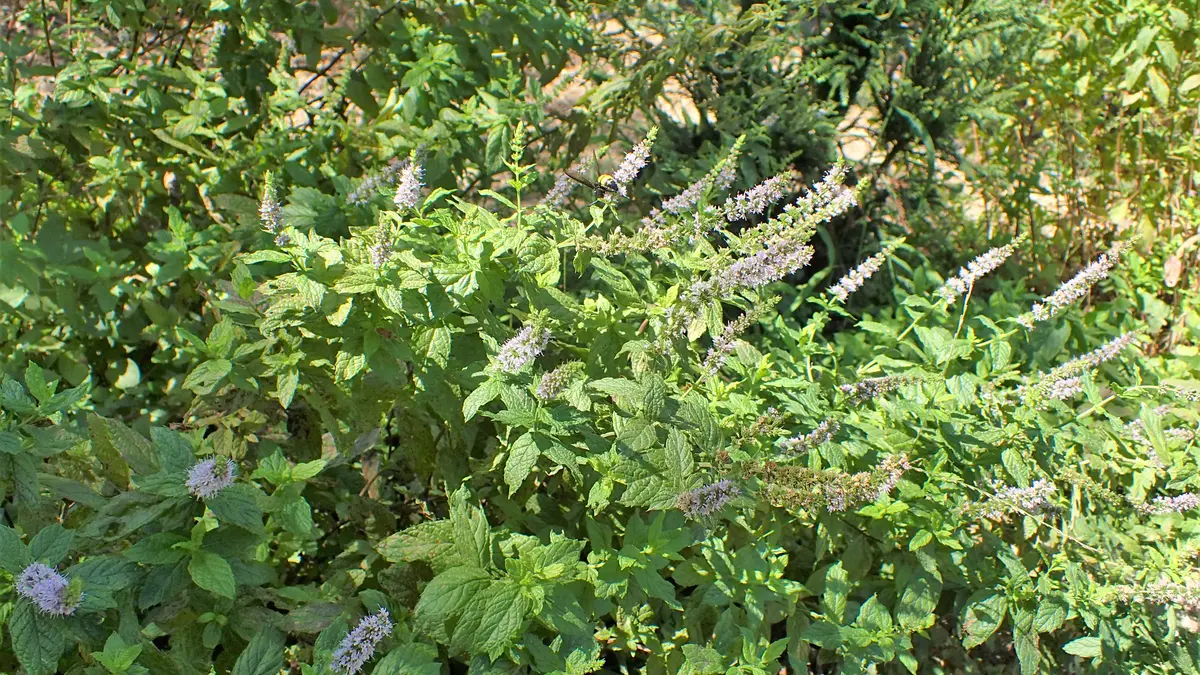

Bottom line: spearmint essential oil comes from Mentha spicata and is commonly carvone-rich. It is not peppermint oil, and evidence about spearmint tea does not prove that concentrated oil treats the same outcomes.
This profile separates plant, essential oil and tea evidence. It does not recommend swallowing essential oil or using it as a treatment.
Botanical identity
Kew accepts Mentha spicata as a species native from Europe to China. It is a perennial member of the mint family.
Spearmint is not the same plant as peppermint, Mentha × piperita. Peppermint is a hybrid and commonly has a markedly different volatile profile.
A label that says only “mint oil” leaves an important identity question unanswered. It may refer to spearmint, peppermint, cornmint or a blended flavour.
How spearmint oil is produced
The essential oil is normally steam-distilled from aerial plant material. Harvest stage, climate, cultivar and distillation conditions influence the yield and composition.
Distillation collects volatile molecules. It does not make a concentrated version of every chemical present in leaves or tea.
This distinction is essential when reading research. An aqueous infusion, isolated constituent and distilled oil are different interventions.
Carvone and chemical variation
Spearmint oil is often described as carvone-rich, with limonene and other terpenes also present. That pattern helps distinguish it from many menthol-rich peppermint oils.
One composition study characterised spearmint oil and its biological activity. Its measured batch should not be treated as a universal formula.
Another analysis found a defined chemical profile alongside antioxidant and antimicrobial test results. Laboratory endpoints do not establish clinical benefit.
Research across cultivated spearmint material has documented variation relevant to essential-oil production. A current batch analysis is therefore useful when composition matters.
Why spearmint is not peppermint
The two oils can smell and feel different because their dominant compounds differ. Substitution can also change safety limits, product performance and the relevance of a study.
Menthol research is frequently cited for “mint oil” claims. A menthol experiment cannot prove that a carvone-rich spearmint oil produces the same physiological effect.
Likewise, evidence about enteric-coated peppermint-oil capsules concerns a particular oral medicine. It does not authorise swallowing spearmint essential oil.
The spearmint-tea evidence is not oil evidence
A small randomised trial studied spearmint herbal tea in women with hirsutism. It assessed a prepared drink, not essential oil applied to skin or inhaled.
The trial reported changes in hormone measures and participants’ subjective assessments. It was short and did not show a clear objective change in hair growth over a full hair cycle.
Online summaries sometimes turn that study into “spearmint oil balances hormones”. That wording changes both the product and the claim.
A biochemical change is not automatically a meaningful treatment result. Hormone-related symptoms also deserve a diagnosis rather than an improvised concentrated-oil regimen.
Antimicrobial findings
Spearmint oil has inhibited selected bacteria in laboratory testing. Direct exposure in a culture dish does not reproduce a safe concentration on human tissue.
In vitro antifungal research has also reported activity. It does not establish treatment of oral, skin, vaginal or systemic infection.
A broader study of spearmint’s biological properties illustrates the range of experimental claims. The useful next question is whether an appropriate human trial measured a relevant outcome.
Flavour and fragrance uses
Spearmint is widely used in flavourings, oral-care products and fragrance. A finished regulated product is not equivalent to a bottle of concentrated oil.
EFSA has assessed carvone in defined flavouring and exposure contexts. Such assessments do not endorse unrestricted ingestion of essential oils.
PubChem records carvone’s chemical identifiers and properties. A constituent profile helps identify a product but cannot prove a whole-oil medical claim.
Safety
Concentrated spearmint oil can irritate skin, eyes and mucous membranes. Do not swallow it or apply it undiluted.
Essential oils and fragrance constituents are recognised causes of allergic contact dermatitis. Stop use if a persistent rash, swelling or blistering develops.
Children, pregnancy, respiratory conditions and medicines can change the risk assessment. Ask a pharmacist or clinician about a particular route and product.
Keep bottles and diffuser liquids secured. A sweet or familiar food smell does not make the concentrate safe to drink.
How to assess a spearmint-oil label
- Look for Mentha spicata, not only “mint”.
- Check the plant part and steam-distillation statement.
- Look for a lot number and a batch-specific analysis.
- Confirm whether the product is pure oil, diluted oil, flavour or fragrance.
- Do not transfer peppermint, menthol or spearmint-tea studies to the bottle.
- Expect clear route, storage and hazard information.
My verdict
Spearmint oil has a recognisable botanical and chemical identity, but its clinical evidence is sparse. Most antimicrobial claims remain laboratory findings.
The prominent hormone story concerns spearmint tea, not essential oil. Product, route, dose and outcome must match before a reference can support a claim.
References
- Kew Plants of the World Online: Mentha spicata
- Spearmint essential-oil composition study
- Spearmint composition and laboratory properties
- Variation in cultivated spearmint material
- Randomised trial of spearmint herbal tea for hirsutism
- In vitro antibacterial study of spearmint oil
- In vitro antifungal study of spearmint oil
- Experimental biological properties of spearmint
- Review of analgesic research involving mint constituents
- EFSA: Safety assessment of carvone
- PubChem: Carvone
- Contact allergy to essential oils
- NCCIH: Aromatherapy