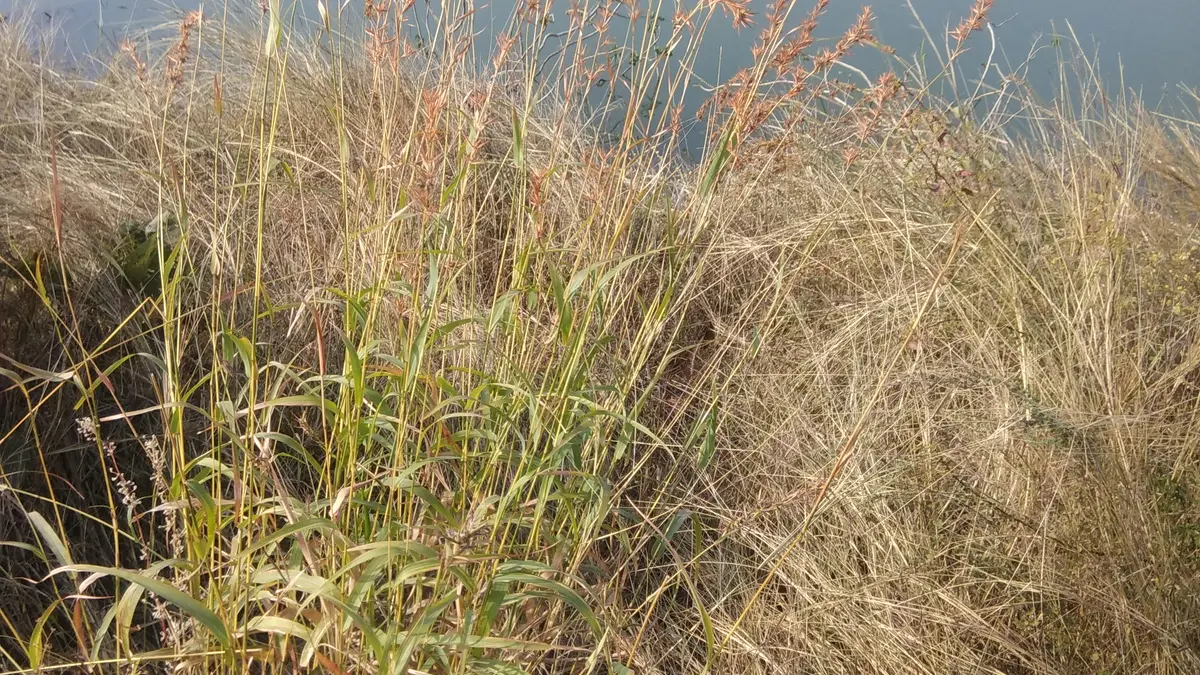
.jpg)
Bottom line: palmarosa oil is distilled from the aromatic grass Cymbopogon martini. It is commonly rich in geraniol, but most promoted health uses rest on laboratory or animal research rather than clinical trials.
This profile explains identity, composition and evidence limits. It does not recommend palmarosa oil for treating infection, inflammation or a skin condition.
Botanical identity
Kew accepts Cymbopogon martini as a perennial grass native from the Indian subcontinent to Indo-China. The spelling martinii still appears in papers and product listings.
Palmarosa belongs to the same broad genus as lemongrass and citronella plants. It is not rose oil and it is not a Pelargonium geranium oil.
The confusing common names matter because floral scent is not botanical identity. A label should provide the Latin name, plant part and extraction method.
How palmarosa oil is made
The essential oil is normally steam-distilled from grass and flowering aerial material. Harvest stage and growing conditions affect yield and chemistry.
Research across growth stages found changes in palmarosa oil yield and composition. One published batch cannot define every bottle.
Distillation selects volatile constituents. Evidence about a whole grass, water extract or isolated geraniol does not automatically describe the finished essential oil.
A geraniol-rich oil
Geraniol commonly dominates palmarosa oil and helps explain its rose-like fragrance. Other constituents and their proportions vary.
A review of geraniol describes its occurrence in several essential oils and its many experimental effects. It is not a clinical review of palmarosa products.
Another geraniol review covers mechanisms and preclinical research. Isolated-compound evidence cannot be used as proof for any whole oil, dose or route.
A batch-specific chromatogram can help confirm a plausible profile. It cannot by itself demonstrate purity, safety or treatment effectiveness.
Antimicrobial research
A 2025 study found palmarosa oil active against dandruff-associated microorganisms in laboratory experiments. It did not show that applying the oil treats dandruff safely in people.
Another laboratory study tested palmarosa oil and geraniol against clinical bacterial isolates. Susceptibility in culture is not a dose, formulation or clinical outcome.
An in vitro antifungal study included palmarosa among several active oils. It concerned laboratory isolates and cannot authorise treatment of a diagnosed fungal infection.
Research has also screened essential oils against difficult bacterial states. The authors’ need for safety and in vivo work is central, not a minor caveat.
Inflammation and stress claims
Palmarosa oil and geraniol have been examined in experimental immune and inflammatory models. These models help explore mechanisms but do not establish treatment in patients.
An animal inhalation study reported behavioural and physiological responses to palmarosa aroma. Animal exposure cannot prove relief of human anxiety or stress.
A relaxing personal association with a fragrance can still be real. It should be described as an experience, not converted into an untested medical promise.
Skin and cosmetic use
Palmarosa appears in perfumes, soaps and cosmetic formulations because of its scent. A cosmetic function does not establish treatment of acne, ageing, eczema or infection.
Finished products can be assessed differently from concentrated oil. Formulation, concentration, preservation, packaging and intended exposure all influence safety.
Do not place neat oil on inflamed or broken skin. A product that stings is not “working” through detoxification.
Geraniol is also a fragrance allergen
Clinical literature recognises essential oils and fragrance constituents as causes of allergic contact dermatitis. Geraniol can be relevant to patch testing and labelling.
A fragrance-safety assessment reviews geraniol across defined exposure endpoints. Such an assessment depends on exposure assumptions and is not permission for unrestricted neat use.
EU cosmetic rules include expanded fragrance-allergen labelling requirements. Ingredient disclosure helps people with known allergy, but it does not prevent every reaction.
Stop using a product that causes persistent redness, itching, swelling or blisters. Seek advice for a severe or continuing reaction.
How to assess a palmarosa label
- Look for Cymbopogon martini and check any botanical synonym.
- Confirm steam distillation and the plant material used.
- Check country, batch number and analysis date.
- Do not assume “geranium grass” means Pelargonium geranium oil.
- Separate laboratory antimicrobial results from human treatment evidence.
- Expect dilution, storage, hazard and contact information.
My verdict
Palmarosa is a distinctive geraniol-rich fragrance oil with substantial laboratory interest. Human clinical evidence for its promoted health uses remains very limited.
The responsible description is botanical and evidence-led. It should not become an all-purpose antibacterial, hormone or skin-treatment claim.
References
- Kew Plants of the World Online: Cymbopogon martini
- Growth stage, yield and composition of palmarosa oil
- Review of palmarosa cultivation, composition and uses
- Review: The many experimental faces of geraniol
- Geraniol: A review of a commercially important fragrance material
- Palmarosa oil and dandruff-associated microbes: Laboratory study
- Palmarosa oil, geraniol and clinical bacterial isolates
- In vitro antifungal testing of essential oils
- Essential oils screened against difficult bacterial states
- Palmarosa oil and geraniol in experimental immune models
- Animal inhalation study of palmarosa aroma
- Contact allergy to essential oils
- Fragrance-ingredient safety assessment of geraniol
- EU Regulation 2023/1545 on fragrance-allergen labelling