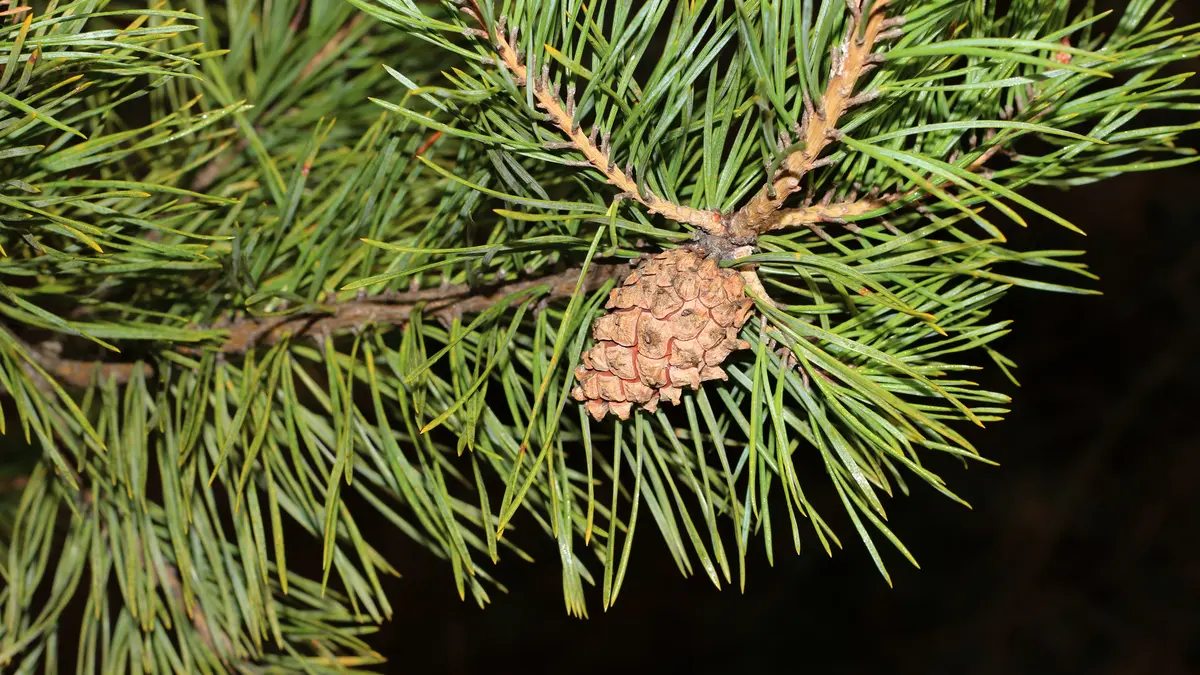

Short answer: pine essential oil can mean oils from several species and plant parts. Scots pine needle oil is commonly associated with Pinus sylvestris, but “pine oil” on a cleaner or fragrance is not necessarily the same material. Direct human evidence for respiratory, pain or antimicrobial treatment claims is limited.
“Pine oil” is not a complete identity
Kew records Scots pine as Pinus sylvestris. Commercial pine oils can also come from other Pinus species and from needles, twigs, cones or wood. Turpentine obtained from resin is a different product and should not be confused with needle oil.
Household “pine scent” may be a fragrance composition. The label should state the full botanical name, distilled plant part and extraction method before evidence or safety can be matched to the bottle.
Chemistry changes across species and batches
Pine needle oils often contain alpha-pinene, beta-pinene, 3-carene, limonene and other terpenes in varying proportions. PubChem provides chemical and safety information for alpha-pinene, but a constituent record is not a clinical assessment of a complete oil. Geography, season, plant age and distillation affect the profile. A recent review of Pinus ethnopharmacology and experimental research shows the breadth of species and preparations discussed under the pine name.
Oxidation matters. Terpenes can form oxidation products during storage, increasing the chance of skin sensitisation. A batch analysis describes composition at testing; it does not demonstrate clinical effectiveness.
Respiratory claims
Pine aroma may create a subjective sensation of freshness. That feeling does not show that airways have opened, mucus has cleared or an infection has been treated. Volatile fragrance can also provoke coughing, headache or wheeze in sensitive people.
The historical literature includes traditional respiratory uses, as the broader Pinus review describes. Longstanding use can help researchers frame questions, but it is not the same as evidence from robust clinical trials.
There is no sound basis for using a home diffuser to treat asthma, pneumonia, sinusitis or another respiratory disease. Breathing difficulty, chest pain, blue lips, confusion or rapidly worsening symptoms need urgent medical assessment.
Laboratory antimicrobial findings
Pine oils and isolated terpenes have been tested against microorganisms and inflammatory pathways in experimental systems. These studies can guide product or drug research. They do not prove that inhaled vapour disinfects a room, that pine oil treats a skin infection or that it is safe to swallow.
Cleaning products have their own tested formulations and instructions. Adding essential oil to a homemade spray does not turn it into a validated disinfectant.
How to read pine research
A paper about pine bark extract, pollen, resin, turpentine or an isolated terpene is not automatically evidence for needle essential oil. Even within needle oils, species and chemistry may differ. The methods should name the botanical material and provide a chemical analysis.
Traditional-use monographs can provide useful boundaries for established uses and safety. They should not be presented as equivalent to replicated randomised trials. For a respiratory claim, useful research would need objective breathing or symptom outcomes, an appropriate control and careful monitoring of people whose airways may react to fragrance.
Safety
Pine oil can irritate skin, eyes and airways. Oxidised terpene-rich products may be more sensitising. A clinical review documents allergic contact dermatitis caused by essential oils. Poison Control advises that essential oils can cause serious harm when swallowed or misused.
- Do not swallow pine essential oil or turpentine.
- Do not put either product in the nose, mouth, ears or nebuliser.
- Never apply concentrated pine oil to damaged skin.
- Diffuse briefly with ventilation and stop if breathing symptoms occur.
- Keep bottles and cleaning products locked away from children and pets.
Buying checklist
- The full Pinus species and plant part are stated.
- Needle oil is clearly distinguished from turpentine and fragrance oil.
- A batch number, date and storage advice are supplied.
- Respiratory comfort is not presented as treatment of disease.
- There are clear ingestion, dilution and ventilation warnings.
My assessment
Pine needle oil has a clear fragrance use and a substantial experimental literature, but human treatment evidence is limited. The familiar smell can encourage overconfidence. Species, plant part and product type must be verified, and the oil should not be swallowed or used as a substitute for respiratory or infection care.