
Bottom line: I found no trial showing that an essential oil releases pressure on the sciatic nerve or treats sciatica itself. Aromatherapy massage may change pain briefly, but studies of ordinary low-back pain cannot be assumed to apply to nerve-root pain.
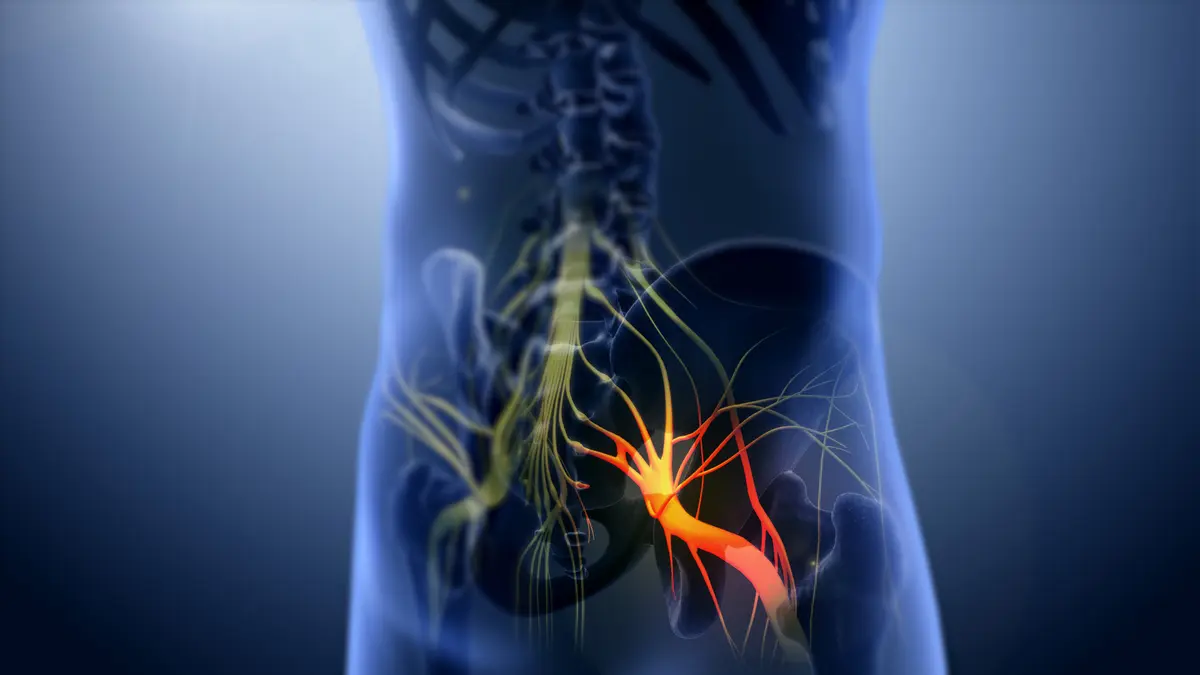
Sciatica describes pain and other symptoms caused by irritation or compression of the sciatic nerve. It is not simply another name for an aching lower back.
What sciatica feels like
The NHS describes sciatica as pain that usually travels through the bottom and down one leg. Tingling, numbness or weakness can occur, and coughing or sneezing may make the pain worse.
A slipped disc is a common cause. Spinal narrowing, a vertebra moving out of position or an injury can also press or irritate a nerve. An oil on the skin does not reverse these structural changes.
Sciatica often improves over several weeks or months. That natural improvement makes uncontrolled testimonials especially unreliable. Feeling better after using an oil does not prove the oil caused recovery.
What the essential-oil research studies
Searches for sciatica treatments often lead to studies of low-back pain, arthritis, neuropathy or general musculoskeletal pain. These are related experiences, but they are not the same diagnosis.
A trial of frankincense-and-myrrh aromatherapy massage studied chronic low-back pain. It combined two oils with massage and did not establish that either oil treats sciatica or relieves nerve compression.
An older study combined acupoint stimulation, acupressure and lavender oil for subacute low-back pain. Several elements changed together, so the effect of lavender cannot be separated.
A 2023 systematic review examined topical essential oils across several musculoskeletal disorders. The authors reported possible add-on pain relief, but the conditions, mixtures and treatments varied. This does not prove benefit for sciatica.
Pain relief is not nerve treatment
Menthol products can produce a cooling sensation, and massage may temporarily relax tense muscles. Either effect may change how pain feels without changing the irritated nerve or the reason it is being compressed.
This distinction protects against a common leap in online advice. A study showing a short-term pain-score change does not demonstrate disc healing, nerve repair or prevention of weakness.
It also matters whether researchers used a regulated topical medicine, a diluted oil, massage or inhalation. The result cannot be transferred to neat oil or a homemade blend.
Most studies were also small and could not fully hide whether participants received a scented treatment. Expectations, touch and attention may influence pain ratings. These limits do not make every finding useless, but they prevent a confident oil-specific conclusion.
What guidance recommends
NICE guidance recommends advice and support to continue normal activities. Exercise can form part of care, with manual therapy considered only as part of a package that includes exercise.
The NHS advises staying active, starting gentle exercise and avoiding long periods of sitting or lying down. Heat packs may help some people. A pharmacist can advise about pain relief and whether a medicine is suitable.
See a GP if pain is worsening, has not improved after a few weeks or stops normal activity. Physiotherapy, specialist assessment, injections or surgery may be considered in selected cases.
Emergency warning signs
Call 999 or go to A&E if symptoms affect both sides, severe weakness or numbness is worsening in both legs, or there is numbness around the genitals or bottom.
New difficulty starting urination, loss of bladder control or loss of bowel control also needs immediate hospital assessment. These can indicate serious compression of the nerves controlling the bladder and bowel.
Do not massage through these symptoms or wait to see whether an oil helps.
Safety if massage is used for comfort
Massage may feel soothing, but deep pressure can aggravate pain for some people. A trained practitioner should know the diagnosis, symptoms and any conditions that make massage unsuitable.
Do not put neat essential oil on the skin. A systematic review found dermatitis was the most frequently reported aromatherapy adverse event. Stop if irritation, swelling or a rash develops.
Wintergreen oil is particularly unsuitable for casual pain experiments because it contains concentrated methyl salicylate. Swallowing it or using too much on skin can cause serious salicylate poisoning.
If you use any scented product for comfort, keep it separate from the treatment plan. Do not apply it to broken skin, use it under a heat pad or let temporary numbness encourage activity that clearly worsens symptoms.
My verdict
There is no good evidence that an essential oil treats sciatica. Small studies of massage and other painful conditions may support a cautious discussion of temporary comfort, not nerve decompression or recovery.
Keep moving within your limits, use established advice and seek assessment when symptoms persist or worsen. Treat the emergency warning signs as urgent, regardless of any temporary relief.
References
- NHS: Sciatica
- NICE NG59: Low back pain and sciatica in over 16s
- Bernstein and colleagues: Summary of NICE sciatica guidance
- Alkanat and Özdelikara: Frankincense-and-myrrh massage for chronic low-back pain
- Yip and Tse: Acupoint stimulation, acupressure and lavender oil
- Bakó and colleagues: Topical essential oils in musculoskeletal disorders
- NCCIH: Aromatherapy
- Posadzki and colleagues: Adverse effects of aromatherapy