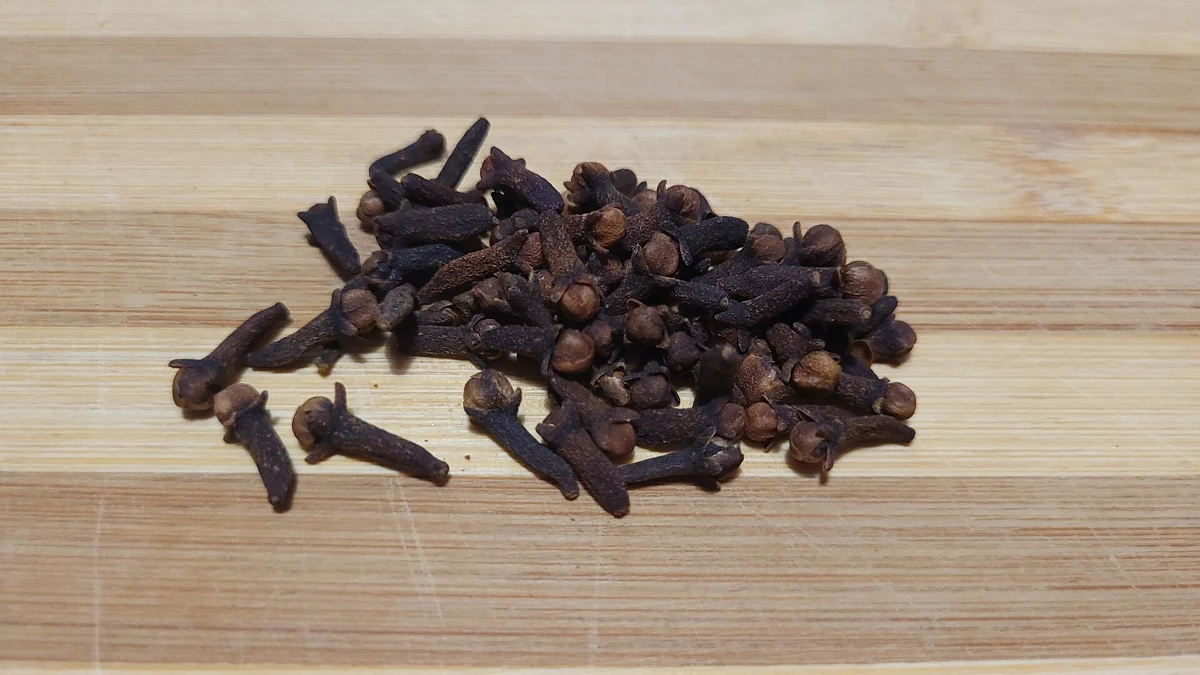

HealthWatchlist verdict: Clove preparations can have a local numbing effect, but the best-known trials measured pain from dental needles. They do not establish that a bottle of clove oil treats decay, an inflamed tooth or an abscess. Toothache still needs dental assessment.
Why clove has a place in this discussion
Clove is not merely a pleasant smell with a dental story attached. Eugenol, a major constituent, has a history in dental materials. However, an ingredient used by a dentist in a controlled formulation is different from applying concentrated oil at home.
The US National Library of Medicine describes eugenol and its dental uses, alongside the risk of toxicity after substantial ingestion. The useful question is which preparation has been tested, for which kind of pain, and with what safety controls.
The often-quoted adult trial
A 2006 trial involved 73 adult volunteers. Researchers applied clove gel, benzocaine gel or matching placebos to the mouth lining before needle sticks. Both active gels reduced reported pain compared with placebo.
The absence of a significant difference between the active gels does not prove that they are interchangeable. Demonstrating equivalence requires a study designed to test that question, with a justified margin and adequate numbers.
More importantly, these volunteers were not being treated for spontaneous toothache. A brief needle puncture through the mouth lining differs from inflammation inside a tooth, a cracked tooth or an infection around its root.
What newer research adds
A newer randomised study in children aged seven to ten compared clove oil with two topical anaesthetic preparations before local anaesthetic administration. It reported no significant difference between groups on pain scores.
This provides another procedural-pain comparison. It does not establish a home treatment for a child with toothache, and a small treatment study cannot settle uncommon safety risks. We do not translate its protocol into a home recipe.
An exploratory review of herbal topical anaesthetics in dentistry places clove within a wider, limited evidence base. Different plants, gels and dental procedures should not be treated as repeated confirmation of one standard clove-oil treatment.
Numbing a surface does not repair a tooth
A convincing toothache study would recruit people with a defined dental diagnosis, measure meaningful relief over a useful period, record rescue painkillers and harms, and ensure definitive treatment was not delayed.
The needle studies answer a narrower question. They cannot show that clove prevents an abscess, removes decay or makes a damaged tooth safe to leave untreated. Antibacterial experiments would not fill that clinical gap either.
| Evidence or experience | What it can establish |
|---|---|
| Less pain from a dental needle | A possible short-term surface-anaesthetic effect for that preparation. |
| A tooth feels temporarily numb | A change in sensation, without demonstrating that its cause has resolved. |
| Eugenol appears in a dental material | A professional formulation has a particular purpose; bottled oil is not an equivalent product. |
| Pain disappears before an appointment | Improvement alone cannot establish that a damaged tooth no longer needs care. |
Safety matters even when the amount looks small
A published case describes severe liver injury after a toddler swallowed clove oil. Case reports cannot tell us how often poisoning occurs, but they establish that serious harm is possible. The reported amount is not a threshold below which ingestion is safe.
Do not swallow aromatherapy clove oil or leave it where a child can reach it. Avoid applying concentrated oil to gums or repeatedly soaking a painful area. A pharmacist can advise on a suitable licensed dental product and its instructions.
NHS poisoning guidance advises calling 999 or going to A&E if something harmful may have been swallowed. Do not induce vomiting or wait for symptoms. If you are unsure whether an exposure is harmful, call NHS 111 immediately.
What to do about the toothache
The NHS advises seeing a dentist for pain lasting more than two days, pain not controlled by painkillers, or pain with fever, swelling or a bad taste. Ask a pharmacist about appropriate pain relief while arranging care.
A suspected dental abscess needs an urgent dental appointment. If you cannot obtain one, NHS 111 can help. Difficulty breathing, swallowing or speaking, eye swelling or extensive mouth swelling requires emergency assessment.
Changing oils while an infection spreads is a poor trade-off. A dental examination can identify whether the problem needs a filling, drainage, root treatment or another approach.
Evidence score and conclusion
John’s Evidence Score: 2/10 for clove oil relieving untreated toothache. Controlled procedural-pain findings provide indirect support for numbing, but direct evidence for this specific use is inadequate. The score does not rate professional eugenol-containing materials.
Clove deserves an accurate explanation of its pharmacology and evidence. It does not deserve a claim that temporary numbness replaces dental treatment.
How this review was researched
Research checked on 13 September 2026. We searched PubMed for the named oils or preparations and the condition, followed relevant review references, and checked the official guidance linked below. This is an editorial review, not an exhaustive systematic review. We distinguish human treatment outcomes from laboratory findings, and identify where a study tested a mixture or a different preparation.
Related reading
References
- The effect of clove and benzocaine versus placebo as topical anesthetics.
- Comparative Evaluation of Pain Perception Following Topical Application of Clove Oil, EMLA 5%, and Lignocaine Hydrochloride Gel 2% as a Pre-anesthetic Agent in Children Aged 7-10 Years: A Randomized Controlled Study.
- Herbal topical anesthetics in dentistry: an exploratory review.
- Essential oil poisoning: N-acetylcysteine for eugenol-induced hepatic failure and analysis of a national database.
- LiverTox: Eugenol (clove oil)
- NHS: Toothache
- NHS: Dental abscess
- NHS: Poisoning