
Bottom line: a diffuser is not automatically dangerous, but it is not exposure-free. Risks include irritation, poisoning, contaminated water, spills, fire from heated units and delayed care for symptoms.
This guide concerns household exposure and safer use. It does not establish a universally safe dose, because devices, oils, rooms and users differ.
“Natural” does not describe the risk
Essential oils are concentrated mixtures of volatile chemicals. Plant origin does not make every dose, route or product suitable for every person.
ANSES advises caution with essential oils because their composition and hazards vary. It also stresses that vulnerable people need particular care.
The device matters too. A passive reed diffuser, ultrasonic mist unit, nebuliser and candle-heated burner produce different exposures and physical hazards.
Airborne compounds and particles
A controlled chamber study detected volatile organic compounds and particles from an ultrasonic essential-oil diffuser. Emissions varied by operating condition and formulation.
A 2025 experimental study likewise measured vapour and particle mixtures during diffuser use. These studies establish that exposure occurs, not that every measured concentration causes illness.
Research on lemon essential oil shows that indoor chemistry can change the compounds released into room air. Ventilation, ozone and other pollutants can affect the mixture.
Measurements in rooms using aroma oils found that product and ventilation choices strongly affected concentrations. A pleasant smell is therefore not a measure of clean air.
Irritation and breathing symptoms
ANSES describes reports of eye, nose and throat irritation, coughing and breathing difficulty associated with sprays and diffusers. Reports cannot calculate the risk for every user, but they identify credible warning signs.
People with asthma, fragrance sensitivity or other respiratory disease may react at exposures that others tolerate. A diffuser should never be used to cover new breathing symptoms.
Stop the unit, move to fresh air and ventilate if symptoms begin. Seek urgent medical help for severe breathlessness, blue lips, confusion or rapidly worsening symptoms.
Poisoning and spills
Poison Control warns that essential oils can be poisonous when swallowed and can harm the skin and eyes. Small bottles and fragranced liquids need secure storage.
Reed-diffuser liquid can be hazardous if a child drinks it or if it enters the lungs during choking or vomiting. Decorative bottles are not child-resistant containers.
Place a diffuser on a stable surface outside the reach of children and animals. Wipe spills promptly and follow the product’s first-aid instructions.
Do not induce vomiting after a suspected ingestion unless a poison service tells you to do so. In the UK, call NHS 111 for advice and 999 for a life-threatening emergency.
Skin allergy can develop
Diffuser use is mainly an inhalation exposure, but refilling and cleaning can put concentrated oil on the skin. Repeated contact may matter.
A clinical review identifies essential oils as recognised causes of allergic contact dermatitis. Oxidation during storage can alter fragrance chemicals and increase sensitisation concerns.
A consumer-products study documented contact-allergy issues involving essential-oil ingredients. Wash exposed skin and stop using a product that causes a persistent rash, swelling or blistering.
Water tanks need hygiene
An ultrasonic diffuser contains less water than many humidifiers, but stagnant water can still collect residue and microorganisms. Emptying the tank is better than repeatedly topping it up.
EPA explains that ultrasonic devices can disperse tank contents into the air. Its humidifier guidance supports using fresh water, drying reservoirs and cleaning them regularly.
Follow the diffuser instructions because alcohol, bleach, vinegar or abrasive tools may damage particular seals and surfaces. Never clean an electrical base while it is connected to power.
Heat and flame change the risk
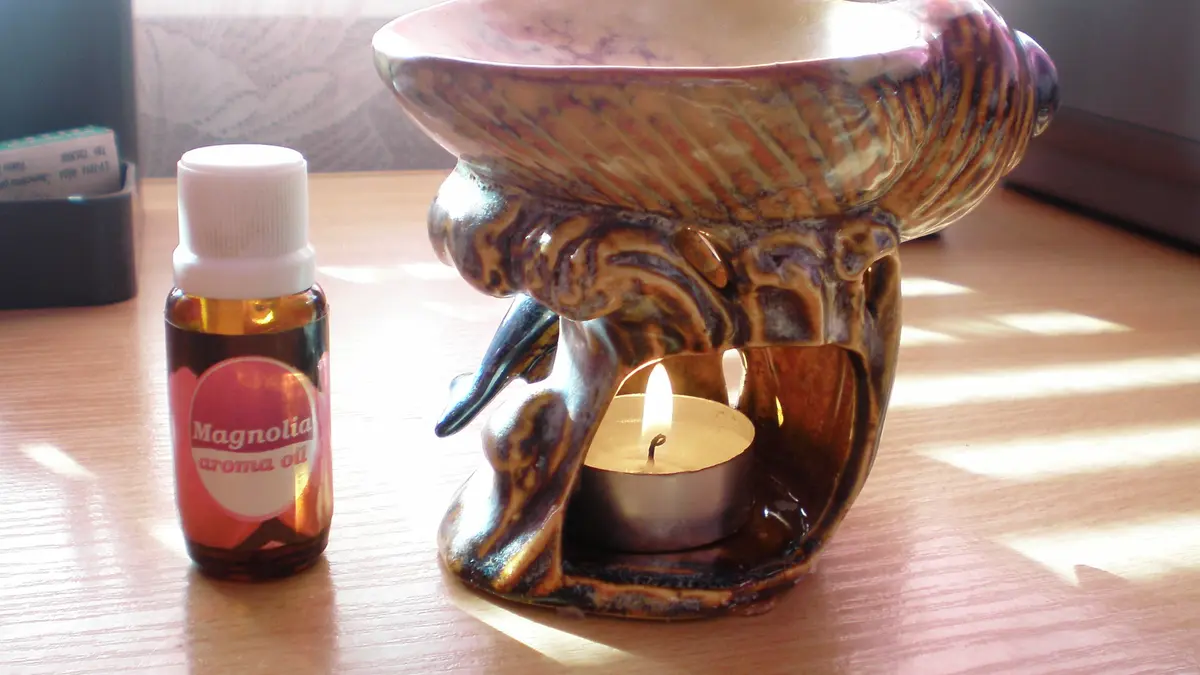
Candle-powered aroma lamps introduce an open flame and a hot bowl. Keep them away from curtains, bedding, children, pets and unstable surfaces.
Do not leave a flame or heated diffuser unattended. Extinguish it before sleeping or leaving the room.
Electrical devices avoid an open flame, but they still require an undamaged cable, dry controls and the correct power supply. Stop using a cracked, leaking or overheating unit.
Aerosolised oil is not the same as ordinary fragrance
A 2025 case report linked repeated exposure to an aerosolised essential-oil breath spray with exogenous lipoid pneumonia. One unusual case cannot estimate the risk from normal diffuser use.
It does show why direct inhalation of oily sprays and improvised devices should not be treated as equivalent to low-level room fragrance. Never put oil into the nose or inhale it from an unapproved apparatus.
Who should be especially cautious?
- People with asthma, chronic lung disease or known fragrance reactions.
- Babies and young children, who cannot describe early symptoms or avoid a spill.
- People with migraine or nausea triggered by odours.
- Households with pets, especially when a species-specific veterinary risk is uncertain.
- Anyone using oxygen equipment or managing another fire risk.
Ask a pharmacist, clinician or veterinary professional about a specific concern. “Pet-safe” or “family-safe” marketing is not a substitute for route-specific evidence.
A practical risk-reduction checklist
- Read the device and oil labels before use.
- Use the minimum amount needed for scent.
- Run the unit intermittently in a ventilated room.
- Do not direct mist at a face, cot, bed or animal enclosure.
- Keep oils, filled reservoirs and reed liquids securely out of reach.
- Empty, dry and clean water reservoirs.
- Stop if anyone develops irritation, wheeze, headache or nausea.
- Do not use a diffuser instead of diagnosis or treatment.
My verdict
The credible risks are specific and manageable, but they should not be dismissed. Product choice, dose, ventilation, storage, cleaning and the people or animals present all matter.
Use a diffuser as an optional fragrance device, not as a health necessity. Stop at the first sign of a reaction, and never improvise routes such as nasal or direct aerosol inhalation.
References
- ANSES: Risks of essential oils and precautions
- ANSES: Reports involving sprays and diffusers
- Ultrasonic diffuser emissions of volatile compounds and particles
- Experimental characterisation of diffuser vapours and particles
- Diffuser emissions and short-term cognitive testing
- Indoor volatile compounds released by aroma oils
- Indoor emissions from lemon essential oil
- Poison Control: Essential oils
- Poison Control: Reed-diffuser risks
- Contact allergy to essential oils: Clinical review
- Essential oils in consumer products and contact allergy
- US EPA: Water hygiene in ultrasonic devices
- Case report: Lipoid pneumonia after aerosolised essential-oil exposure
- EU Regulation 2023/1545: Fragrance-allergen labelling
Related evidence review: Eucalyptus Oil for Sinusitis: Cineole Capsules versus Inhalation.