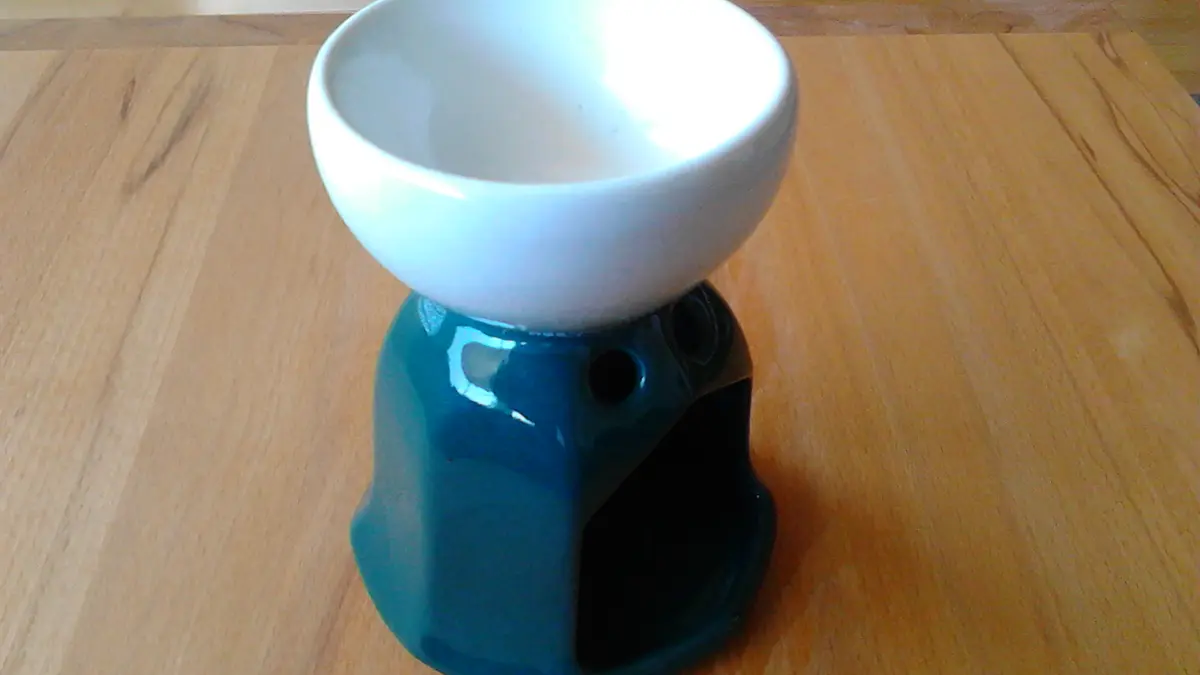

Bottom line: an essential-oil diffuser is a fragrance-delivery device. It releases volatile oil compounds by misting, airflow, evaporation or heat. The word “diffuser” does not describe one standard output or medical effect.
This guide explains the devices and the evidence questions they raise. It does not treat aromatherapy as a substitute for medical care.
What “diffusing” means
Essential oils evaporate because many of their constituents are volatile. A diffuser increases their movement from a liquid or porous material into room air.
The result is an airborne fragrance mixture. It may include vapours, liquid droplets or both, depending on the device.
NCCIH describes aromatherapy as the use of plant essential oils, commonly through inhalation or diluted skin application. That description does not confer proven medical benefit on a diffuser.
The four common types
Ultrasonic diffusers
An ultrasonic unit places water and a small amount of oil above a vibrating disc. The vibration creates fine droplets that leave the reservoir as visible mist.
Oil and water do not form a permanently uniform solution. Output can change as the tank runs, and different units produce different particle sizes and rates.
A chamber study measured both particles and volatile compounds from an ultrasonic diffuser. This is a better physical description than calling the output simple “water vapour”.
Nebulising diffusers
A nebuliser uses moving air to draw concentrated oil into small droplets. It does not need a water tank and can create a stronger exposure over a shorter period.
That intensity is not evidence of greater therapeutic value. It can also make dose comparison difficult when a product does not state output clearly.
Evaporative and fan diffusers
These place oil on a pad, wick or porous surface. Natural airflow or a small fan carries evaporating compounds into the room.
A reed diffuser is a passive version. Liquid moves up the reeds and evaporates continuously, so it cannot be turned off without removing or sealing the source.
Heat and candle diffusers
A heated plate, lamp or candle warms a fragrant material. Heat changes the evaporation rate and may alter the mixture reaching the air.
Candle-powered units add a flame and hot surface. They should never be left unattended or placed near bedding, curtains, children or animals.
What reaches the room?
An oil’s label may name dozens of naturally occurring constituents. Once released, their airborne concentrations depend on amount, temperature, room size, ventilation and indoor chemistry.
A room study measured volatile organic compounds during aroma-oil use. Concentrations differed between products and conditions.
Laboratory work with lemon essential oil found that indoor reactions can produce additional airborne compounds. The smell alone cannot reveal the full mixture.
A 2025 diffuser experiment again recorded both vapour-phase chemicals and particles. Measurements from a chamber cannot be assumed to equal exposure in every home.
A diffuser is not an air purifier
Laboratory antimicrobial activity does not show that ordinary diffuser use disinfects an occupied room. Effective test concentrations, contact times and organisms may not resemble household exposure.
EPA’s indoor-air guidance prioritises controlling pollutant sources and improving ventilation. Adding a scent does not remove particles, damp, smoke, carbon monoxide or allergens.
A diffuser may also mask an odour that signals mould, drainage, overheating or another source needing attention. Investigate the cause instead of covering it.
A diffuser is not automatically a humidifier
An ultrasonic diffuser releases some water droplets. Its intended task remains fragrance distribution, and it may lack the output or control needed to change room humidity meaningfully.
EPA advises measuring humidity and keeping it below levels that cause condensation. A proper humidifier should be chosen and maintained for that purpose.
Do not put essential oil into an ordinary humidifier unless its manufacturer explicitly allows it. Oils can damage tanks, filters, seals and other components.
What the health evidence can establish
A credible trial must identify the oil, delivery method, exposure, comparison and outcome. “Aromatherapy helped” is too vague to transfer between massage, capsules, patches and diffusers.
A systematic review of inhaled essential oils and sleep found promising results alongside substantial study limitations. It did not establish that any diffuser treats every cause of poor sleep.
A controlled diffuser study examined short-term cognitive outcomes as well as emissions. A short experimental exposure cannot answer questions about repeated household use or clinical treatment.
Pleasure, expectation and the surrounding routine can influence subjective outcomes. That does not make the experience unreal, but it does make blinding and suitable controls important.
How to read a product description
- Identify the method: ultrasonic, nebulising, fan, heat or passive evaporation.
- Check the stated tank volume and output, not only a room-size claim.
- Look for timers, automatic shut-off and accessible cleaning surfaces.
- Confirm which oils and cleaning products the materials tolerate.
- Check whether replacement parts and instructions remain available.
- Treat medical, detoxification and air-purification claims sceptically.
Basic safer use
ANSES recommends ventilation and particular caution around people with respiratory conditions. Begin with less fragrance rather than trying to fill the room continuously.
Keep the unit stable and out of reach. Do not aim mist at a face, pillow, cot, animal enclosure or food-preparation surface.
Empty and dry a water reservoir after use. EPA’s humidifier advice explains why standing water and ultrasonic dispersion deserve careful cleaning.
Poison Control warns that reed-diffuser liquids can be dangerous when swallowed or aspirated. Store oils and filled diffusers securely.
My verdict
“Diffuser” is a broad device category, not a standard dose. The most useful comparison begins with the physical method, output, ability to stop exposure and ease of cleaning.
Use one for optional fragrance if everyone present tolerates it. Do not use it to purify air, replace humidity measurement or treat unexplained symptoms.
References
- NCCIH: Aromatherapy
- Ultrasonic diffuser emissions of volatile compounds and particles
- Experimental characterisation of diffuser vapours and particles
- Indoor volatile compounds released by aroma oils
- Indoor emissions from lemon essential oil
- US EPA: Indoor air quality
- US EPA: Use and care of home humidifiers
- ANSES: Essential-oil sprays and diffusers
- ANSES: Essential-oil risks and precautions
- Systematic review of inhaled essential oils and sleep
- Diffuser emissions and short-term cognitive testing
- Poison Control: Reed-diffuser risks