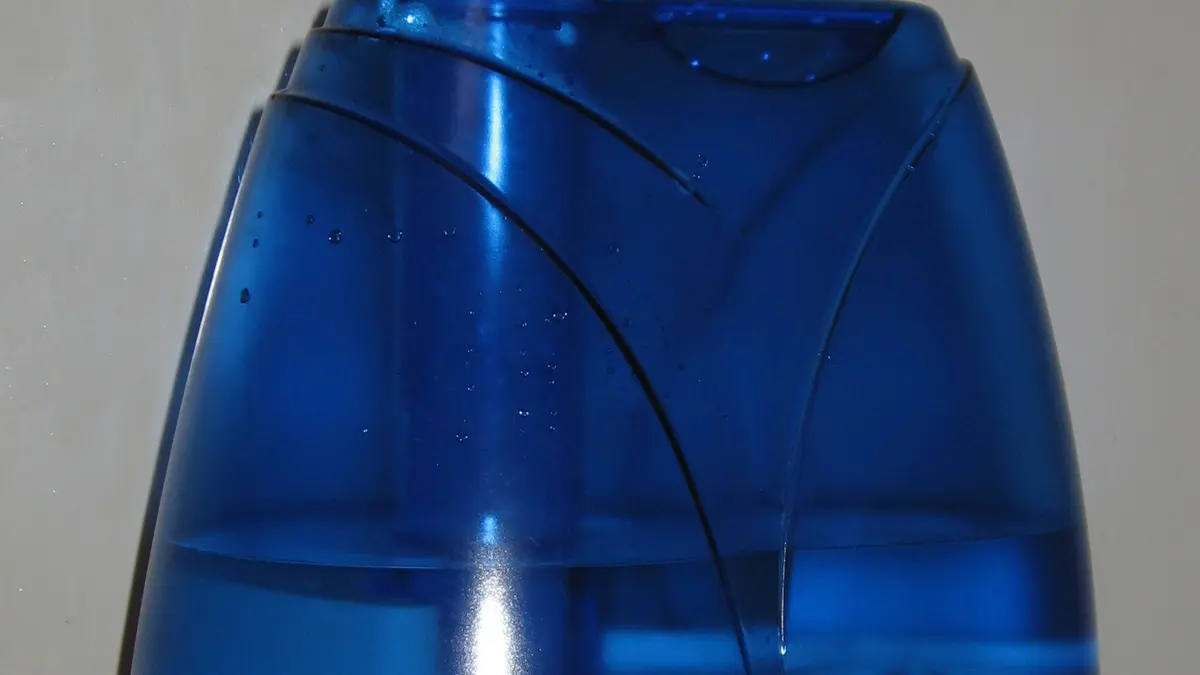

Bottom line: buy a humidifier to raise measured indoor humidity. Buy a diffuser only if you want fragrance. An ultrasonic diffuser may release some water, but it is not a substitute for humidity control.
This guide compares device functions, maintenance and air-quality considerations. It does not assume that adding fragrance improves health.
They solve different problems
A humidifier is designed to add water vapour or droplets to indoor air. Its useful output is judged by how it changes relative humidity in a defined space.
An essential-oil diffuser is designed to distribute volatile fragrance compounds. Some types use water, while others release oil without a water reservoir.
This distinction matters because similar-looking devices may have very different tank sizes, output rates and cleaning instructions. Product words such as “mist” and “ultrasonic” do not establish the intended function.
How the main devices work
An ultrasonic humidifier uses a vibrating element to create fine droplets from reservoir water. The US Environmental Protection Agency explains that ultrasonic and impeller humidifiers can also disperse minerals and microorganisms from their tanks.
An ultrasonic aroma diffuser uses a related mist-making principle, usually with a much smaller reservoir and fragrance added. It is built to spread scent, not to maintain a target room humidity.
A nebulising diffuser uses airflow to disperse concentrated oil without water. Heat diffusers warm a fragrant material, while evaporative and reed diffusers rely on passive evaporation or a fan.
| Question | Humidifier | Essential-oil diffuser |
|---|---|---|
| Main purpose | Raise indoor humidity | Distribute fragrance |
| Typical liquid | Water | Oil, or water plus oil |
| Useful measurement | Relative humidity | No standard health measure |
| Main maintenance issue | Water hygiene and mineral deposits | Oil residue, water hygiene and material compatibility |
| Main exposure | Water droplets or vapour | Volatile fragrance compounds, sometimes with droplets |
Can a diffuser humidify a room?
A water-based diffuser contributes moisture while it runs. That does not show that it can correct dry indoor air across a room or maintain a suitable relative humidity.
Tank capacity alone is not enough. Output per hour, room volume, ventilation, temperature and starting humidity all affect the result.
If humidity is the aim, use a hygrometer and a device whose manufacturer states a humidification output. EPA advises against humidifying above 50 per cent and recommends reducing output if condensation appears.
Persistent condensation can support damp and mould. EPA’s mould guidance treats moisture control as the central preventive measure.
What an aroma diffuser adds to the air
Essential oils contain volatile organic compounds. Their concentration indoors depends on the oil, dose, device, room and ventilation.
A chamber study measured both volatile compounds and particles from an ultrasonic diffuser. It showed that emissions changed with operating conditions, so one test cannot describe every household setup.
A later experimental study also found that diffuser use generated mixtures of vapours and particles. Laboratory measurements identify exposure, but they do not by themselves prove a clinical benefit or harm.
Research on aroma-oil use in rooms has found measurable volatile compounds during operation. Ventilation and product composition strongly influence the concentrations.
ANSES reports irritation and respiratory symptoms in some exposure reports involving essential-oil sprays and diffusers. It recommends ventilation and caution around people with respiratory conditions.
Maintenance is not optional
Standing water can support microbial growth. Emptying and drying the reservoir is more reliable than repeatedly topping it up.
EPA recommends fresh water, daily emptying and drying, and frequent cleaning for portable humidifiers. Follow the manufacturer’s instructions because disinfectants and descalers may damage some devices.
Diffusers also collect oily residue. That residue can affect output, trap debris and degrade seals or plastics. Use only oils and cleaning methods permitted by the device instructions.
Never add essential oil to a humidifier unless its instructions explicitly permit it. Oil can damage components, invalidate a warranty or create an exposure the machine was not designed to deliver.
Which should you buy?
Choose a humidifier when a hygrometer shows dry air and you have a clear reason to increase humidity. Compare stated output, cleaning access, noise, tank design and automatic humidity control.
Choose a diffuser when scent is the objective. Compare the diffusion method, timer, reservoir access, instructions, replacement parts and whether the unit can be cleaned thoroughly.
Choose neither if a pleasant room does not require added moisture or fragrance. EPA places source control and ventilation ahead of adding another indoor emission source.
Health claims need a separate test
NCCIH describes aromatherapy research as limited for many promoted uses. A diffuser purchase should not be treated as a treatment decision.
A study of one oil, dose and outcome cannot validate a device’s broad wellness advertising. It also cannot be transferred automatically between inhalation, massage, capsules and skin products.
If fragrance causes wheezing, chest tightness, headache, nausea or persistent irritation, stop using it and ventilate the room. Seek medical advice for serious or continuing breathing symptoms.
My verdict
A humidifier and an essential-oil diffuser are not interchangeable. The former manages moisture; the latter distributes scent.
For humidity, measure the room and control the output. For fragrance, use the smallest effective amount, allow ventilation and keep the device clean. Neither purchase should be justified by unsupported medical promises.
References
- US EPA: Use and care of home humidifiers
- US EPA: A brief guide to mould, moisture and your home
- US EPA: The inside story on indoor air quality
- ANSES: Vigilance concerning essential-oil sprays and diffusers
- ANSES: Essential-oil risks and precautions
- Ultrasonic diffuser emissions of volatile compounds and particles
- Experimental characterisation of diffuser vapours and particles
- Essential-oil diffuser emissions and short-term cognitive testing
- Indoor volatile compounds released by aroma oils
- Indoor emissions from lemon essential oil
- NCCIH: Aromatherapy
- Poison Control: Essential oils