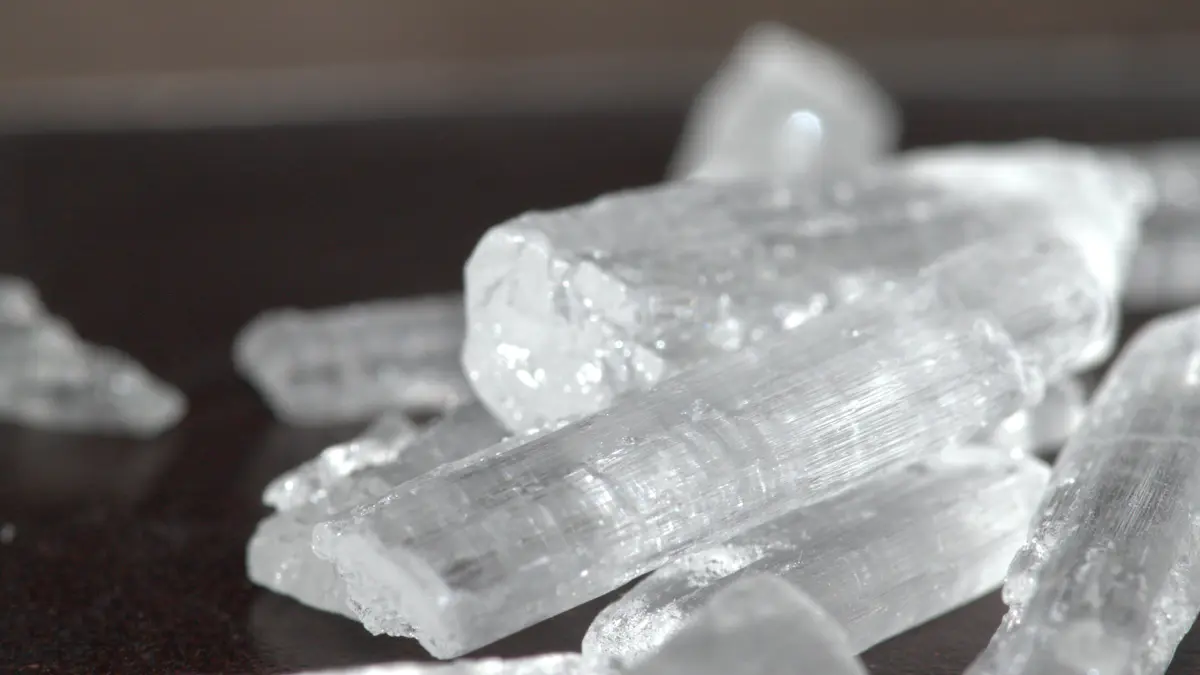

HealthWatchlist verdict: menthol can make nasal breathing feel easier. Human studies do not show that peppermint aroma physically opens a blocked nose or treats its cause.
This Claim Review separates breathing sensation, measured nasal resistance and treatment of infection or allergy.
HealthWatchlist evidence assessment
Peppermint for perceived nasal breathing comfort
Peppermint: Eases perceived nasal breathing discomfort
John’s verdict: Menthol can make breathing feel easier, but the limited evidence does not show that a peppermint-oil diffuser opens blocked airways or treats congestion.
What the evidence shows
A controlled study found that inhaled menthol reduced the sensation of respiratory discomfort. This offers a plausible explanation for the familiar cooling or clearer-breathing sensation associated with peppermint.[1] [2] [3] [4] [5]
Important limitations
The evidence concerns menthol delivered experimentally, not ordinary peppermint oil diffused in a home. A change in sensation is not the same as improved nasal airflow, treatment of infection or relief of the underlying cause of congestion.[1] [2] [3] [4] [5]
Sources used for this score
The claim being tested
Peppermint contains menthol, which produces a cooling sensation. That sensation can create a convincing impression of clearer breathing.
The central question is whether the nose has physically opened. A second question is whether the allergy, viral illness or sinus inflammation causing symptoms has improved.
What the classic studies found
A controlled study measured nasal resistance after menthol exposure. Participants reported an increased sensation of airflow, but the objective measurement did not show a corresponding fall in resistance.
A study of menthol during the common cold also found improved subjective nasal sensation without an objective decongestant effect.
Another controlled experiment found that inhaled menthol reduced respiratory discomfort. It investigated sensation, not an ordinary peppermint-oil diffuser or treatment of nasal disease.
Later experimental work confirmed that cooling sensations can alter perceived nasal patency. Perception and measured airway size remain distinct outcomes.
Why the cooling signal feels persuasive
Menthol activates cold-sensitive sensory pathways. A stronger cooling signal can be interpreted as more air moving through the nose.
A clinical review of menthol and the upper airway describes this sensory effect and the mismatch between perceived benefit and measured resistance.
This explains why a product may feel useful without acting as a conventional decongestant. The comfort is real as an experience, but the interpretation can be wrong.
Peppermint oil is not identical to menthol
A menthol lozenge, a measured vapour and peppermint oil in a diffuser are different interventions. Peppermint oil contains several volatile compounds, and room concentration depends on the device, dose, ventilation and distance.
No study above proves that a household diffuser delivers the tested menthol concentration. It also cannot show that more oil would create more benefit.
Stronger exposure may simply increase irritation, headache, coughing or nausea. A noticeable effect should not be mistaken for an effective dose.
What it does not treat
Nasal blockage can come from a cold, allergy, sinusitis, medicines or structural problems. Peppermint aroma does not remove those causes.
NICE describes sinusitis through nasal blockage or discharge with facial pressure or reduced smell. Assessment and treatment depend on duration, severity and other features.
The US Centers for Disease Control and Prevention explains that most sinus infections are viral. Fragrance exposure does not establish antiviral treatment inside the sinuses.
Safety
NCCIH says evidence about inhaled peppermint-oil safety is limited. It warns against applying peppermint oil to the face of infants or young children.
Do not put essential oil inside the nostrils. Direct contact can irritate sensitive tissue, and oil droplets can be inhaled into the lungs.
Poison Control records irritation, digestive effects and serious neurological effects after substantial ingestion. Keep bottles securely away from children.
People with asthma, migraine or fragrance sensitivity may find menthol or peppermint uncomfortable. Stop exposure if breathing worsens or other symptoms appear.
When symptoms need attention
Seek advice for severe symptoms, persistent fever, worsening facial pain, repeated episodes or symptoms lasting longer than expected. Sudden breathing difficulty needs urgent help.
Young children, pregnant people and those with existing respiratory conditions need product-specific caution. A general “natural decongestant” label is not enough.
My interpretation
Menthol has a repeatable effect on the sensation of nasal airflow. Human experiments do not show that it reliably lowers nasal resistance.
I would describe peppermint as capable of producing a clearer-feeling sensation. I would not describe it as a proven decongestant or treatment for sinusitis, allergy or infection.
References
- Aldren and Tolley: Menthol and nasal resistance
- Aldren and Tolley: Menthol and nasal sensation during a cold
- Nishino and colleagues: Menthol and respiratory discomfort
- Zhao and colleagues: Perception of nasal patency
- Eccles: Menthol and upper-airway sensation review
- Burrow and colleagues: Camphor, eucalyptus and menthol vapour
- Aldren and Tolley: Menthol and nasal sensation
- NCCIH: Peppermint-oil usefulness and safety
- NICE Clinical Knowledge Summary: Sinusitis
- CDC: Sinus infection basics
- Poison Control: Peppermint-oil safety
Editorial responsibility and correction note
Editor: John Hamlen. This article has not been independently reviewed by a clinician.
Reference correction, 12 September 2026: Changes in this check: Correct authors against PubMed metadata. This was a targeted correction, not a comprehensive new review of every claim in this article.
Read our editorial policy, evidence method and corrections policy, including how to report an error.
Does peppermint treat a sinus infection
Research update, 14 September 2026: A cooling sensation does not demonstrate treatment of sinusitis. The menthol trial by Eccles, Jawad and Morris found improved perceived airflow without a corresponding reduction in measured nasal resistance. It did not test bacterial clearance or recovery from a sinus infection.
NHS sinusitis guidance explains that many episodes follow a viral infection and antibiotics are rarely needed. Seek advice if symptoms persist after three weeks of self-care, worsen, or you feel very unwell. Avoid putting peppermint oil inside the nose or adding it to a nasal rinse.
See the sinusitis overview for care options. Targeted searches and accessible primary reports were checked on 14 September 2026; this was not a systematic review.
Additional references
- Eccles R, Jawad MS, Morris S (1990). The effects of oral administration of (-)-menthol on nasal resistance to airflow and nasal sensation of airflow in subjects suffering from nasal congestion associated with the common cold. Journal of Pharmacy and Pharmacology 42:652–654.
- NHS: Sinusitis (sinus infection).