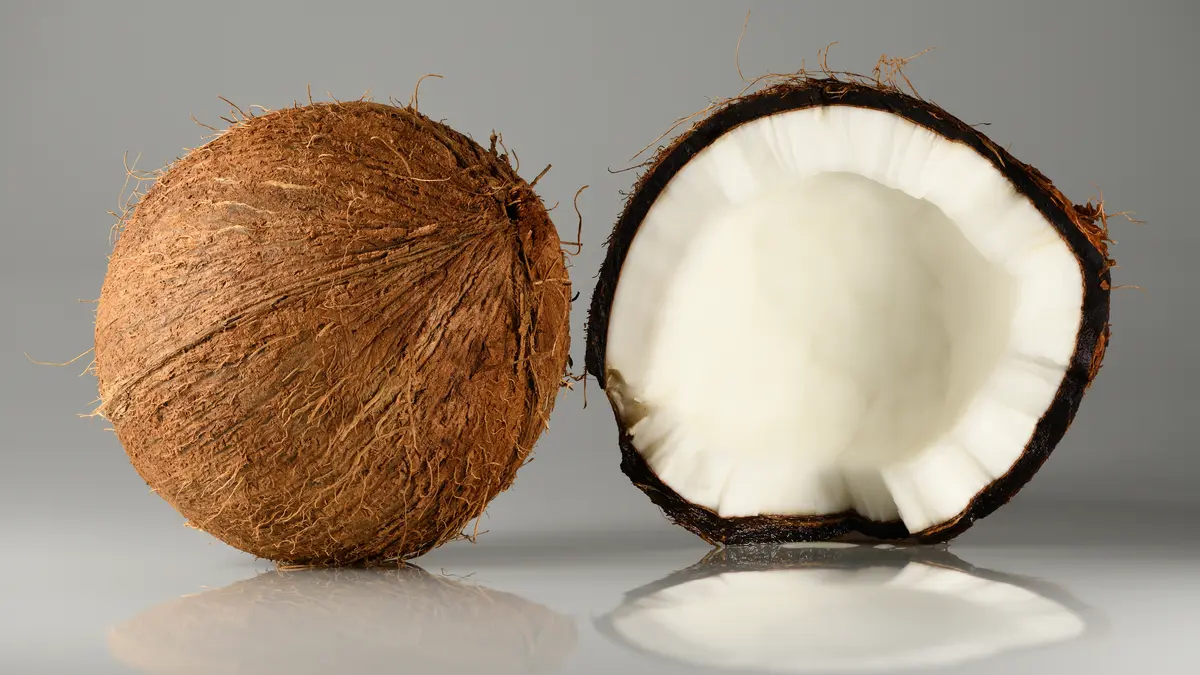

HealthWatchlist verdict: Coconut oil may act as a moisturiser, but that is different from controlling psoriasis. A small controlled psoriasis study found no faster clearance when coconut oil was applied before phototherapy. Positive dry-skin or eczema trials do not overturn that condition-specific result.
Start with the outcome that matters
Dryness, scaling and inflammation can overlap, but improving one does not necessarily control the others. A product that makes skin feel softer should not automatically be described as treating the underlying psoriasis.
Coconut oil is a fatty plant oil, not a distilled essential oil. This distinction matters when evaluating both its evidence and recipes that mix it with fragrant oils.
The direct psoriasis trial
A controlled half-body study tested coconut oil before psoriasis phototherapy. Fourteen patients received PUVA and 15 received narrow-band UVB. Investigators compared psoriasis severity on the treated and comparison sides.
The study found no significant acceleration of clearance in either treatment group. Its result does not support routinely adding coconut oil before those particular irradiation regimens to make psoriasis clear faster.
There are limits: the study was small, concerned a specific timing of application and used particular phototherapy protocols. It did not test every moisturising use of coconut oil or establish that nobody finds it comfortable.
However, it is more directly relevant to the psoriasis claim than a positive study in ordinary dry skin. Ignoring it would give readers an incomplete picture of the evidence.
What the dry-skin trial supports
A randomised trial compared coconut oil with mineral oil in 34 people with xerosis. Over two weeks, both improved hydration and skin surface lipid measurements. The study did not demonstrate a clear superiority of coconut oil.
Participants had negative patch tests to the products before treatment. That selected, short-term population cannot establish universal tolerability or long-term safety in inflamed psoriasis plaques.
The reasonable inference is that coconut oil can have moisturising effects. It is not evidence that it suppresses psoriasis activity, reduces the need for prescribed medicine or prevents future flares.
Why eczema evidence stays separate
A paediatric atopic dermatitis trial compared virgin coconut oil with mineral oil. It reported favourable eczema and barrier outcomes for coconut oil. This is relevant to that preparation and diagnosis.
Atopic dermatitis is not psoriasis. A positive eczema result should be described accurately, without turning it into a psoriasis cure claim or assuming the two disorders respond identically.
A review of vegetable oils discusses effects on the skin barrier and skin disease. Reviews help map plausible uses and remaining questions, but they do not create a missing psoriasis trial.
| Research | Appropriate conclusion |
|---|---|
| Small psoriasis phototherapy study | No demonstrated faster clearance with pre-treatment coconut oil. |
| Short dry-skin comparison | Moisturising effects comparable with mineral oil. |
| Paediatric eczema study | A finding in a different inflammatory skin condition. |
Moisturising within a psoriasis treatment plan
NHS psoriasis guidance includes emollients alongside treatments directed at inflammation. The appropriate plan depends on the affected areas and severity. Persistent joint pain, stiffness or swelling should also be discussed with a clinician.
NHS emollient guidance explains practical use and fire precautions. A tolerated, suitable moisturiser is preferable to repeatedly experimenting on painful skin. Keep affected clothing and bedding away from flames.
If you receive phototherapy, ask the unit which products to use and when. The direct trial illustrates why adding a product immediately before a session should be discussed with the team.
Avoid turning a simple oil into a risky mixture
Fragrant essential oils can cause contact dermatitis. Mixing tea tree, cinnamon or other concentrated oils into coconut oil does not make an evidence-based psoriasis treatment. It adds another exposure with a different risk profile.
Stop a product that causes irritation. New severe symptoms, rapidly worsening skin disease or feeling systemically unwell need prompt medical assessment rather than further experimentation.
Evidence score
John’s Evidence Score: 2/10 for coconut oil controlling psoriasis. This editorial judgement separates plausible moisturising comfort from an unestablished disease-treatment benefit.
The negative phototherapy result should remain visible even when discussing coconut oil’s useful physical properties. Future psoriasis trials would need to show meaningful benefits beyond those of a suitable comparison moisturiser.
How this review was researched
Research checked on 14 September 2026. We searched PubMed for the named oils or preparations and the condition, reviewed the retrieved study abstracts and relevant reviews, and checked the official guidance linked below. This is an editorial review, not an exhaustive systematic review. We distinguish human treatment outcomes from laboratory findings, and identify where a study tested a mixture or a different preparation.
Related reading
- Coconut oil profile
- Psoriasis evidence overview
- Turmeric and psoriasis evidence
- Essential oil safety
References
- Failure of coconut oil to accelerate psoriasis clearance in narrow-band UVB phototherapy or photochemotherapy.
- A randomized double-blind controlled trial comparing extra virgin coconut oil with mineral oil as a moisturizer for mild to moderate xerosis.
- The effect of topical virgin coconut oil on SCORAD index, transepidermal water loss, and skin capacitance in mild to moderate pediatric atopic dermatitis: a randomized, double-blind, clinical trial.
- Vegetable Butters and Oils as Therapeutically and Cosmetically Active Ingredients for Dermal Use: A Review of Clinical Studies.
- NHS: Psoriasis
- NHS: Emollients
- DermNet: Allergic contact dermatitis to essential oils
Related evidence review: Coconut Oil for Eczema: Human Trials, Moisturising Benefits and Limits.