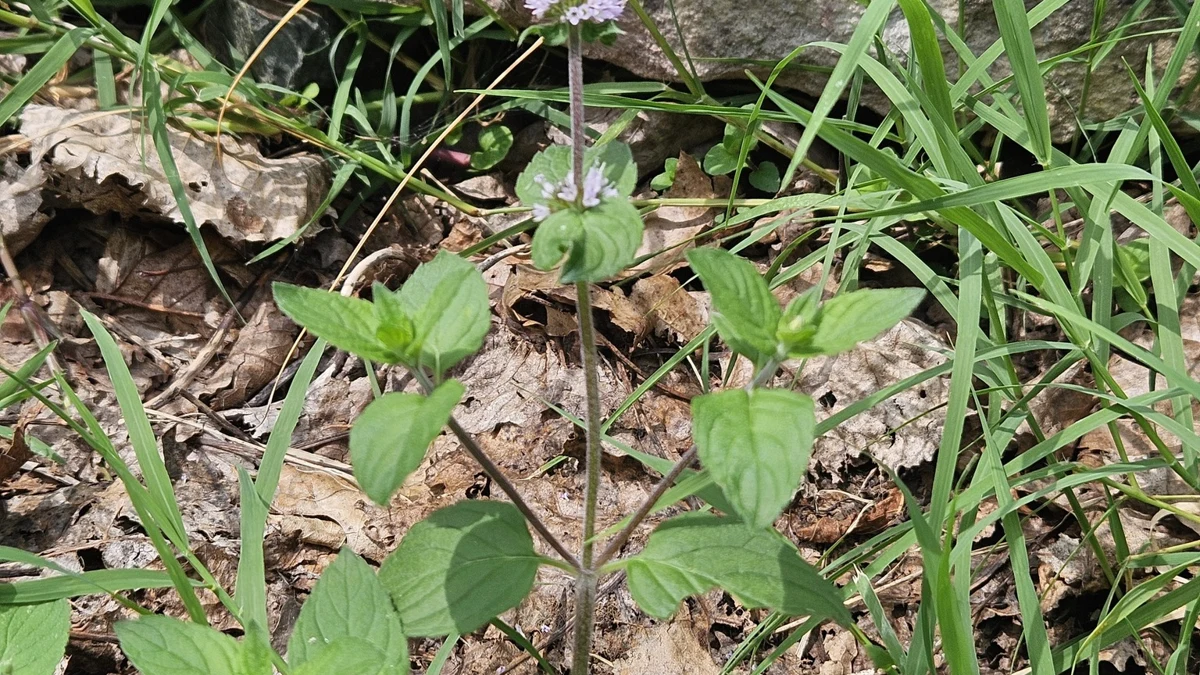

HealthWatchlist verdict: Small human studies suggest that topical peppermint preparations can reduce some types of itching. They do not establish a treatment for every rash, and cooling the skin does not treat an underlying liver, kidney or pregnancy-related problem.
Itch relief and rash treatment are different questions
Peppermint oil is often suggested for an itchy rash because it contains cooling compounds, including menthol. An itch can ease without the cause of a rash changing. A fungal infection, allergic reaction and dry skin need different approaches, even if all three feel itchy.
NHS guidance on itchy skin recommends unperfumed moisturisers and says a pharmacist may suggest a menthol cream. That advice concerns a suitable finished product. It is not an endorsement of rubbing concentrated peppermint essential oil onto inflamed skin.
What the human studies actually tested
A study of 50 people with chronic itching compared a topical peppermint preparation with petrolatum over two weeks. Participants had itching associated with liver disease, kidney disease or diabetes. The peppermint group improved more on the five-domain itch scale.
This is a useful clinical signal, but it is a small, short study across several different causes. The abstract does not clearly establish random allocation or successful blinding. It cannot tell us whether improvement lasts or whether peppermint is appropriate for a particular unexplained rash.
A trial involving 96 pregnant women compared a 0.5% peppermint preparation in sesame oil with placebo for two weeks. It reported a statistically significant difference in itch severity favouring peppermint. This was a defined topical preparation studied after participants had been assessed, not a general test of essential-oil use in pregnancy.
Itching during pregnancy should be discussed with a midwife or GP. The NHS specifically highlights the possibility of a liver condition as a cause. A cooling sensation must not delay that assessment, and this small trial cannot establish safety for all pregnancies.
| Evidence | What it suggests | Important limit |
|---|---|---|
| 50-person chronic-itch study | Short-term symptom improvement | Small sample; several underlying illnesses |
| 96-person pregnancy study | Lower itch severity than placebo | Does not replace assessment or establish broad pregnancy safety |
| Burn-scar hydrogel study | Relief from a combined formulation | Peppermint was only one ingredient; scars were already formed |
The burn-scar study is not evidence for treating fresh burns
A controlled study in 74 people with itchy burn scars tested a hydrogel containing peppermint oil, menthol and methyl salicylate. The formulation reduced itch more than the comparison treatments. Six participants reported skin irritation that resolved after removal.
The result belongs to that combined hydrogel, not to peppermint alone. It also concerns established hypertrophic scars, rather than a recent burn or open wound. Our burns review explains why first aid and wound assessment come first.
What cooling mechanisms can and cannot explain
A review of clinical trials for chronic itching places peppermint among complementary approaches with some human research. Such reviews are useful for finding studies, but they do not make a small trial larger or resolve differences between preparations.
A newer peppermint inhalation experiment in mice studied stress-exacerbated scratching in a dermatitis model. That experiment concerns inhalation, animals and a particular laboratory model. It cannot establish that a diffuser treats eczema or that topical peppermint cures a human rash.
Choosing a safer response to itching
For a new or persistent problem, identifying the cause is more useful than choosing an oil. Seek assessment when itching is severe, widespread, recurrent or disrupting daily life. Changes in a rash, a new medicine or other symptoms are useful details to tell the clinician.
NCCIH notes that peppermint oil can irritate skin. Essential oils can also cause allergic contact dermatitis, which may add a new itchy rash to the original problem. Stop a product that causes burning, redness or worsening itch.
Do not apply concentrated oil, use it near the eyes or genital skin, or give it to a child as a home treatment. If a pharmacist recommends a cooling preparation, follow that product’s instructions. A menthol cream and an essential-oil bottle have different compositions and uses.
Our assessment
Finding: promising symptom relief. Evidence strength: limited human evidence. There is more here than laboratory theory, but the studies are too small and specialised to support peppermint as an all-purpose rash treatment. The most useful conclusion is to distinguish supervised symptom relief from treatment of the underlying disease.
How this review was researched
Research checked on 14 September 2026. We searched PubMed for the named preparation and outcome, read the retrieved study abstracts and relevant reviews, and checked the linked health guidance. This is an editorial review, not an exhaustive systematic review. We identify studies of mixtures, other preparations and different patient groups rather than treating them as interchangeable evidence.
Related reading
References
- Effectiveness of topical peppermint oil on symptomatic treatment of chronic pruritus.
- The effect of peppermint oil on symptomatic treatment of pruritus in pregnant women.
- Effective symptomatic treatment for severe and intractable pruritus associated with severe burn-induced hypertrophic scars: A prospective, multicenter, controlled trial.
- Complementary and integrative remedies in the treatment of chronic pruritus: A review of clinical trials.
- Single Inhalation of Peppermint Essential Oil Alleviates Acute Restraint Stress-Exacerbated Itch in Oxazolone-Induced Mild Dermatitis: Correlations With Brain Neuronal Activity in Female BALB/c Mouse.
- NHS: Itchy skin
- NCCIH: Peppermint oil
- DermNet: Allergic contact dermatitis to essential oils