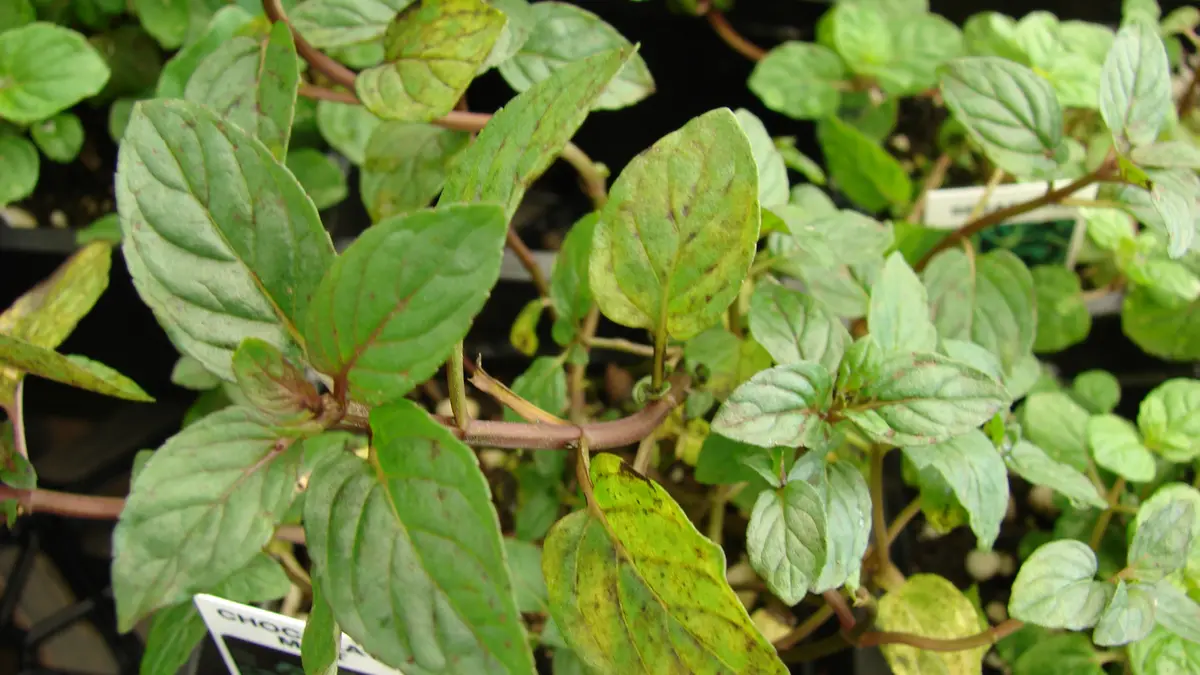

Peppermint essential oil is the concentrated volatile oil distilled from Mentha × piperita. This profile explains the plant, production and traditional use; individual health claims belong in separate Claim Reviews.
Botanical identity
Peppermint is generally described botanically as Mentha × piperita, a hybrid associated with watermint and spearmint. It belongs to the mint family and spreads through underground stems. “Mint oil” is not always peppermint oil, so the botanical name is more informative than the front label alone.
Where peppermint comes from
Peppermint has been cultivated widely in temperate regions. The leaves and flowering tops are harvested for a strongly aromatic oil used in flavouring, fragrance and personal-care products.
How peppermint essential oil is extracted
The essential oil is usually produced by steam distillation of the aerial parts of the plant. Distillation separates volatile aromatic compounds from the bulk plant material. The resulting oil is far more concentrated than fresh mint leaves or a cup of mint tea.
Aroma and composition
Menthol is responsible for much of peppermint’s familiar cooling sensation, while menthone and other constituents contribute to its character. Composition varies with cultivation, harvest and processing.
Traditional uses
Peppermint has a long history as a flavour, fragrance and herbal preparation, particularly in products associated with digestion and a cooling sensation. Traditional use can explain why a claim became popular, but it is not a substitute for testing the exact modern claim in people.
Peppermint claims we have investigated
Peppermint oil and snoring
Menthol can increase the sensation of nasal airflow without consistently reducing measured resistance. That helps explain why a minty scent may feel useful while leaving the snoring question unanswered.
Primary research and its reported outcomes.
Read the peppermint comparison in our snoring guide for the evidence limits, other formulations and signs that need assessment.
Targeted evidence update: 14 September 2026. This section does not represent a new review of every claim on this profile.
Peppermint and tendonitis
Research in other conditions does not establish tendon healing or a recovery benefit. Our oil-specific evidence appraisal explains the studied preparation, comparison and limits. It also sets the claim alongside appropriate care.
Peppermint and jaw pain
Trials of a blended ointment cannot identify this ingredient’s individual effect, and their pain outcomes are mixed. Our oil-specific evidence appraisal explains the studied preparation, comparison and limits. It also sets the claim alongside appropriate care.
Peppermint and plantar heel pain
Peppermint-derived menthol has been tested in combinations, including one plantar-pain product; neither study isolates whole peppermint oil or demonstrates fascia healing. See the detailed plantar-fasciitis comparison for the studies, limitations and care context.
Peppermint and toothache
A small open trial favoured a prepared peppermint formulation for injection discomfort, but excluded emergency dental conditions. It does not establish a home treatment for toothache. See the detailed evidence comparison for the studies, limitations and care context.
Peppermint and psoriasis
L-menthol has laboratory and mouse psoriasis findings. The small human peppermint itch study excluded psoriasis, and burning and contact allergy remain relevant safety concerns. See the detailed evidence comparison for the primary studies, limitations and care context.
Profile sources
- Royal Botanic Gardens, Kew: Plants of the World Online
- National Center for Complementary and Integrative Health: Peppermint oil
Route and diagnosis change the headache claim
The small adult headache trial used topical peppermint for tension-type headache. It did not test a room diffuser. A migraine study used isolated menthol, which is also a different intervention.
The distinction prevents a narrow clinical observation from becoming an unsupported recommendation for all headaches. A sudden, extremely painful or otherwise concerning headache needs assessment rather than another oil preparation.
Targeted evidence update: 12 September 2026. This addition does not represent a new review of every statement on this page.
Related evidence review: Peppermint Oil for Headaches: Tension Headache versus Migraine.
Peppermint capsules and IBS: a preparation-specific medical use
A ten-trial review found a pooled benefit for adult IBS symptoms, but judged certainty very low and found more adverse events. A larger release-formulation trial missed its primary outcomes. These findings concern medicinal capsules, not tea or aromatherapy bottles. NHS peppermint-oil medicine guidance explains the recognised use. Reflux can limit tolerability, and unexplained abdominal symptoms need assessment.
Targeted evidence update: 13 September 2026. This section reviews the specified claim; it does not represent a new review of every statement on this page.
Related evidence review: Peppermint Oil for IBS: Capsule Evidence, Benefits and Limits.
Peppermint relaxation findings need the comparator
Evidence update: 14 September 2026.
A postoperative peppermint trial reported lower anxiety against no aroma intervention. However, a breast-biopsy study found no significant extra benefit from adding peppermint to lavender, and a placebo-controlled patch trial found no faster discharge. These different outcomes support cautious interpretation rather than a general anxiety-treatment claim.
Related evidence review: Peppermint Oil for Relaxation: Positive Anxiety Trials and Important Limits.
New peppermint nausea findings do not resolve every setting
Evidence update: 14 September 2026.
A recent surgical inhalation trial reported fewer combined nausea-or-vomiting events. However, the earlier peppermint-specific pooled comparison was negative for its five-minute nausea endpoint, and a pregnancy trial found no advantage over placebo. Route, cause and timing matter.
Related evidence review: Peppermint Oil for Nausea: What Surgery, Chemotherapy and Pregnancy Trials Show.
Peppermint has small human itch studies, not a general rash cure
Evidence update: 14 September 2026.
A 50-person study reported improved chronic itching with topical peppermint. A burn-scar study used a combined hydrogel, so its findings cannot be assigned to peppermint alone or applied to fresh burns. Itch relief does not treat every underlying cause.
Related evidence review: Peppermint Oil for Itching and Rashes: Human Studies and Safety.