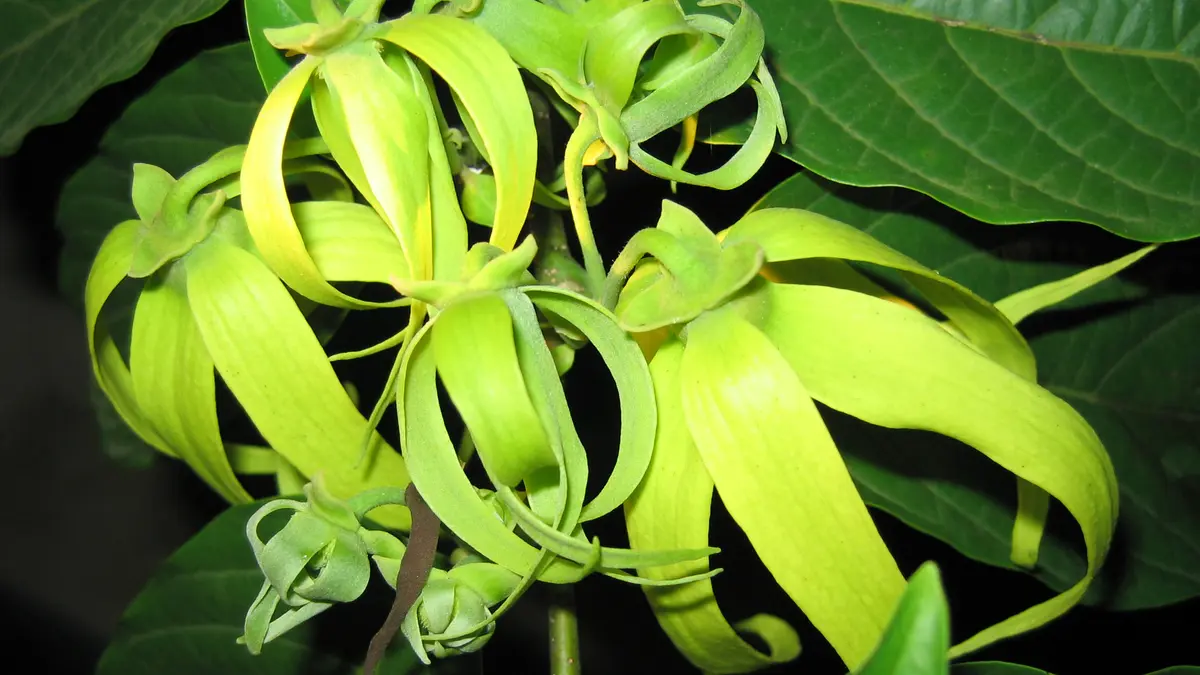

Short answer: ylang-ylang essential oil is distilled from the flowers of Cananga odorata. Its strongest established use is fragrance. Distillation fractions can differ substantially, so “ylang ylang extra”, numbered fractions and complete oil are not interchangeable in research or formulation.
Botanical identity
Cananga odorata is a tropical tree in the custard-apple family, Annonaceae. Its intensely fragrant flowers are distilled for perfumery in several regions, notably the Comoros, Madagascar and parts of South-east Asia. The name ylang ylang may also appear with a botanical variety on technical documents.
The full name matters because “cananga oil” can refer to related commercial material produced under different distillation conditions. A perfume name on the front of a bottle is not enough to establish botanical identity.
How the fractions are made
Ylang-ylang flowers undergo a long steam or water distillation. Producers may collect the distillate in stages. Early, more volatile fractions are commonly sold as Extra or Extra Superior, followed by fractions I, II and III. “Complete” oil may be a continuous whole distillation or a recombination intended to represent it.
These fractions smell and analyse differently. Early material tends to be rich in highly fragrant oxygenated compounds, while later fractions contain more sesquiterpenes. A research result or safety limit for one specified product should not be assigned automatically to every ylang-ylang bottle.
What is it used for?
The defensible use is fragrance in fine perfume, cosmetics, soap and room scent. The oil can contribute floral, creamy, spicy and balsamic notes. Its intensity means that a small amount may dominate a blend, and more is not necessarily more pleasant.
Traditional-use accounts and aromatherapy marketing also describe relaxation, lowered blood pressure, sexual effects, skin benefits and antidepressant action. A review of ylang ylang’s traditional uses and research catalogues many of these ideas, but much of the supporting evidence is preclinical, small or based on outcomes that do not establish treatment of a diagnosed condition.
Relaxation and blood-pressure claims
A pleasant aroma may help someone create a restful setting. Small inhalation experiments have reported changes in subjective calmness or physiological measurements, but scent preferences, expectation, blinding and short follow-up complicate interpretation. A brief change during an aroma session is not evidence that ylang ylang treats an anxiety disorder.
It should never be presented as a way to manage high blood pressure. Blood pressure varies naturally and can fall while someone sits quietly. Demonstrating treatment would require robust trials with a defined oil, dose, comparator, repeated measurements and clinically meaningful follow-up. Prescribed medicines should not be altered because a diffuser feels calming.
Skin and hair claims
Ylang ylang is sometimes marketed for oily skin, acne and hair growth. I could not identify strong controlled human evidence that the essential oil treats these conditions. Antimicrobial or antioxidant tests in a laboratory do not establish that a fragranced cosmetic improves skin without irritation.
The oil is a recognised fragrance sensitisation concern. A safety assessment reports human sensitisation associated with ylang-ylang oil. Someone can enjoy the smell and still develop allergic contact dermatitis after repeated exposure.
Safe use
Use a finished cosmetic within its instructions or keep home use conservative. Do not apply undiluted oil, and avoid eyes, lips, broken skin and improvised intimate products. A patch test cannot guarantee that sensitisation will never develop. Stop after persistent redness, itching, swelling or blistering.
Diffuse briefly in a ventilated room. Headache, nausea, dizziness, coughing or irritation are reasons to stop. Do not swallow the oil. Keep it where children and animals cannot reach the bottle or a filled diffuser.
Buying checks
- Cananga odorata and the flower as the plant part.
- The fraction (Extra, I, II, III or Complete) clearly stated.
- Country of origin, batch number and analytical report.
- A complete ingredient list if the product is diluted or blended.
- No promise to treat hypertension, depression, anxiety, acne or hair loss.
My assessment
Ylang ylang is an important perfume material, not a clinically established multi-purpose treatment. Its fraction and composition deserve more attention than romantic marketing language. I would choose it for aroma, use little, and take its allergy potential seriously.
What would stronger evidence look like?
A convincing relaxation study would identify the distillation fraction and batch, use a credible comparison aroma and register the outcome in advance. It would separate a temporary subjective response from treatment of a diagnosed condition. A blood-pressure claim needs repeated, clinically interpreted measurements and follow-up, not one reading after quiet rest. Skin research must compare complete formulations and report allergy as well as the desired effect.