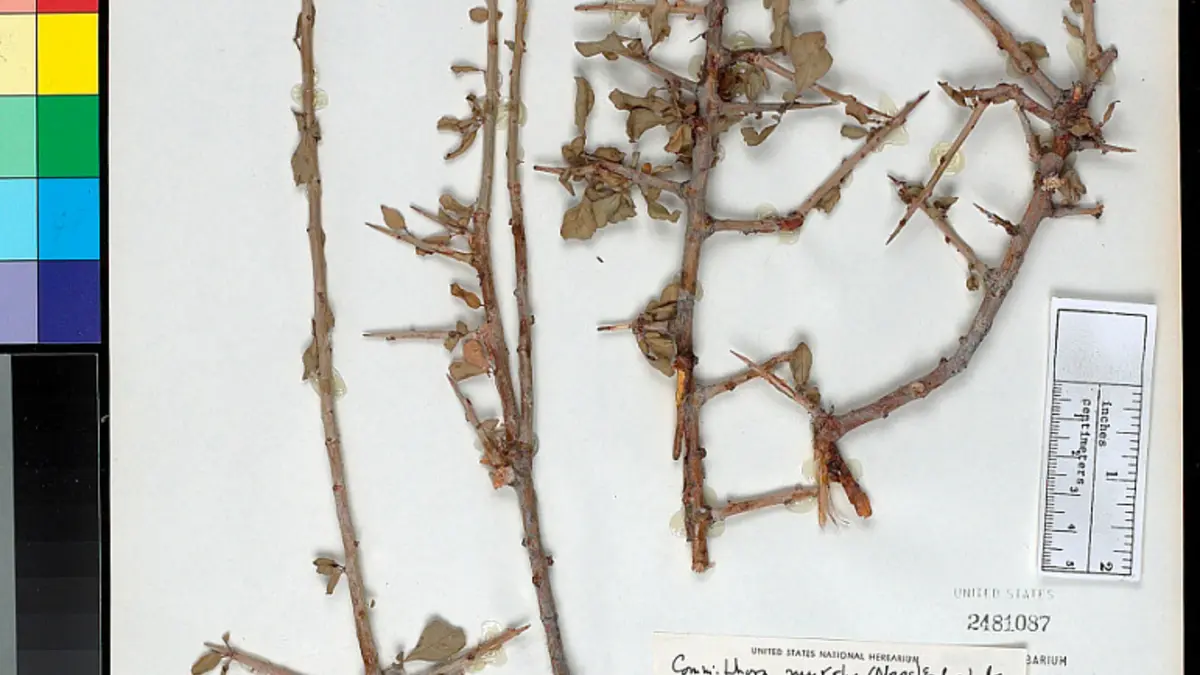

Short answer: myrrh essential oil is distilled from the aromatic resin of Commiphora trees, most often Commiphora myrrha. Resin, tincture, extract and essential oil are different preparations. A long history in incense and traditional medicine does not by itself prove that the distilled oil treats infection, pain or oral disease.
What is myrrh?
Myrrh is a gum-resin released when the bark of certain Commiphora trees is damaged or tapped. It hardens into irregular “tears” that have been traded for fragrance, ritual and medicinal purposes for centuries. A historical and pharmacological review describes this long record, but also shows how many preparations have been grouped under the same name.
The tree commonly associated with medicinal myrrh is Commiphora myrrha, although trade material can involve other species. Botanical identification and origin therefore matter, particularly when a product makes a specific chemical or therapeutic claim.
Resin, oil and extract are not interchangeable
Steam distilling the resin produces a volatile essential oil. Alcohol tinctures and other extracts carry a different range of compounds, while burning resin creates smoke and new combustion products. A review of myrrh chemistry and biological research includes multiple preparations; each result must be traced back to the substance actually tested.
Myrrh oil is usually balsamic, earthy and smoky. Sesquiterpenes and furanosesquiterpenes contribute to its profile. Composition varies with species, origin, storage and distillation, so a generic list cannot authenticate a retail batch.
Oral-care claims
Myrrh appears in some mouthwashes and traditional oral products. Laboratory experiments have reported activity against selected microorganisms; one study tested bactericidal effects of myrrh preparations in vitro. That does not show that neat essential oil cures gum disease, an abscess or persistent bad breath.
A finished mouth product has a defined formulation, contact time and warning label. Putting essential oil directly on gums may burn tissue and can delay diagnosis of decay, periodontal disease or infection. Persistent bleeding, swelling, pain, a loose tooth or facial swelling needs dental assessment.
Wound, pain and infection claims
A bibliometric study mapped publication patterns in frankincense and myrrh research. It describes the research landscape rather than pooling clinical treatment outcomes. Publication volume cannot establish that a home blend treats wounds or replaces an antimicrobial medicine.
A wound is not an appropriate place to test an uncertain fragranced mixture. Irritation and allergic reactions can complicate healing, while infection may require cleaning, vaccination review, antibiotics or other care depending on the injury.
Fragrance use
Myrrh’s clearest role is aromatic. It is used as a warm base note in perfume and incense-style compositions. Brief diffusion can provide scent, but burning resin or incense adds smoke and fine particles; that should not be described as air purification. Ventilate and avoid smoke or strong fragrance around people with asthma or sensitivity.
Safety
Do not swallow myrrh essential oil. Evidence about a standardised medicine, mouthwash or traditional resin preparation does not define a safe oral dose for a retail oil. Avoid neat application, the eyes, mucous membranes and broken skin. Stop after burning, rash or swelling.
Pregnancy is a reason for particular caution because reliable safety data for concentrated myrrh oil are lacking and traditional sources have sometimes attributed uterine effects to myrrh preparations. Keep it out of reach of children and animals. Seek prompt poisons advice after accidental ingestion.
Buying checks
- Full species name and resin as the source material.
- Steam distillation stated if the product is sold as essential oil.
- Country of origin, batch number and analytical report.
- No suggestion that resin history proves the distilled oil cures infection.
- No instruction to apply neat oil inside the mouth or to a wound.
My assessment
Myrrh is culturally important and chemically interesting, but its evidence is frequently inflated by merging resin, extracts, mouthwashes and essential oil. I would use the distilled oil for fragrance only. Dental symptoms, wounds and infections deserve established care, not a concentrated home remedy supported mainly by laboratory results.
What would stronger evidence look like?
An oral-care study would identify the Commiphora species, preparation and concentration, then compare a standardised finished product with established care. It would measure clinical outcomes such as inflammation or healing, not only microbial growth in a dish, and report mucosal irritation. Wound research would need an equally clear diagnosis, formulation, safety protocol and follow-up. Evidence for tincture or resin cannot fill those gaps for distilled oil.
Myrrh and psoriasis
Myrrh water extract has psoriasis-like cell-model findings, with some null results and toxicity at the highest tested concentration. This is not evidence that distilled myrrh oil treats human plaques. See the detailed evidence comparison for the primary studies, limitations and care context.
Myrrh and rashes
Myrrh has laboratory itch-mediator findings, but no controlled general rash-treatment trial was located. Published contact-allergy reports and differences between resin extracts and oil are important limitations. See the detailed evidence comparison for the primary studies, limitations and care context.
Myrrh and wrinkles
Myrrh evidence consists chiefly of laboratory lipid and cell experiments. Collagen markers, guggul extracts and yeast UV tests do not establish human wrinkle improvement. See the detailed evidence comparison for the primary studies, limitations and care context.
Sources
- Historical and pharmacological review of myrrh
- Review of myrrh chemistry and research
- Bibliometric analysis of frankincense and myrrh research
- Laboratory bactericidal study
- NHS: gum disease
Editorial responsibility and correction note
Editor: John Hamlen. This article has not been independently reviewed by a clinician.
Reference correction, 12 September 2026: Changes in this check: Distinguish publication mapping from clinical evidence synthesis; Correct bibliographic description against source record. This was a targeted correction, not a comprehensive new review of every claim in this article.
Read our editorial policy, evidence method and corrections policy, including how to report an error.
Related evidence review: Myrrh Oil for Toothache: What Mouthwash Trials Really Show.