.jpg)
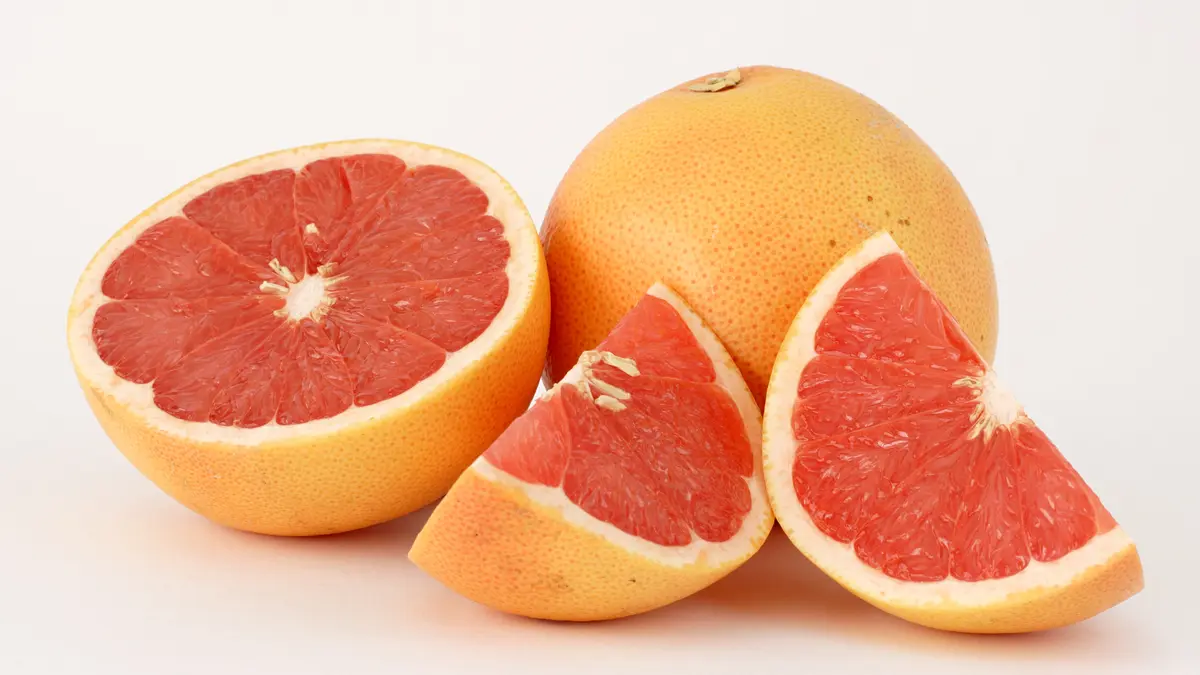
Short answer: grapefruit essential oil is usually expressed from the peel of Citrus × paradisi. It is valued mainly for fragrance. Expressed citrus oils may contain light-reactive compounds, while evidence about eating grapefruit or drinking its juice does not automatically apply to smelling or applying the peel oil.
Botanical identity and extraction
Grapefruit is a citrus hybrid generally known as Citrus × paradisi. Commercial oil is commonly obtained by mechanically expressing the coloured outer peel during juice processing. A steam-distilled grapefruit oil is also possible, but it is a chemically different material because less volatile peel compounds do not all pass through distillation.
A review of grapefruit chemistry and pharmacology describes limonene as a major volatile constituent and also covers many non-volatile substances present elsewhere in the fruit. This breadth is precisely why “grapefruit research” cannot be treated as a single category.
Aroma and composition
The expressed oil has a fresh, bitter-sweet citrus smell. Limonene is usually dominant, with smaller constituents shaping the recognisable grapefruit character. Variety, fruit maturity, processing, storage and oxidation all alter the final profile.
A label should state the botanical name, peel as the plant part and whether the oil was expressed or distilled. “Pink grapefruit” may describe the cultivar or aroma, but it does not replace those facts. A batch number and current chromatogram provide more useful evidence of identity than an unregulated purity slogan.
Mood, weight and “detox” claims
Grapefruit oil is promoted for alertness, appetite control, fat burning, lymphatic drainage and detoxification. I could not identify persuasive human evidence that inhaling or applying the essential oil produces meaningful weight loss. Animal or laboratory work on isolated constituents does not establish that a room scent changes human energy balance.
A fresh aroma may be enjoyable and may fit a person’s morning routine. That subjective use is different from treating depression, suppressing appetite or altering metabolism. “Detox” has no useful meaning here unless a specific substance, measurement and elimination pathway are identified.
Grapefruit and medicine interactions
The US Food and Drug Administration warns that grapefruit juice can change the levels of certain medicines. The best-known interactions involve non-volatile furanocoumarins in juice and fruit products. This does not prove that ordinary inhalation of grapefruit peel oil causes the same interaction.
It also does not make swallowing an essential oil sensible. Retail oils vary, oral dosing is not established for home aromatherapy and a product may contain constituents or additives not characterised by food-interaction research. Anyone taking a medicine with a grapefruit warning should ask a pharmacist about the actual product and route rather than rely on a blanket internet claim that the oil is either always dangerous or always exempt.
Phototoxicity
Some expressed citrus oils contain furanocoumarins that can increase the skin’s reaction to ultraviolet light. The risk depends on the species, extraction, composition, concentration and UV exposure. A steam-distilled oil may differ, and some commercial oils are processed to reduce phototoxic constituents.
Do not assume that a home dilution is safe in sunlight merely because it smells weak. Follow the finished product’s sun-exposure warning and do not use an uncertain expressed oil on skin before sunbathing or a tanning device. Redness, burning or blistering after oil and UV exposure needs appropriate medical advice.
Other safety points
Limonene-rich oils oxidise in air. Oxidised material is more likely to cause skin sensitisation, so keep the bottle tightly closed, cool and away from light and discard it if its smell or texture has clearly changed. Avoid neat application, eyes, lips, broken skin and ingestion. Diffuse briefly with ventilation and stop after irritation, headache or nausea.
Buying checks
- Citrus × paradisi and peel stated.
- Expressed or steam-distilled extraction identified.
- A clear phototoxicity statement for topical use.
- Batch and storage information.
- No promise to burn fat, detox the body or replace treatment for low mood.
My assessment
Grapefruit oil is most defensible as a fragrance. Its health claims are commonly built by mixing research on juice, whole fruit, isolated constituents and essential oil. I would keep those preparations separate, take expressed-oil phototoxicity seriously and ask a pharmacist about medicines rather than extrapolate from either reassuring or alarming marketing.
What would stronger evidence look like?
A trial of a weight, mood or skin claim would need to identify expressed or distilled oil, analyse the batch and measure the actual outcome over a suitable period. It should not use limonene research as a substitute for the complete product. A topical study must record ultraviolet exposure and reactions, while medicine-interaction research would need to test the specific route and furanocoumarin content rather than infer risk from grapefruit juice.
Grapefruit oil and snoring
Brief waking exposure increased diastolic blood pressure and sympathetic activity in small human experiments. The studies did not test sleep or snoring.
Read the grapefruit comparison in our snoring guide for the findings and their limits.
Targeted evidence update: 14 September 2026. This section does not represent a new review of every claim on this profile.
References: Kawai E et al. Journal of Physiological Sciences. 2020;70:2; Kawai E et al. Heliyon. 2025;11:e42766.
Grapefruit and jaw pain
Grapefruit’s reported colonoscopy benefit concerned abdominal discomfort in an anxious subgroup. It does not establish relief of TMD pain or teeth grinding. See the detailed evidence comparison for the studies, limitations and care context.