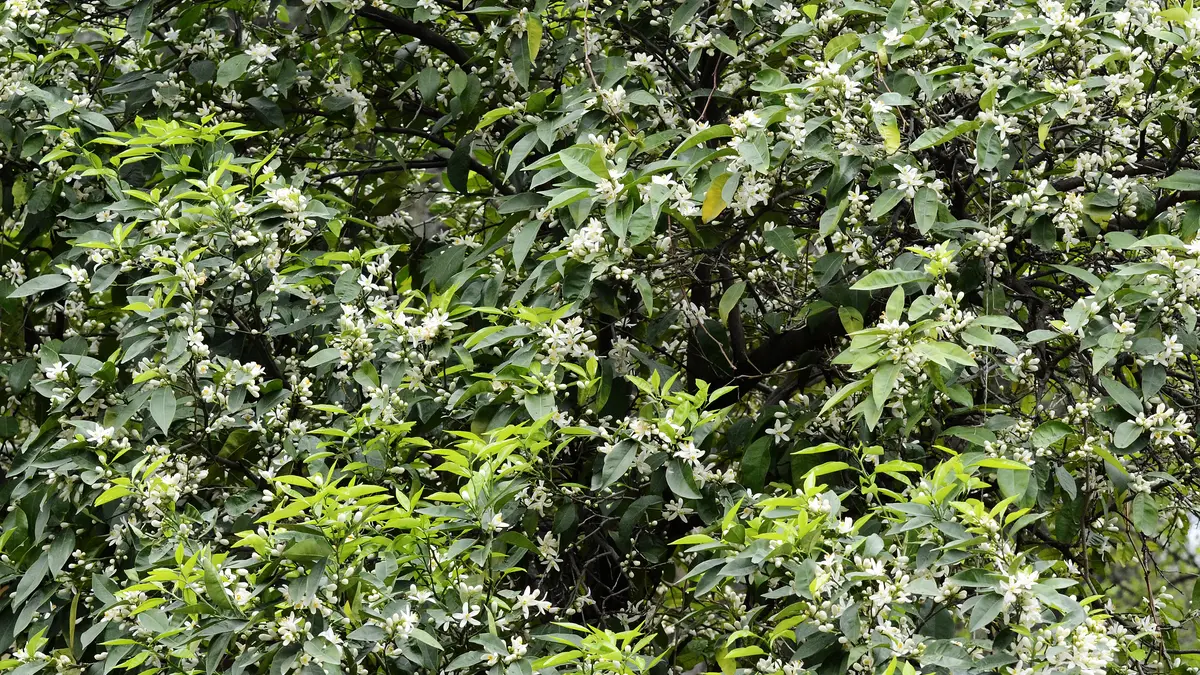

Short answer: petitgrain is normally the essential oil distilled from the leaves and young twigs of bitter orange, Citrus aurantium. It is not neroli and it is not orange-peel oil. Its chemistry is well described, but direct human evidence for anxiety, sleep, pain or skin-treatment claims is very limited.
Three oils from one tree
Kew provides the botanical record for Citrus aurantium. The plant can yield several commercial materials. Neroli is distilled from flowers, petitgrain from leaves and twigs, and bitter-orange peel oil from the fruit peel. The plant part and extraction method determine which product is present.
A seller who uses research on neroli to support petitgrain is changing the intervention. A review of bitter-orange flowers, for example, is useful for understanding neroli-related research but does not establish the effects of leaf-and-twig oil.
Chemistry depends on material and season
Petitgrain bigarade commonly contains linalyl acetate, linalool and other volatile compounds, but proportions vary. Research on seasonal variation in bitter-orange leaf oil illustrates why harvest and environment matter. A batch chromatogram is more informative than a generic list copied from a supplier.
Composition data establish what was analysed, not whether it treats a health condition. Two oils with similar headline constituents may still differ in minor compounds, oxidation state and exposure.
What evidence is available?
Human clinical research specifically on petitgrain oil is sparse. Much of the accessible literature concerns chemistry, food or feed safety, laboratory antimicrobial activity, or different bitter-orange preparations. An EFSA assessment considered bitter-orange leaf oil in the tightly defined context of an animal-feed additive. It is not approval to swallow an aromatherapy product and does not prove treatment effects in people.
Laboratory findings can identify activity worth investigating, but they cannot demonstrate that diffusion treats anxiety or that a skin blend cures infection. A useful human trial would identify the exact oil, compare it with a credible aromatic control, report adverse effects and measure a defined outcome over a meaningful period.
Claims about relaxation and sleep
A pleasant fragrance can contribute to a bedtime or relaxation routine, just as music, lighting or a familiar environment can. That does not establish a pharmacological treatment for insomnia or an anxiety disorder. Smell also makes aromatherapy trials difficult to blind, so expectation and personal preference may influence results.
Persistent sleep difficulty or anxiety can have medical, psychological, environmental and medicine-related causes. Petitgrain should not delay assessment or replace evidence-based care.
Why related citrus evidence is not interchangeable
Using one botanical species does not make every preparation equivalent. Flowers, leaves and peel perform different functions in the plant and contain different volatile mixtures. Extraction can also change which compounds enter the final material. A study title that says only “bitter orange” needs its methods checked before it is used to support petitgrain.
The same rule applies to safety. An expressed peel oil may contain photoreactive compounds that are less relevant to a distilled leaf oil, while a leaf oil can present its own irritation or allergy risks. The actual batch and route of use must guide the conclusion.
Safety
Petitgrain is produced differently from expressed citrus peel oil, so phototoxicity must be assessed from the actual product rather than assumed from the word “citrus”. It can still irritate skin or trigger fragrance allergy. Essential oils are recognised causes of allergic contact dermatitis.
- Do not swallow petitgrain essential oil.
- Do not apply it undiluted or near the eyes.
- Use finished cosmetics according to their instructions.
- Diffuse sparingly with ventilation, especially around asthma or migraine.
- Keep concentrated oils away from children and pets.
Buying checklist
- The label names Citrus aurantium, leaf and twig, and steam distillation.
- The product is clearly separated from neroli, peel oil and fragrance oil.
- Origin, batch number and chemical analysis are available.
- The seller does not borrow clinical claims from other bitter-orange preparations.
- Use and safety instructions are specific rather than vague.
My assessment
Petitgrain is a valid, distinctive fragrance material, but its health reputation is supported mainly by composition data, tradition and inference from other citrus products. Direct human treatment evidence is inadequate. Enjoyment of the aroma is a defensible reason to use it cautiously; treating anxiety, insomnia, infection or pain is not.
References
- Kew Plants of the World Online: Citrus aurantium
- Review of bitter-orange flowers, chemistry and research
- Study of seasonal variation in bitter-orange leaf oil
- EFSA assessment of bitter-orange leaf oil in animal feed
- Clinical review of allergic contact dermatitis from essential oils
- Poison Control guidance on essential-oil exposure