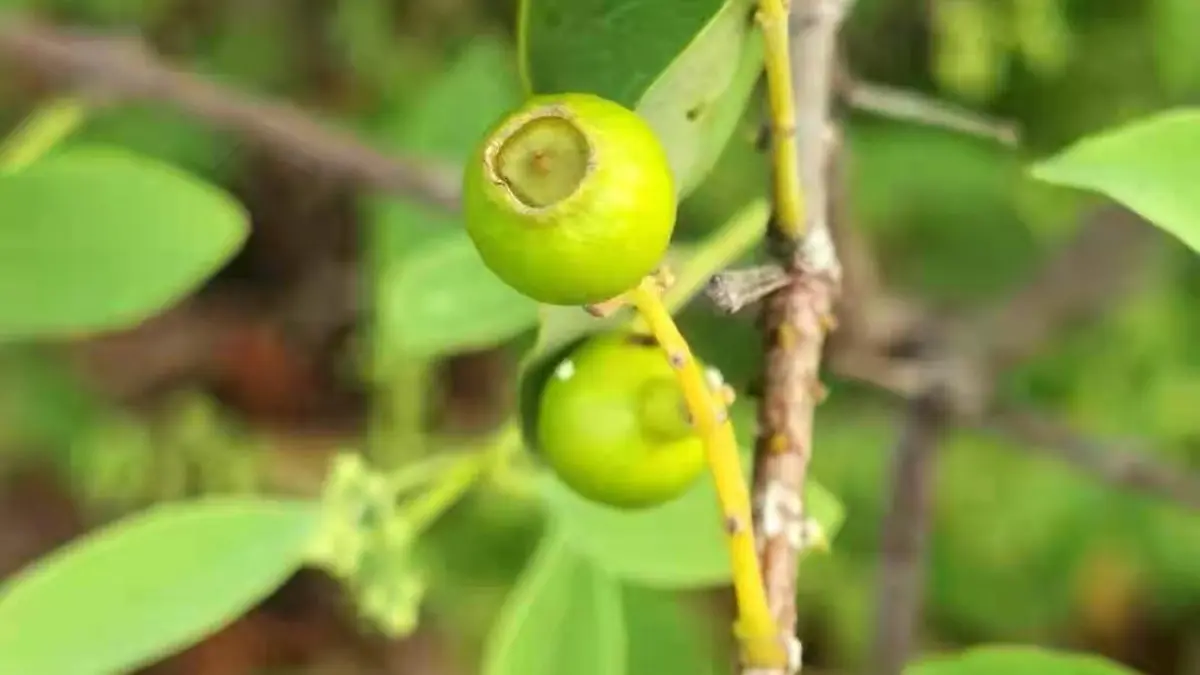

HealthWatchlist verdict: A positive early report made sandalwood look promising for eczema. However, later placebo-controlled registry results show similar response proportions with sandalwood cream and its base. A clear added benefit is not established, and ordinary bottled oil is not a substitute for eczema care.
Why the claim deserves a closer look
East Indian sandalwood oil comes from Santalum album. Researchers have investigated a defined pharmaceutical preparation, rather than simply recommending that people add drops to a moisturiser. That distinction matters before interpreting any encouraging result.
A dermatology review describes sandalwood’s proposed anti-inflammatory uses. It provides context for the research programme, but a favourable review is not another independent clinical trial. The same early findings can appear in several publications.
The encouraging early report
A 2018 paper combines laboratory work with a paediatric eczema report. The uncontrolled study used a regimen of three products containing sandalwood and colloidal oatmeal. Its abstract reports that 75% achieved more than a 50% reduction in EASI.
The full text is inconsistent about participant numbers: the methods describe 25 enrolled and 22 completing, while the figure caption gives 32. This makes the headline response percentage harder to interpret confidently.
EASI measures eczema area and severity. A reduction of that size can matter to a patient, but the percentage alone does not tell us how much improvement the cream caused. We need an adequate comparison group.
The paper also reports effects on inflammatory pathways and phosphodiesterase activity. An effect on an enzyme in an experiment does not make sandalwood interchangeable with a licensed medicine targeting a related pathway.
Some authors were affiliated with the company developing the preparation. Commercial involvement does not invalidate a result, but it strengthens the case for transparent reporting and independent confirmation.
The later controlled trial changes the picture
The posted results for trial NCT02871479 deserve attention alongside the positive publication. This randomised, double-blind, 28-day study enrolled 71 participants across two sandalwood-cream strengths and a vehicle cream.
Safety was the primary outcome. A secondary measure recorded participants achieving at least a 50% EASI reduction at any point during treatment. The registry reports these response counts:
| Group | Responders in the reported analysis |
|---|---|
| 5% sandalwood cream | 17 of 35 |
| Vehicle cream | 12 of 23 |
| 10% sandalwood cream | 6 of 11 |
The proportions are similar. No formal statistical comparison accompanies this outcome in the posted results, so it would be wrong to claim a calculated non-significant result. The data do not demonstrate a clear advantage for sandalwood.
These are participant counts, despite the registry outcome title referring to percentages. The trial is small, the groups are uneven, and its duration differs from the earlier report. It does not prove that every sandalwood formulation is ineffective.
Why improvement with a cream is not enough
Eczema fluctuates. A cream base may itself moisturise, and trial participation can change how consistently people look after their skin. A before-and-after improvement cannot separate these influences from the added ingredient.
The controlled result should therefore carry more weight than an isolated success percentage. It would be misleading to describe sandalwood as clinically proven while omitting the vehicle group.
A review of alternative eczema treatments also judged the evidence insufficient for a recommendation. It covered research through May 2018, so it should not be mistaken for an assessment of the later posted registry results.
Fragrance can create another skin problem
A multicentre investigation of people with suspected fragrance allergy included sandalwood among relevant allergens. This selected patient group cannot tell us the allergy rate in everyone who uses sandalwood.
Nevertheless, essential-oil contact allergy is a recognised cause of dermatitis. A fragrant product can aggravate the problem someone is trying to soothe. “Natural” does not mean suitable for an already inflamed skin barrier.
Do not put concentrated sandalwood oil on eczema or make a home version of the study creams. Their listed concentrations are research details, not dilution instructions. Stop a new product if it causes irritation.
What to do instead
NHS guidance explains how emollients support dry, inflamed skin. Choose a suitable product with a pharmacist or clinician rather than altering a tolerated moisturiser with fragrance. Keep emollient-contaminated clothing and bedding away from flames.
Established eczema care includes moisturisers and appropriate anti-inflammatory treatment. Seek urgent GP or NHS 111 advice if eczema becomes painful, hot, swollen, weeping or pus-filled, suddenly worsens, or comes with fever or feeling unwell.
Evidence score and conclusion
John’s Evidence Score: 2/10 for an added eczema benefit from sandalwood-containing creams. There is direct human research, but the controlled registry result does not establish superiority over the base.
This score is an editorial judgement, not a probability of improvement. For ordinary bottled sandalwood oil, the clinical extrapolation is weaker still. Better independent trials would need to show a reproducible benefit over a suitable vehicle.
How this review was researched
Research checked on 13 September 2026. We searched PubMed for the named oils or preparations and the condition, followed relevant review references, checked relevant trial-register results where available, and checked the official guidance linked below. This is an editorial review, not an exhaustive systematic review. We distinguish human treatment outcomes from laboratory findings, and identify where a study tested a mixture or a different preparation.
Related reading
References
- Sandalwood Album Oil as a Botanical Therapeutic in Dermatology.
- East Indian Sandalwood Oil Is a Phosphodiesterase Inhibitor: A New Therapeutic Option in the Treatment of Inflammatory Skin Disease.
- ClinicalTrials.gov: SAN007 atopic dermatitis trial NCT02871479, posted results
- Alternative Treatments for Atopic Dermatitis: An Update.
- Fragrance contact dermatitis: a worldwide multicenter investigation (Part I).
- DermNet: Allergic contact dermatitis to essential oils
- NHS: Emollients
- NHS: Atopic eczema