_(Baltics)_2.jpg)
“Amber essential oil” is not one standard botanical oil. The name may describe a fragrance blend, an infused carrier oil or a product made by heating fossilised resin.
Amber is not a plant species
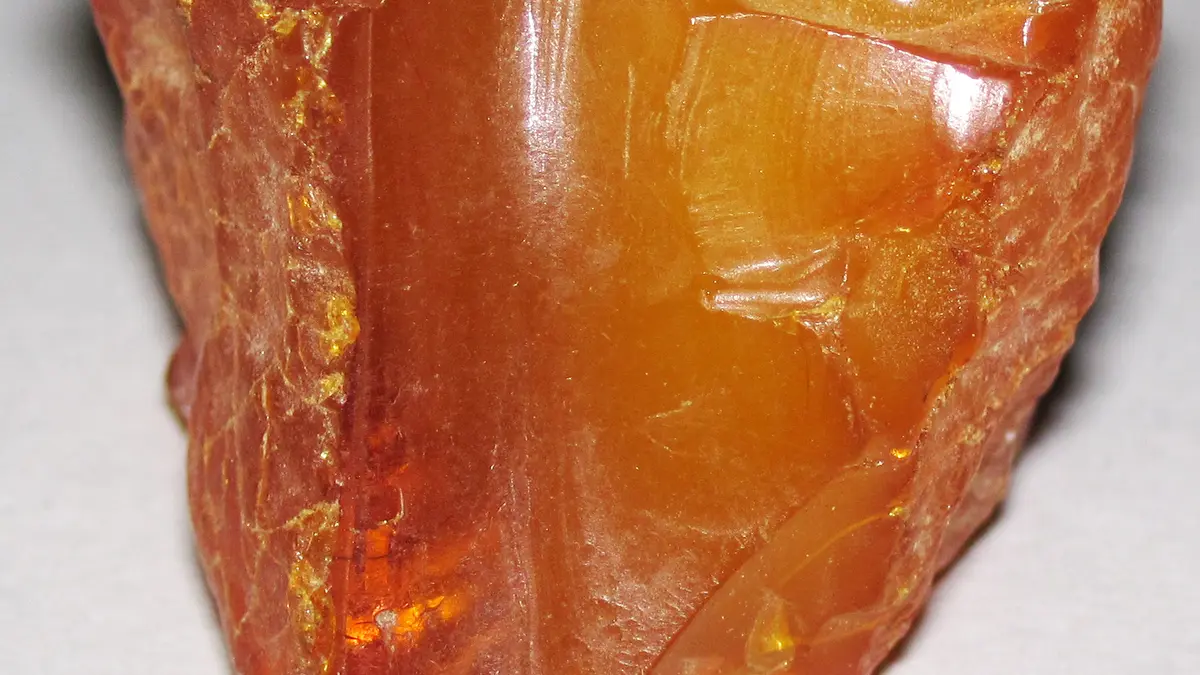
Conventional essential oils are volatile materials obtained from an identified plant. Amber is hardened ancient tree resin, not the current leaf, flower, peel or wood of one named species.
The J. Paul Getty Museum explains how buried resin hardens and polymerises as amber forms. Fully polymerised amber has lost the volatiles found in the original resin.
That makes “amber essential oil” an imprecise trade name. There is no single botanical identity or composition that every seller must mean by it.
What might be in the bottle?
- A fragrance accord. Several aromatic materials may be blended to create a warm, resinous “amber” smell.
- An infused oil. A carrier oil may be scented with resin or other materials.
- A distillation product. Heating or dry distillation of fossil resin can produce an aromatic material sold under an amber-oil name.
- A diluted perfume material. The product may already contain a carrier or solvent.
These products can smell related while having different ingredients and hazards. The front label is not enough to identify them.
How to assess an amber-oil product
Read the full ingredient list, intended use and warnings. Look for the manufacturer’s name, batch details and a clear statement about dilution. Do not assume “100% natural” tells you what the product contains.
If the seller presents amber as a single essential oil but gives no botanical name or production method, ask for clarification before buying. A responsible answer should identify the actual aromatic materials.
Health claims
Findings about frankincense, pine, lavender or another named oil cannot support an unspecified amber fragrance. The ingredients must be known before a health claim can even be framed properly.
The FDA notes that an aromatherapy product’s intended use and claims affect how it is regulated. Plant origin does not by itself establish safety or effectiveness.
Safety
Use the product only for its stated purpose. Do not swallow it, apply it neat or add it to a diffuser unless the manufacturer clearly identifies that use.
Stop after skin irritation, headache, coughing or breathing discomfort. If the ingredients are not disclosed, the safest assumption is that allergy, medicine and pregnancy questions cannot be answered from the word “amber”.
Evidence scores for amber products
No Claim Review is currently linked to this oil. Traditional use or a marketing claim is not enough to assign an Evidence Score.