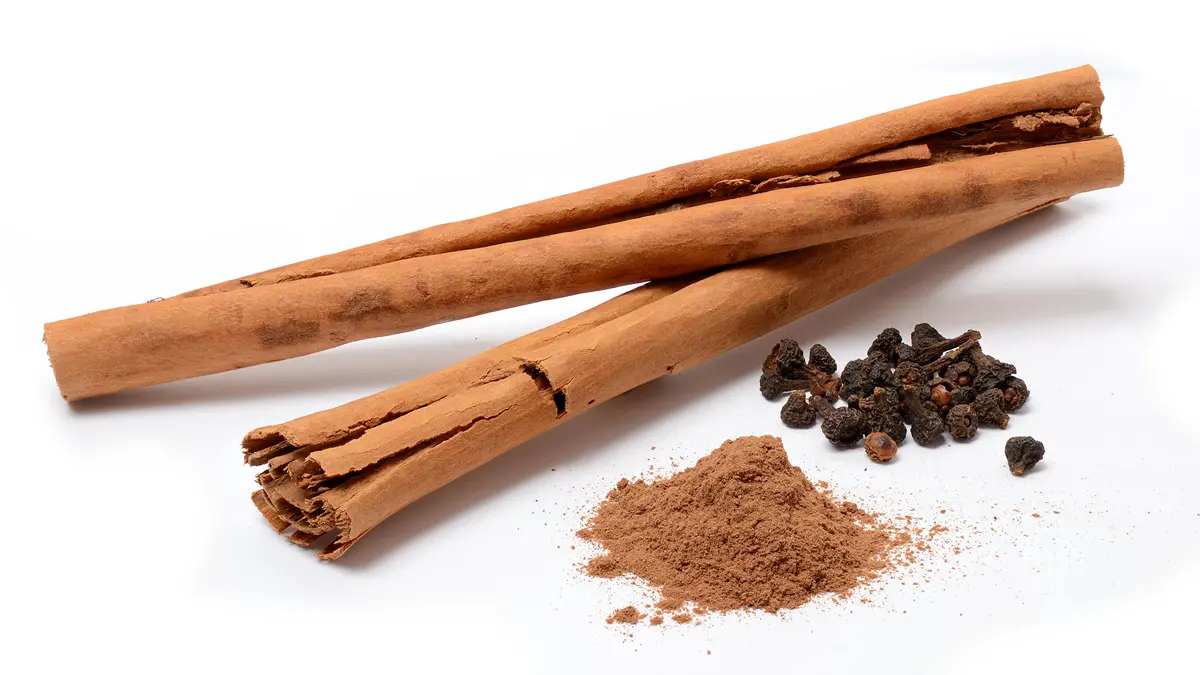

HealthWatchlist verdict: Cinnamon bark oil and cinnamaldehyde have shown activity against Borrelia in laboratory cultures. Those experiments do not establish a safe or effective human Lyme treatment. They cannot tell us whether swallowing or applying cinnamon oil would help persistent symptoms.
Where the cinnamon claim comes from
There is real research behind this claim. The problem arises when a result in a bacterial culture becomes a recommendation for treating an infection in a person.
The two key papers ask whether particular oils or compounds can affect Borrelia burgdorferi under controlled laboratory conditions. They do not measure recovery, disability, symptom improvement or adverse effects in patients.
The cinnamon bark oil experiment
A 2017 study screened 34 essential oils against stationary-phase Borrelia cultures. Cinnamon bark, oregano and clove bud were among the most active. Selected oils also prevented regrowth in the subsequent culture experiments.
That makes the result more interesting than a single visual observation of damaged bacteria. However, the exposure occurred directly in culture medium. It did not show that a patient could safely achieve the same exposure in infected tissues.
The authors themselves identified safety, pharmacokinetics and further experimental work as necessary before treatment use. Pharmacokinetics concerns what happens to a substance after it enters the body, including absorption and breakdown.
The follow-up investigated cinnamaldehyde
A 2018 screen included cinnamaldehyde, a constituent of cinnamon bark. The compound showed activity against growing and stationary-phase bacteria and prevented regrowth in a reported subculture experiment.
A constituent and a whole essential oil are not interchangeable. Retail products can differ in plant species, plant part and composition. Cinnamon leaf oil should not inherit evidence from cinnamon bark or isolated cinnamaldehyde.
Neither paper provides a validated human dose. We deliberately do not translate culture concentrations into drops, capsules or skin applications. Such a conversion would require information these studies did not supply.
Why “persister” does not settle the clinical question
A stationary-phase culture is an experimental model. Showing activity against it does not prove that viable bacteria explain every person’s symptoms after treatment, or that destroying the culture would relieve those symptoms.
CDC recognises that prolonged symptoms after Lyme disease can be disabling and need clinical attention. Their cause remains uncertain. People deserve assessment and support without an unproven explanation being treated as established fact.
There are several separate questions: whether infection is present, what is causing symptoms, whether a compound reaches a relevant target, and whether treatment improves health. A laboratory result addresses only part of that sequence.
| Evidence available | Evidence still needed |
|---|---|
| Activity in Borrelia cultures | Safe exposure and relevant effects in living systems. |
| No regrowth in selected subcultures | Reliable clinical outcomes in controlled human studies. |
| Activity of cinnamaldehyde | A defined formulation with demonstrated benefit and tolerability. |
Current treatment decisions
The AAN, ACR and IDSA guideline bases Lyme treatment on clinical presentation. It does not recommend cinnamon oil. Persistent symptoms require an assessment of possible explanations rather than automatically adding another antimicrobial.
NHS advice is to seek care for possible Lyme symptoms after tick exposure. Antibiotics are used when indicated. Do not delay assessment while trying an essential oil, and do not replace a prescribed course.
CDC notes that a Lyme rash need not have a classic target appearance. Other manifestations can involve the joints, nerves or heart. Absence of the familiar bull’s-eye pattern is not a reason to dismiss concerning symptoms.
Cinnamon safety depends on the product
NCCIH describes important differences between cinnamon species and preparations. Food use is not evidence that concentrated oil is safe to swallow. Supplement findings also cannot establish an essential-oil treatment dose.
Essential oils can cause irritant or allergic contact dermatitis. Do not apply concentrated cinnamon oil to a tick bite or rash. A burning sensation is irritation, not evidence that an infection is being treated.
Evidence score
John’s Evidence Score: 1/10 for cinnamon oil treating Lyme disease in humans. This editorial score recognises laboratory interest while reflecting the lack of demonstrated human treatment benefit in the research reviewed.
These papers identify research candidates. They do not justify a cinnamon-oil treatment protocol, either for newly diagnosed Lyme disease or for persistent symptoms after treatment.
How this review was researched
Research checked on 14 September 2026. We searched PubMed for the named oils or preparations and the condition, reviewed the retrieved study abstracts and relevant reviews, and checked the official guidance linked below. This is an editorial review, not an exhaustive systematic review. We distinguish human treatment outcomes from laboratory findings, and identify where a study tested a mixture or a different preparation.
Related reading
- Cinnamon bark oil profile
- Cinnamon leaf oil distinctions
- Lyme disease evidence overview
- Essential oil safety
References
- Selective Essential Oils from Spice or Culinary Herbs Have High Activity against Stationary Phase and Biofilm Borrelia burgdorferi.
- Identification of Essential Oils with Strong Activity against Stationary Phase Borrelia burgdorferi.
- CDC: Clinical care of Lyme disease and prolonged symptoms
- AAN/ACR/IDSA guideline: Prevention, diagnosis and treatment of Lyme disease
- NHS: Lyme disease
- CDC: Signs and symptoms of untreated Lyme disease
- NCCIH: Cinnamon
- DermNet: Allergic contact dermatitis to essential oils