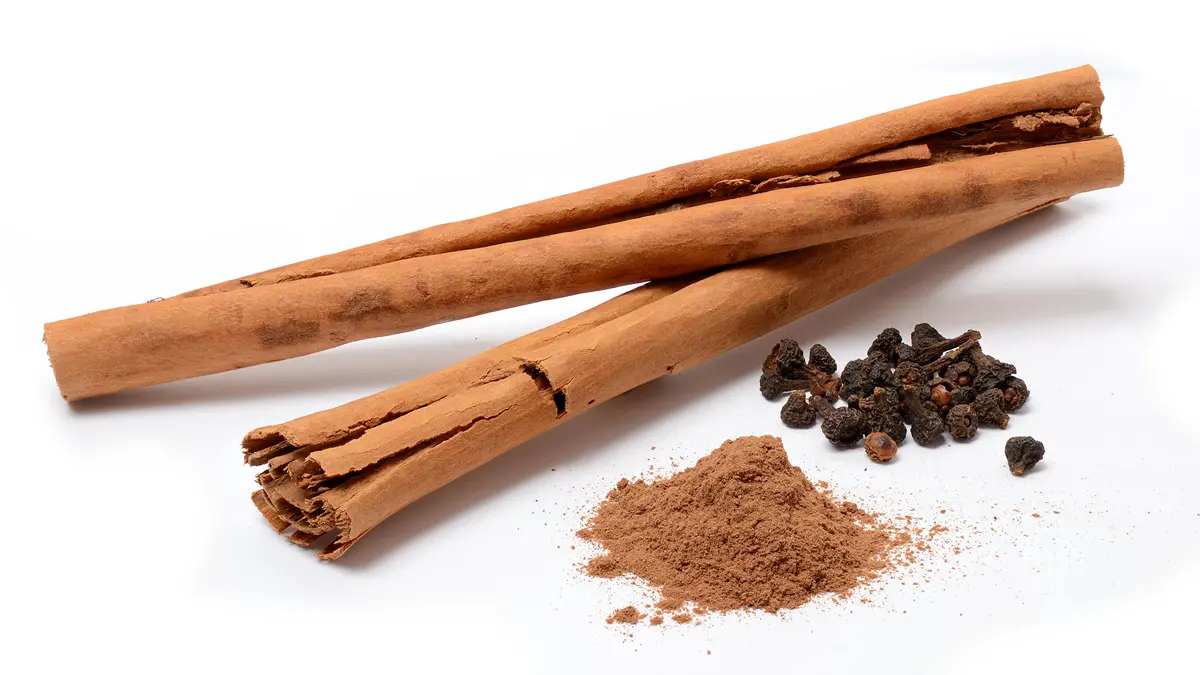

Short answer: cinnamon bark essential oil is a highly concentrated, usually cinnamaldehyde-rich oil distilled from the bark of a named cinnamon species. Laboratory antimicrobial activity is real, but it does not establish a safe treatment. The oil can irritate or burn skin and should not be swallowed as a home remedy.
Which cinnamon?
True or Ceylon cinnamon is Cinnamomum verum. Cassia products may come from Cinnamomum cassia or related species. The common name “cinnamon” does not resolve the difference. Kew’s Plants of the World Online provides the botanical record for C. verum.
A bark oil is also different from cinnamon leaf oil, ground culinary spice, a water extract or a standardised supplement. A recent review describes the varied chemistry and research associated with cinnamon species and preparations. Results from one preparation should not be moved to another without evidence.
Bark oil chemistry
Cinnamaldehyde is commonly the dominant constituent of cinnamon bark oil, although composition varies by species, origin and processing. Leaf oil is often richer in eugenol. A batch analysis should therefore state both the botanical source and principal constituents.
Cinnamaldehyde helps explain both the oil’s strong aroma and its hazard profile. Experimental skin-sensitisation research identifies cinnamaldehyde as an important fragrance sensitiser. Oxidation, concentration and repeated exposure can influence reactions.
Antimicrobial results are not clinical treatment
In-vitro research has reported antimicrobial effects for cinnamon bark essential oil. Other laboratory work has tested bark oil against selected microorganisms. These experiments expose organisms directly to controlled concentrations, often under conditions that cannot be used safely on skin or inside the body.
The results do not prove that putting cinnamon oil on acne, fungal infection, a wound or a painful tooth is effective. They also do not show that diffusing it disinfects a room. Clinical treatment must reach the target at a safe dose and outperform an appropriate comparison in people.
What about diabetes and other health claims?
Human studies and reviews of cinnamon supplements usually concern bark powder or an oral extract, not essential oil. Even when a cinnamon preparation changes a laboratory measurement, that result cannot define an effective or safe oil dose. Swallowing concentrated bark oil can irritate the mouth and digestive tract and creates an unnecessary poisoning risk.
HealthWatchlist did not find a robust body of trials establishing cinnamon bark essential oil as a treatment for diabetes, infection, inflammation, weight loss or chronic pain.
This is a particularly important evidence mismatch. A review headed “cinnamon and blood glucose” may include powders or extracts taken for weeks, while an oil contains a different fraction of the plant. Even a positive result for the former would not answer whether inhaling, applying or swallowing bark oil helps.
Burns and allergy
A published case describes a chemical burn after topical cinnamon-oil exposure. Older clinical literature also documents contact allergy to cinnamon and allergic reactions associated with cinnamal-containing products. Individual cases cannot provide an incidence rate, but they are consistent with the known irritant and sensitising potential.
- Do not swallow bark oil or use it in food, drinks or capsules.
- Do not apply it neat, to damaged skin or inside the mouth.
- Avoid homemade dental, acne and fungal remedies.
- Prefer a finished product with a complete ingredient list and directions.
- Keep the bottle away from children and pets.
- Stop exposure after burning, rash, coughing, wheeze, headache or nausea.
Anyone with fragrance allergy, eczema, asthma or previous reactions to cinnamon should be especially cautious. Pregnancy, breastfeeding, childhood and medicine use warrant advice about the exact finished product rather than a generic dilution suggestion.
After accidental eye or skin exposure, remove contaminated clothing and rinse with plenty of lukewarm water. Persistent pain, blistering, eye involvement or a large exposure needs professional assessment. Do not try to neutralise the oil with another household chemical.
Buying checklist
- The label states the Latin species and “bark”, not simply “cinnamon”.
- Steam distillation and country of origin are disclosed.
- A current analysis quantifies cinnamaldehyde and other major constituents.
- The supplier distinguishes bark oil from leaf oil and cassia.
- Directions do not encourage ingestion or neat skin use.
- Laboratory antimicrobial findings are not turned into disease claims.
My assessment
Cinnamon bark oil has well-documented laboratory activity and an important fragrance role. Its human treatment evidence is much weaker than advertising suggests, while its ability to irritate, sensitise and burn skin is credible. It is a poor choice for casual home remedies and should be handled as a potent fragrance ingredient, not as concentrated culinary cinnamon.
Cinnamon oil and snoring
Cinnamon inhalation has been studied in animal anxiety models. Those experiments did not test human sleep, snoring or airway obstruction.
Read the cinnamon comparison in our snoring guide for the distinction between laboratory signals and clinical evidence.
Targeted evidence update: 14 September 2026. This section does not represent a new review of every claim on this profile.
Reference: Nguyen LTH et al. Molecules. 2022;27:7997. doi:10.3390/molecules27227997.
Cinnamon and fungal nails
Cinnamon research distinguishes bark, cassia and leaf preparations and different fungal species; laboratory inhibition is not a nail cure. See the detailed evidence comparison for the studies, limitations and appropriate care.
Cinnamon and toothache
Cinnamon oil and a nanoemulsion inhibited experimental oral biofilms. These findings do not establish human toothache relief or a safe preparation for gums and cavities. See the detailed evidence comparison for the studies, limitations and care context.
References
- Kew Plants of the World Online search for Cinnamomum verum
- Review of cinnamon chemistry and biological research
- Research on cinnamaldehyde and skin sensitisation
- In-vitro study of cinnamon bark essential oil
- Laboratory antimicrobial study of cinnamon bark oil
- Chemical burn associated with topical cinnamon oil
- Clinical report of contact allergy to cinnamon
- Allergy associated with cinnamal-containing products
Cinnamaldehyde activity remains laboratory evidence
Evidence update: 14 September 2026.
The cinnamon bark oil screen and follow-up cinnamaldehyde experiments concern bacterial cultures. Neither establishes a human dose, safe tissue exposure or clinical recovery. Cinnamon leaf oil also cannot inherit results from bark oil or an isolated constituent. Persistent symptoms deserve clinical assessment and support.
Related evidence review: Cinnamon Oil for Lyme Disease: What the Laboratory Studies Can Tell Us.