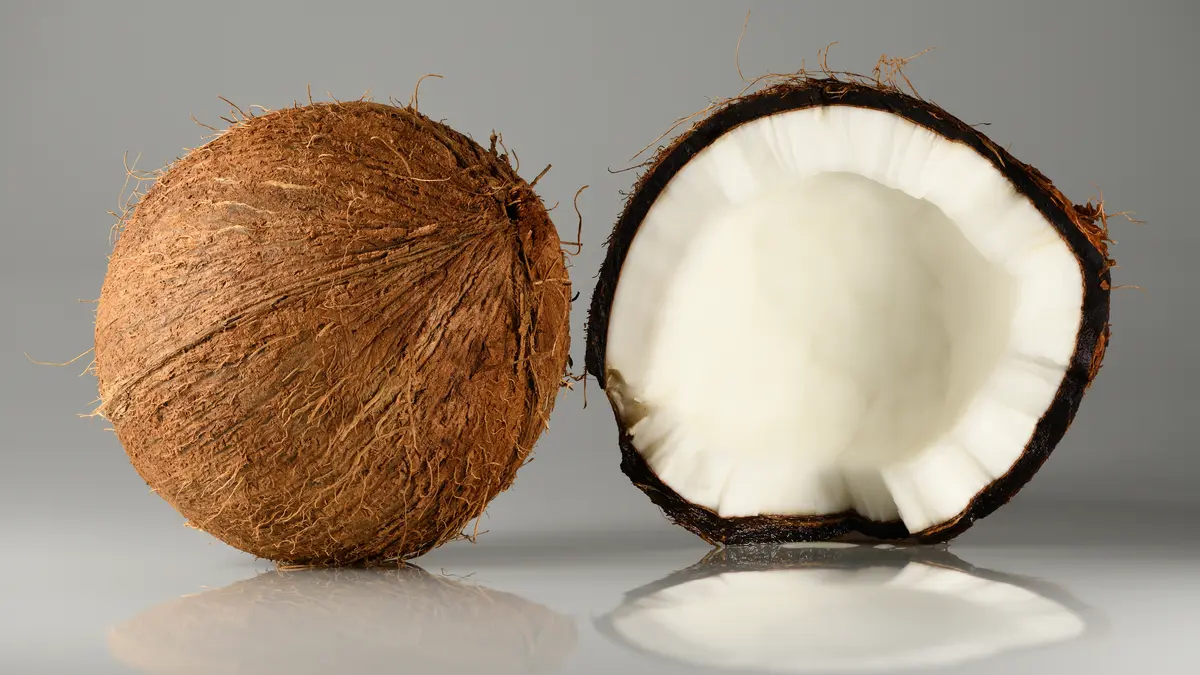

HealthWatchlist verdict: Coconut oil can moisturise dry skin, but that is not proof that it reverses wrinkles or repairs sun damage. Human studies mainly concern dryness and eczema. The anti-ageing claim goes beyond the outcomes those trials measured.
Coconut oil is a fixed oil
The coconut oil used in skin studies is a fatty oil, not a volatile essential oil. That distinction matters when comparing it with lavender, tea tree or other concentrated aromatic products.
A moisturiser can make skin feel softer and make fine surface lines less noticeable. Demonstrating a lasting reduction in wrinkles requires a different outcome and a suitable trial.
The dry-skin trial
A randomised trial compared coconut oil with mineral oil in 34 people with dry skin. Participants used the assigned product on their legs for two weeks. Both improved hydration and surface lipid measurements.
The results were broadly comparable. A trend towards greater subjective improvement with coconut oil was not statistically established. The small study also selected participants whose preliminary patch tests were negative.
This supports coconut oil as a possible moisturiser for some people. It does not establish wrinkle reduction on the face, collagen repair or superiority to every conventional moisturiser.
The eczema study is positive, but asks another question
An eight-week trial analysed 117 children with mild to moderate atopic dermatitis. Virgin coconut oil improved eczema severity and skin-barrier measurements more than mineral oil.
The result deserves recognition. However, children with eczema are not a study population for facial ageing, and an eczema score is not a wrinkle measurement. The finding cannot be converted into a percentage reduction in wrinkles.
A product may be useful for one purpose while remaining unproven for another. Rejecting the anti-ageing claim does not require dismissing the moisturising findings.
More recent formulations need careful reading
A 2024 trial in workers with hand dermatitis compared a coconut-and-glycerine cream with glycerine cream. Both helped, without an established advantage for the coconut combination in the reported results.
A newer paediatric eczema trial tested chemically derived ingredients from coconut and sunflower fatty acids, added to an oatmeal preparation. Some itch and steroid-use outcomes favoured the added ingredients, but the reported eczema-response comparisons were not statistically significant.
This was a manufactured formulation, not a jar of coconut oil. Even if all its outcomes had been positive, it would not establish that ordinary coconut oil reverses facial ageing.
A review of clinical studies of vegetable oils and butters shows how widely the purposes differ: dry skin, inflamed skin and other conditions were studied with different products. A broad review title should not obscure that variation.
What would convincing wrinkle evidence look like?
A useful trial would recruit adults with defined signs of ageing, compare coconut oil with a suitable control, and measure changes over months using consistent methods. Blinded assessment would reduce the influence of expectations.
It would also record irritation, breakouts, product use and other skincare, including sunscreen. Without that information, photographs taken under different lighting can be more persuasive than reliable.
The studies reviewed here do not provide that evidence. Statements that coconut oil “boosts collagen” or “erases lines” need direct human support rather than a chain of assumptions about antioxidants or moisture.
| Claim | Evidence assessment |
|---|---|
| Moisturises some dry skin | Supported by small human studies. |
| Improves selected eczema measures | Some positive evidence for particular populations and formulations. |
| Reverses established facial wrinkles | Not established by those studies. |
| Replaces sunscreen | Not supported; do not use it for this purpose. |
What has better evidence for preventing sun-related ageing?
A randomised Australian sunscreen trial followed adults for four and a half years. Regular sunscreen use reduced progression of measured skin ageing compared with discretionary use.
That study addresses prevention rather than erasing existing wrinkles. Its value here is that it measured the relevant long-term outcome, instead of inferring an anti-ageing effect from hydration.
NHS sun-safety guidance recommends shade, clothing and suitable sunscreen. Coconut oil should not replace a tested sunscreen, and mixing oil into sunscreen changes the finished product rather than improving its proven protection.
The American Academy of Dermatology explains that moisturisers can make some fine lines less noticeable. That is a reasonable cosmetic goal. It should not be presented as restoration of youthful skin structure.
Choosing a product without exaggerated promises
If coconut oil suits your skin and you like its texture, there is no need to invent an anti-ageing mechanism to justify that preference. Stop if it causes irritation or breakouts, and avoid known allergens.
Consider the complete formulation, not just the ingredient highlighted on the label. Fragrance, other oils and added active ingredients can change how a product behaves. A result for virgin coconut oil does not automatically apply to every coconut-branded cream.
For persistent skin symptoms or a changing lesion, seek an appropriate assessment. Cosmetic experimentation should not become a reason to ignore a new skin problem.
Evidence score and conclusion
John’s Evidence Score: 1/10 for coconut oil reversing established wrinkles. Moisturising evidence provides only indirect support for appearance changes, with no demonstrated lasting wrinkle reversal in the studies reviewed.
The evidence-based description is a possible moisturiser with limited clinical research for selected skin conditions. Anti-ageing promises need a stronger and more directly relevant foundation.
How this review was researched
Research checked on 13 September 2026. We searched PubMed for the named oils or preparations and the condition, followed relevant review references, and checked the official guidance linked below. This is an editorial review, not an exhaustive systematic review. We distinguish human treatment outcomes from laboratory findings, and identify where a study tested a mixture or a different preparation.
Related reading
References
- A randomized double-blind controlled trial comparing extra virgin coconut oil with mineral oil as a moisturizer for mild to moderate xerosis.
- The effect of topical virgin coconut oil on SCORAD index, transepidermal water loss, and skin capacitance in mild to moderate pediatric atopic dermatitis: a randomized, double-blind, clinical trial.
- Cocos nucifera and glycerine afterwork moisturizers for secondary prevention of hand dermatitis among fabric worker: a randomized, double-blind, cross over trial.
- Impact of Isosorbide Diesters from Coconut and Sunflower Fatty Acids on Pediatric Atopic Dermatitis and the Skin Microbiome: A Randomized, Double-Blind, Vehicle-Controlled Trial.
- Vegetable Butters and Oils as Therapeutically and Cosmetically Active Ingredients for Dermal Use: A Review of Clinical Studies.
- Sunscreen and prevention of skin aging: a randomized trial.
- NHS: Sunscreen and sun safety
- American Academy of Dermatology: Wrinkle remedies