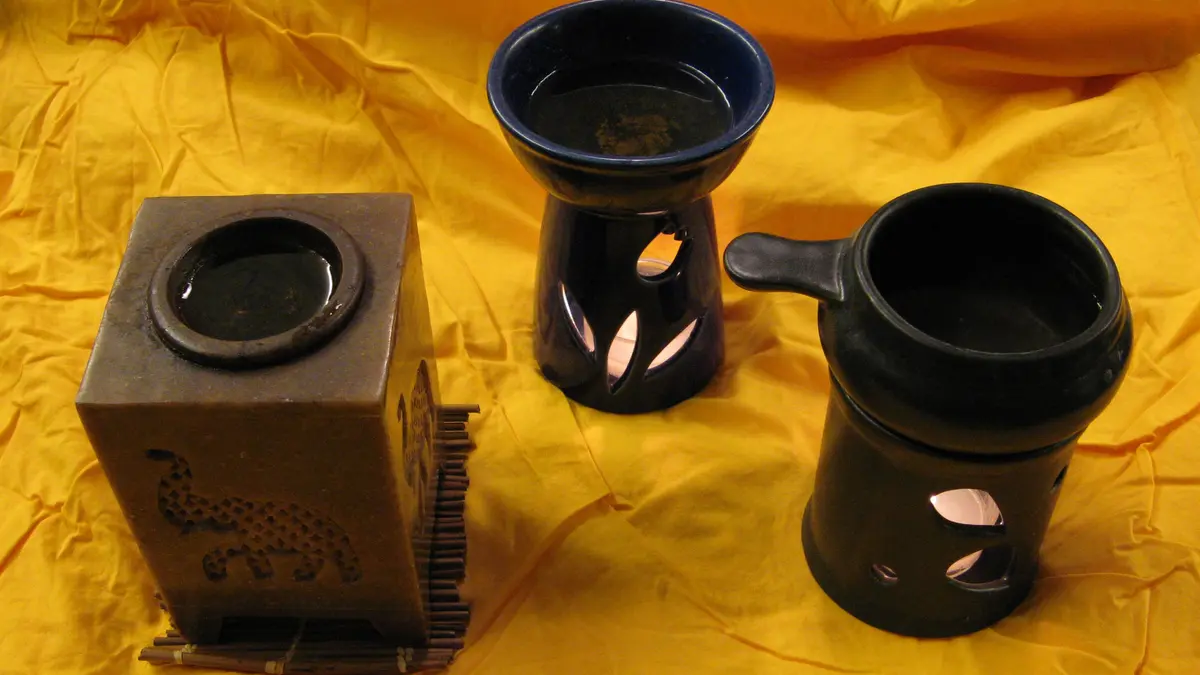


Short answer: do not pour essential oil into a wax warmer unless the manufacturer explicitly says the exact model is designed for it. A wax-melt warmer, a water-filled oil burner and an ultrasonic diffuser are different appliances. The safest rule is to use only the material named in the manual.
First identify the appliance
A wax warmer melts a solid wax product in a dish. Some use a tealight and some use electricity. A traditional oil burner usually warms water containing a small amount of fragrance. An ultrasonic diffuser has a reservoir and vibrating disc that creates droplets. A nebuliser disperses undiluted oil.
The dishes may look similar, but their temperature, capacity and materials differ. Calling all of them “diffusers” obscures the important safety distinction. Find the model number and manual before adding anything.
Why neat oil can be a problem
Essential oils are volatile mixtures rather than one predictable ingredient. Heat changes how quickly their components enter the air. A shallow pool may evaporate rapidly, overheat or leave a concentrated residue. Oil can also damage coatings or seals that were tested only with wax melts.
If the warmer uses a tealight, there is an open flame below the dish. London Fire Brigade advises keeping candles stable, attended and away from flammable items. Never top up a warm dish while the flame is lit.
Use the product named in the instructions
- Wax-only warmer: use a correctly sized commercial wax melt. Do not add water or bottled essential oil.
- Oil burner: use water and fragrance only if the instructions say so, and do not let the dish boil dry.
- Electric fragrance warmer: check whether it accepts wax, a proprietary refill or another specified medium.
- Ultrasonic diffuser: fill only to the marked line and follow the permitted oil quantity.
Do not assume a social-media hack is compatible with your appliance. A manufacturer may exclude essential oils because of temperature, plastics, electrical parts or cleaning requirements.
Air exposure still matters
Heating or diffusing fragrance releases volatile organic compounds into the room. ANSES reports irritation, coughing and breathing difficulty among symptoms associated with essential-oil sprays and diffusers. It recommends ventilation and particular caution for people with respiratory conditions.
An indoor study measured changing concentrations of fragrance compounds while an essential-oil diffuser operated. The results do not establish one safe household dose, but they show that a natural aroma is still a chemical exposure.
Use the lowest output that achieves the wanted scent, keep sessions limited and let anyone leave the room. Stop if there is coughing, wheezing, eye irritation, headache, nausea or dizziness.
Children, pets and spills
Place the warmer beyond reach and where a cable cannot be pulled. A hot dish can burn, and spilled fragrance can irritate skin or eyes. Keep the original packaging available so the ingredients can be identified after an exposure.
Poison Control advises seeking case-specific help after essential-oil ingestion or another concerning exposure. In the UK, contact NHS 111 for urgent advice or 999 for severe breathing difficulty, collapse or seizure.
The RSPCA advises contacting a vet promptly if pet poisoning is suspected. Do not position a fragrance warmer beside a cage, tank, bed, litter tray or food bowl.
Cleaning and disposal
Switch off or extinguish the heat source and allow the dish to cool. Follow the maker’s method for removing wax. Do not scrape a coated dish with a metal blade, immerse an electrical base or use a solvent that the manual does not permit.
Do not pour essential oil, fragrance liquid or melted wax down a drain. Keep residues away from waterways. The safety data sheet may classify an oil as hazardous to aquatic life, a point explained by HSE’s guide to chemical hazard pictograms.
What if the packaging says “oil and wax warmer”?
That wording still requires the model’s own directions. It may mean the dish accepts a pre-formulated fragrance oil, a wax melt or water with a limited amount of oil. It does not necessarily permit neat essential oil. Check the minimum liquid level, maximum operating time and whether the dish must contain water. If the retailer’s listing conflicts with the manual or safety label, ask the manufacturer in writing and do not use the disputed material while waiting.
For second-hand appliances, missing instructions, chipped dishes and unknown electrical history make experimentation a poor bargain. Replace an unsafe or unidentified unit rather than testing it with heat and concentrated fragrance.
My verdict
A wax warmer is not automatically an essential-oil warmer. Use wax in a wax appliance and use essential oils only in a device whose instructions allow them. If the manual is missing or ambiguous, not adding the oil is the safer decision.