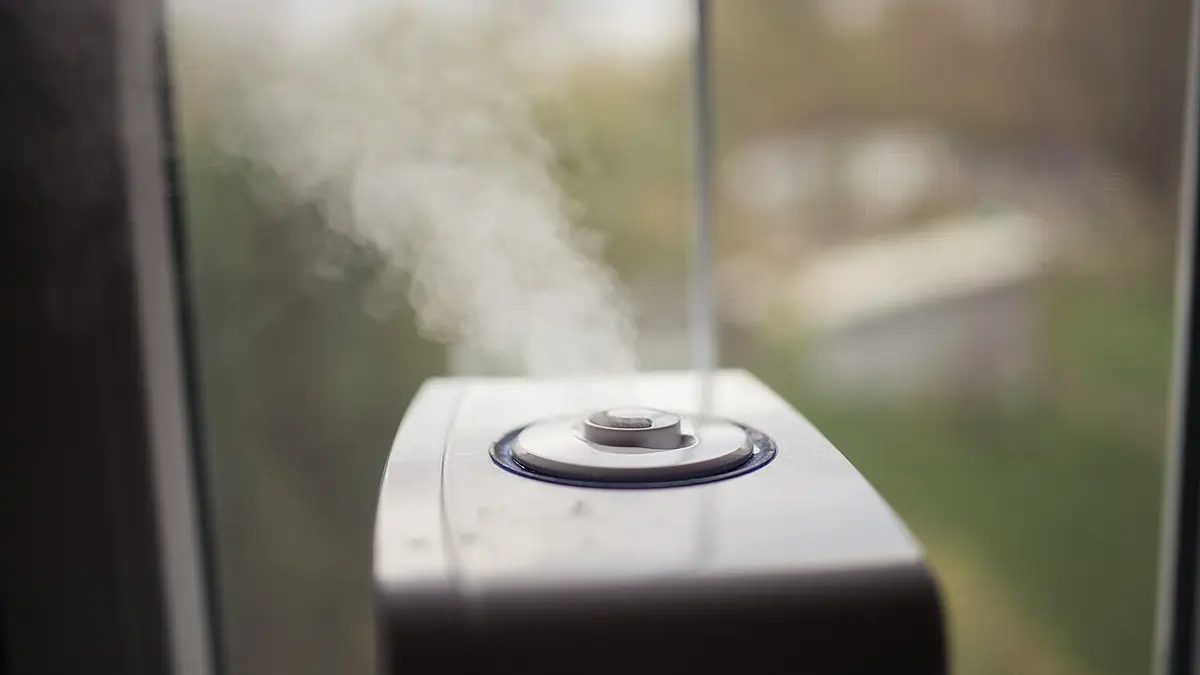

Short answer: a faint fan or water sound can be normal, but rattling, grinding, buzzing or a sudden increase in volume is not. Unplug the diffuser, check its surface, water level, air intake and reservoir, then clean it exactly as the manual directs. Do not open the electrical base.
Before troubleshooting
Switch the diffuser off, unplug it with dry hands and let it cool. Empty the reservoir from the side indicated by the maker so water does not enter the air outlet. Move essential-oil bottles away from the work area.
A diffuser combines water, electronics, a fan and a ceramic ultrasonic disc. Trying to inspect it while powered creates unnecessary spill and electrical risks. If the casing, cable or plug is damaged, stop using it.
Cause 1: vibration against the surface
A diffuser can amplify its normal vibration when it sits on a hollow shelf, uneven tray or loose furniture. A cable touching the casing may rattle too.
- Place the empty, unplugged unit on a firm, level and water-resistant surface.
- Check that all feet are present and the lid is seated correctly.
- Move the cable so it does not touch the body.
- Keep the air intake clear. Do not place the unit on a towel, carpet or soft mat that blocks ventilation.
If moving the unit removes the noise, the appliance may be working normally. Do not improvise foam pads that cover vents or make it unstable.
Cause 2: water level or residue
Too much or too little water can change mist output and sound. Use the water type and fill mark specified for the model. Do not guess from another diffuser’s instructions.
Oil residue and mineral deposits can collect around the ceramic disc or water sensor. One ultrasonic diffuser manual instructs users to unplug the unit and clean the ceramic disc and sensor carefully. That advice illustrates a common maintenance point, but your own manual controls.
Use only the maker-approved cleaning method and a soft material. Do not scrape the disc, pour cleaner into an air outlet or immerse the base. Rinse out permitted cleaning agents before operating the diffuser again.
Cause 3: fan, adaptor or internal fault
A grinding or irregular mechanical sound may come from a worn or obstructed fan. A pronounced electrical buzz may indicate a power-supply or internal problem. If correct placement, filling and cleaning do not resolve it, stop using the device.
Test only with the original or manufacturer-approved adaptor. A plug that fits is not necessarily electrically compatible. Electrical Safety First explains why plugs, leads and fuses must be kept in good condition.
Do not dismantle the base, bypass a cut-out or lubricate a fan with essential oil. Opening the unit can expose mains-connected parts and may defeat safety features or invalidate the warranty.
When to stop immediately
- A burning smell, smoke, sparking or discolouration
- A hot plug, adaptor, cable or casing
- Water leaking into the base
- A cracked reservoir or damaged cable
- Repeated switching off that the manual does not explain
- A loud noise that returns after correct cleaning and filling
Unplug the unit and contact the retailer or manufacturer. UK product-safety guidance explains the responsibilities surrounding safe consumer products. You can also check the model against the government’s product recalls and safety alerts.
Preventing repeat problems
Empty and dry a water-based diffuser after use. Regular cleaning reduces residue and stagnant water, but harsh treatment can damage the ultrasonic disc. EPA humidifier guidance recommends fresh water and frequent cleaning for water-misting appliances. A diffuser is smaller and different in purpose, yet reservoir hygiene is still relevant.
Do not overfill or leave oil-rich water standing for days. Keep mist away from walls and electronics, and leave room around the air intake. If the unit has become quieter only because mist output has fallen, it still needs investigation.
Normal sound versus a fault
A consistent low fan sound, gentle water movement and an occasional drop returning to the tank may be normal for a particular design. Compare the sound with the manual, a recording made when the unit was new, or an identical display model. A fault is more likely when the sound begins suddenly, changes with heat, comes with reduced mist, or continues after correct placement and filling. Do not use a phone sound-level reading as proof of electrical safety. The pattern and associated warning signs matter more than one decibel number.
My verdict
Most benign noise comes from an unstable surface, incorrect filling or residue. A grinding fan, electrical buzz, heat or burning smell needs a stop, not another cleaning hack. If basic checks within the manual do not solve it, replace or professionally assess the appliance.