
Short answer: a water-based ultrasonic diffuser releases some moisture, but it is usually a scent device with a small reservoir and low, uncontrolled output. It should not be relied on to correct dry indoor air. Measure humidity and use a properly sized humidifier when humidity control is the goal.
Why an ultrasonic diffuser adds moisture
An ultrasonic disc breaks water into fine droplets that leave the reservoir as visible mist. Some of that water evaporates into the air, so the device is technically adding moisture. A nebulising diffuser, passive reed diffuser or heat diffuser may contain no water and therefore does not humidify in the same way.
The useful question is not whether any water enters the air. It is whether the device can raise and control relative humidity across the occupied room. Most aroma diffusers are sold by reservoir size and run time, not by a tested moisture output for a stated room volume.
Why the effect is usually small
A compact diffuser may hold only a few hundred millilitres and spread that water over several hours. A room’s ventilation, temperature, volume and starting humidity all affect the result. Moisture may disperse outdoors or into the rest of the building faster than the diffuser supplies it.
A humidifier is designed for a moisture-control task. It may have a larger tank, measured output, humidistat or room-size rating. Our diffuser versus humidifier guide compares the two devices in detail.
Measure rather than infer
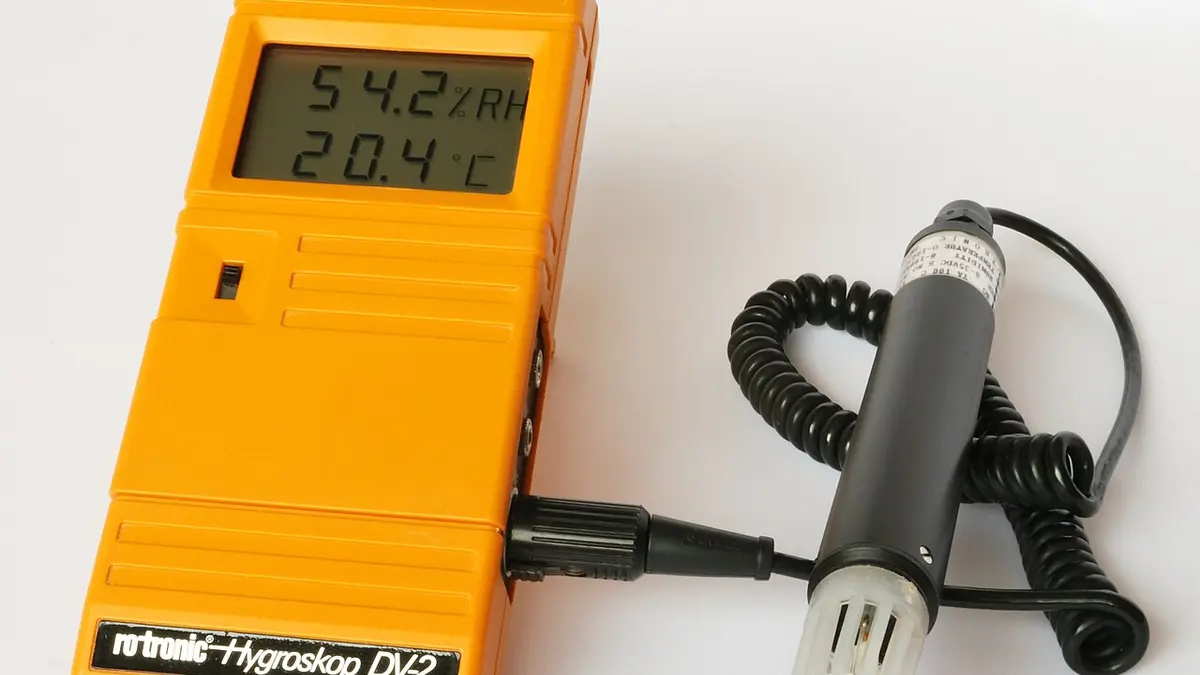
Use a hygrometer placed away from the mist outlet, window, radiator and exterior wall. Check it over time rather than judging humidity from visible mist or condensation beside the appliance.
The US Environmental Protection Agency advises not allowing indoor relative humidity to exceed 50 per cent. Excess moisture can encourage biological growth and condensation. EPA mould guidance stresses moisture control as the key to mould control.
A single target does not suit every building and climate, but persistent condensation, damp patches or mould are signs to stop adding moisture and investigate the source.
Essential oil does not improve humidification
Adding more essential oil does not increase the water output. It increases fragrance exposure and may damage a device if the manual sets a lower limit. Use only the permitted quantity.
A chamber study measured volatile organic compounds and particles emitted by ultrasonic essential-oil diffusers. An indoor study also measured changing fragrance-compound concentrations during diffusion. Neither study turns a diffuser into a health treatment, but both show that the output is more than pure water vapour.
Reservoir hygiene matters
Any appliance that stores and disperses water needs cleaning. Empty a diffuser after use, wipe it according to the manual and let it dry. Do not run stale water simply to finish the tank.
Research on ultrasonic humidifiers has shown that dissolved material in tap water can become airborne particles. A small aroma diffuser is not identical to the humidifiers studied, but the finding supports following the manufacturer’s water specification and cleaning schedule.
If dry air is causing symptoms
Dry-feeling eyes, nose, throat or skin do not prove that room humidity is low. Irritants, allergy, infection, medication and ventilation can produce similar symptoms. Measure the room before buying another device.
If symptoms are persistent, severe or linked to breathing difficulty, seek medical advice. An essential-oil mist can itself irritate some people. ANSES reports respiratory and irritant symptoms associated with sprays and diffusers and recommends ventilation.
Choosing the right device
- Choose a diffuser for a limited scent effect.
- Choose a rated humidifier for measured moisture output.
- Choose an air cleaner for particle filtration, using an appropriate clean-air delivery rate.
- Use ventilation and source control for many indoor pollutants.
Can several diffusers humidify a larger room?
Running more scent diffusers may add more water, but it also multiplies fragrance emissions, reservoirs, cables and cleaning. It still provides no humidistat or dependable room output. If one correctly sized humidifier can perform the measured moisture task, several aroma devices are a less controllable solution. Do not place multiple diffusers around a child, animal or person with asthma simply to increase humidity. Use an unscented humidifier, monitor the hygrometer and reduce output when condensation appears.
No one appliance performs all four jobs. Avoid products that promise scent, humidification, purification and treatment without independently tested performance for each claim.
My verdict
An ultrasonic aroma diffuser humidifies only in the literal sense that it releases water. Its effect on a whole room is generally modest and not controlled. Use a hygrometer to diagnose a humidity problem, then select and maintain a device designed for that purpose.