_1.jpg)
Short answer: citronella essential oil is distilled from aromatic Cymbopogon grasses and has evidence as a short-acting mosquito repellent in suitable formulations. It is generally less durable than established long-lasting repellents. A citronella candle, diffuser or homemade skin blend should not be assumed to prevent bites or mosquito-borne disease.
Which citronella?
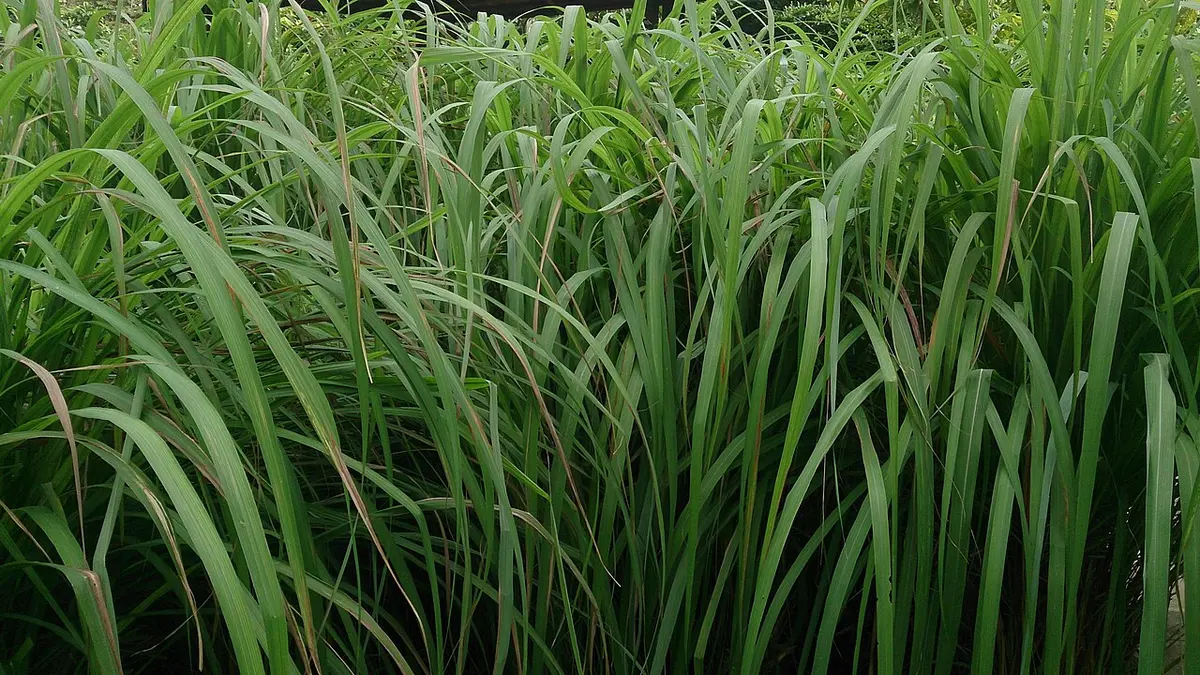
Citronella is not one precisely defined plant product. Ceylon citronella is associated with Cymbopogon nardus, while Java citronella is generally associated with C. winterianus. Kew accepts Cymbopogon nardus as a species.
Citronella, lemongrass and palmarosa are related grasses but are not interchangeable names. The bottle should state the botanical species, plant part, origin and steam-distillation method.
What is in the oil?
Citronellal, geraniol and citronellol are prominent components, with proportions differing between plant type and batch. Other constituents, including methyl eugenol, may occur at lower concentrations.
A Canadian government assessment discusses citronella oil composition, uses and exposure. This variability is one reason a registered finished repellent is more informative than a bottle of raw oil.
Mosquito-repellent evidence
A systematic review of controlled laboratory studies found that citronella products can repel mosquitoes but generally protect for less time than DEET. Formulation mattered, and evaporation limited duration.
A broader review of plant-based repellents reached a similar conclusion: citronella can provide protection, but its volatility usually makes that protection short-lived unless the formulation slows release.
One comparative study reported declining citronella repellency over a two-hour period. A controlled arm-in-cage or laboratory result does not guarantee equivalent protection during walking, sweating, swimming or prolonged outdoor exposure.
Do candles and diffusers work?
An area product is not the same as a skin repellent. Smoke, wind, distance, temperature and placement all change exposure. Health Canada notes that many area repellents do not protect people as well as personal insect repellents.
Do not rely on a citronella candle or room diffuser where mosquito-borne disease is a concern. Use an authorised repellent with evidence for the setting, wear suitable clothing, use screens or nets, and follow current travel-health advice.
Choose a finished repellent
“Natural” does not remove the need to demonstrate both safety and effectiveness. Health Canada advises using approved personal insect repellents according to their labels, including products based on natural ingredients.
A commercial product sets the concentration, solvent, application interval, age restrictions and precautions. A homemade dilution does not come with validated protection time or a complete safety assessment.
Skin and household safety
Citronella oil and its fragrance constituents can irritate skin and eyes or cause allergic contact dermatitis. Do not apply neat oil. Do not spray it towards the face, use it on broken skin or assume it is suitable for young children.
Keep bottles and repellent products out of reach. Do not swallow the oil. Poison Control advises case-specific help after a concerning essential-oil exposure.
When diffused or heated indoors, citronella adds volatile chemicals to the air. Use ventilation and stop after coughing, wheezing, headache, nausea or eye irritation. Keep it away from flames and hot surfaces unless it is part of a finished candle designed and labelled for that use.
Food exposure is not a dosing guide
Health Canada assessed very low citronella exposure as a flavouring agent and explicitly compared it with the much higher exposure involved in a topical repellent. That assessment does not support swallowing bottled essential oil.
Buying checklist
- The botanical species is stated, not just “citronella”.
- A batch number and composition report are available.
- A skin repellent has an authorised label and tested application interval.
- The age and pregnancy directions are explicit.
- The seller does not imply that a candle guarantees bite protection.
- Methyl eugenol and relevant fragrance allergens are addressed.
Citronella is not oil of lemon eucalyptus
Citronella oil should not be confused with oil of lemon eucalyptus or its refined active ingredient, PMD. They come from different plants and have different evidence, concentrations and product labels. Nor is citronella the same as culinary lemongrass oil. Substituting one bottle for another can change both protection time and irritation risk. The product’s age and storage conditions can also affect its composition. When bite prevention matters, use the active ingredient and application interval printed on an authorised finished repellent rather than choosing by a lemon-like smell.
My assessment
Citronella is one of the better-studied essential oils for a specific practical outcome, but “some repellency” is not the same as dependable all-day protection. Its volatility, product variation and short duration matter. For bite prevention, choose a tested finished repellent for the destination and follow its label exactly.
Citronella oil and snoring
A small awake-volunteer study measured mood, brain activity and cardiovascular responses. It did not measure snoring, oxygen or breathing interruptions during sleep.
Read the citronella comparison in our snoring guide for the study details and evidence limits.
Targeted evidence update: 14 September 2026. This section does not represent a new review of every claim on this profile.
Reference: Sayowan W et al. Journal of Health Research. 2012;26:69–75.
References
- Kew Plants of the World Online: Cymbopogon nardus
- Systematic review of citronella mosquito repellency
- Review of plant-based insect repellents
- Comparative mosquito-repellency study
- Health Canada: Personal insect repellents
- Health Canada: Safe use of personal insect repellents
- Canadian screening assessment of citronella oil
- Health Canada: Citronella oil as a flavouring agent
- Poison Control: Essential oils