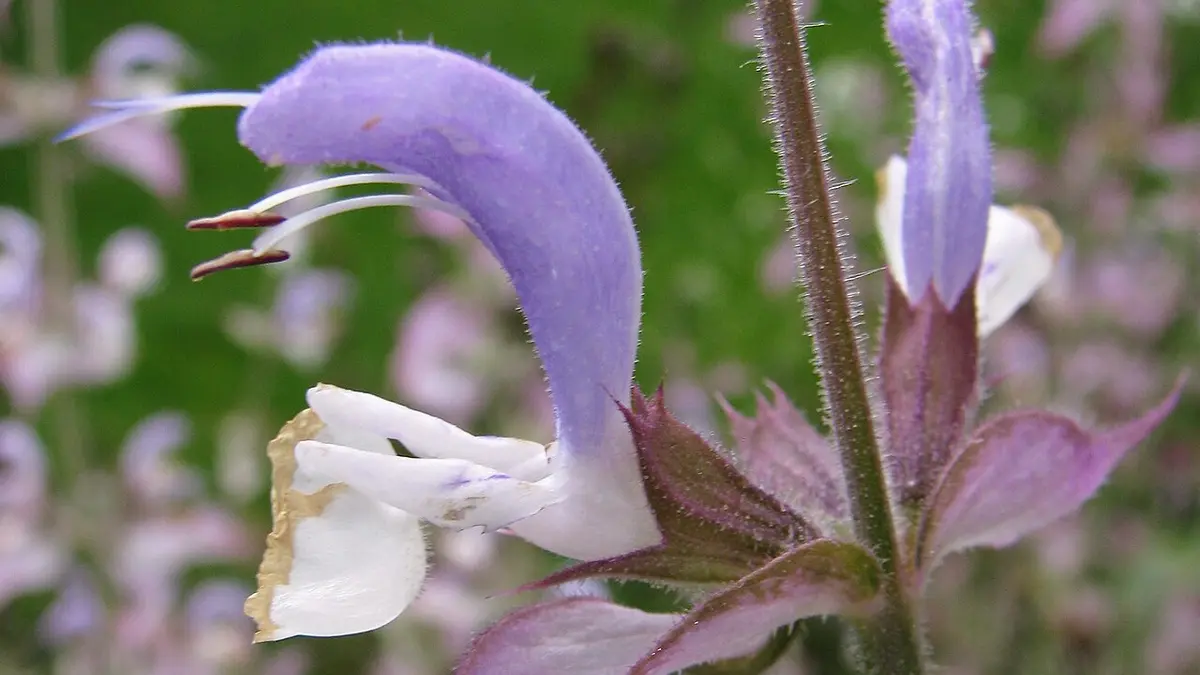

Short answer: clary sage essential oil is normally distilled from Salvia sclarea and is often rich in linalyl acetate and linalool. Small human studies have explored mood, menstrual symptoms and use around labour, but they do not justify claims that the oil balances hormones, induces labour or treats a medical condition.
Identity and production
Kew’s Plants of the World Online accepts Salvia sclarea L. as a species. It is distinct from common sage, Salvia officinalis. Advice about one sage oil should not be transferred to the other.
Clary sage oil is generally steam-distilled from flowering tops and leaves. The essential oil is different from an herbal tea, extract, absolute or fragrance oil. The label should name the species, plant part and extraction method.
Composition
Linalyl acetate and linalool are often the main volatile components. One chemically characterised sample contained predominantly linalyl acetate, but composition varies with origin, harvest and distillation.
Sclareol, a less volatile diterpene used in fragrance chemistry, may be present in smaller amounts. Its name and laboratory activity have helped create online “oestrogenic” or “hormone balancing” claims. Detecting a constituent does not demonstrate that smelling or applying the oil corrects a hormone disorder.
Mood and stress research
A small pilot investigation examined pulse, blood pressure and mood after topical or inhaled clary sage oil exposure. The experiments involved about 30 participants each and reported sex-dependent or mood-related changes.
The sample sizes were small, the scent was difficult to blind and short physiological changes are not proof of treatment for anxiety or depression. The study is useful as an early signal, not a clinical recommendation.
Menstrual symptoms
Some aromatherapy studies for period pain use blended oils and massage. A trial of an aromatic massage blend included several essential-oil constituents and reported reduced menstrual pain. It cannot isolate clary sage from the other oils, carrier, massage or expectations.
A 2026 study reported symptom changes after clary sage inhalation during menstruation. The result deserves replication and assessment of blinding, clinical importance and adverse effects before broad conclusions. It does not establish that the oil treats endometriosis, fibroids, polycystic ovary syndrome or unexplained pelvic pain.
Pregnancy and labour claims
Clary sage is often promoted online to “bring on labour”. That is a high-stakes claim. A small study measured salivary oxytocin after scent exposure in term pregnancy, but a hormone measurement is not the same as safely inducing labour or improving birth outcomes.
A Cochrane review of aromatherapy for labour pain found limited and heterogeneous evidence. Some studies allowed a choice or blend of oils, making clary sage-specific conclusions especially difficult.
Do not use clary sage to start or accelerate labour without the maternity team’s explicit advice. Timing, membranes, bleeding, fetal position, previous caesarean birth and other clinical factors cannot be assessed by an oil seller. During pregnancy or breastfeeding, ask a midwife, pharmacist or doctor about the exact product and route.
Laboratory findings
A laboratory study reported antifungal effects for a characterised clary sage oil and linalyl acetate combination. Other in-vitro work has examined antimicrobial activity.
Direct laboratory contact does not show that a diffuser treats infection or that neat oil is safe on affected skin. Human treatment claims need clinical trials using a defined finished preparation.
General safety
- Do not swallow the oil or add it to food and drink.
- Avoid neat application, eyes, mucous membranes and broken skin.
- Use a properly formulated finished cosmetic for skin exposure.
- Diffuse briefly at low intensity with ventilation.
- Stop after irritation, wheeze, headache, nausea or dizziness.
- Keep the bottle out of reach of children and pets.
Linalool can oxidise during storage, and oxidised fragrance materials may be more sensitising. Keep the container tightly closed and away from heat and light. A batch analysis is more informative than claims that an oil is “therapeutic grade”.
Buying checklist
- Salvia sclarea is printed on the label.
- The flowering top or aerial part and distillation method are identified.
- A batch number and recent composition report are available.
- The supplier distinguishes common sage from clary sage.
- No claim promises hormone balancing or unsupervised labour induction.
- Pregnancy and skin directions are conservative and specific.
My assessment
Clary sage oil has a recognisable fragrance profile and several small human studies, but the clinical evidence remains preliminary. It should not be marketed as a hormone treatment or labour-induction method. Product identity, limited exposure and appropriate maternity advice matter more than confident online recipes or testimonials, particularly when pregnancy complications or medicines are involved.
Clary sage and jaw pain
Clary sage appears in a menstrual-pain blend and a short-term psychological study. Neither establishes treatment of jaw pain or bruxism. See the detailed evidence comparison for the studies, limitations and care context.
Clary sage and psoriasis
Clary sage has encouraging rat wound-healing findings, but no controlled human psoriasis trial was located. Wound closure and psoriasis control are different outcomes. See the detailed evidence comparison for the primary studies, limitations and care context.
Clary sage and oily skin
Laboratory antibacterial findings do not establish that clary sage oil reduces facial sebum. A controlled human oil-control trial was not located. See the detailed evidence comparison for the primary studies, limitations and care context.
Clary sage and wrinkles
An isolated-sclareol cream study reported wrinkle improvement. It did not test bottled clary sage essential oil, and full clinical methods were unavailable for appraisal. See the detailed evidence comparison for the primary studies, limitations and care context.
References
- Kew Plants of the World Online: Salvia sclarea
- Chemical composition and laboratory antimicrobial study
- Pilot study of clary sage oil, physiology and mood
- Trial of blended aromatic massage for menstrual pain
- 2026 study of clary sage inhalation and menstrual symptoms
- Study of salivary oxytocin after aroma exposure in term pregnancy
- Cochrane review of aromatherapy for labour pain
- Laboratory antifungal study of characterised clary sage oil