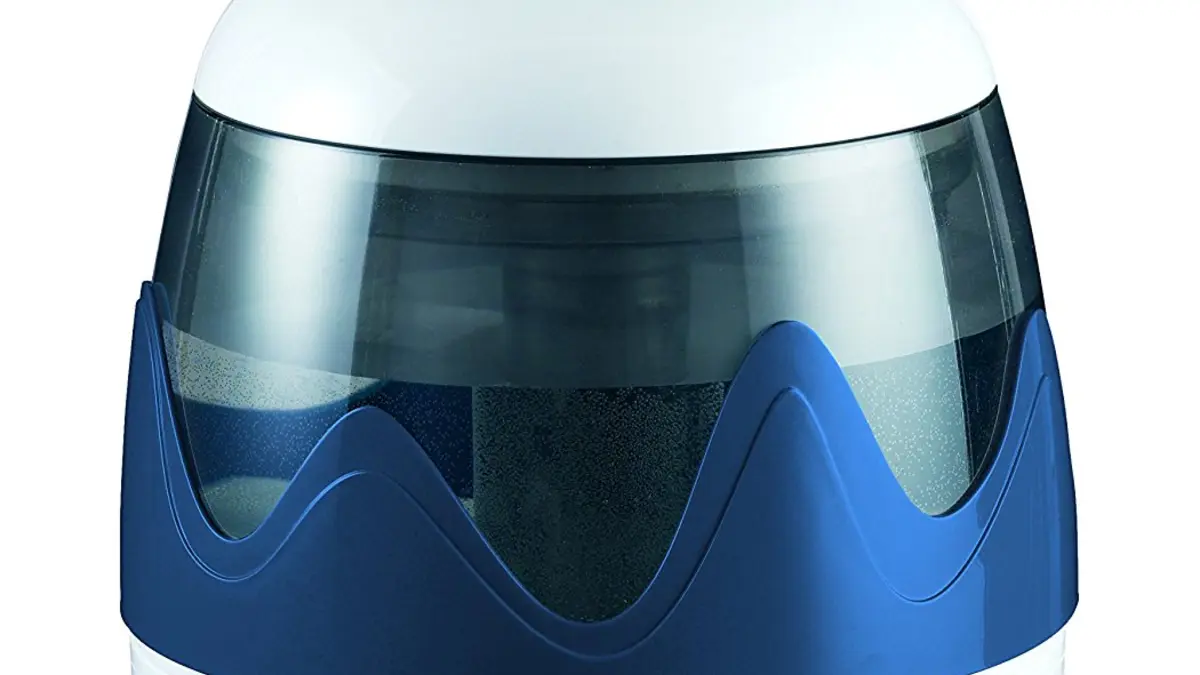

Bottom line: the doTERRA Petal is a straightforward ultrasonic diffuser with useful timer choices. Its published coverage figure is a manufacturer claim, and it should be judged as a scent device rather than a health treatment.
This is an independent desk review of current public information. HealthWatchlist has not received, bought or bench-tested the Petal Diffuser.
Review checked: 7 September 2026. Specifications, price and availability can change. Check the current UK listing and manual before purchase.
What the Petal is
The Petal is a water-based ultrasonic diffuser. A vibrating element creates small droplets from water and essential oil, and a fan moves the mist into the room.
The current doTERRA UK shop page identifies the Petal 2.0 and provides cleaning directions. Availability should be checked at the time of purchase.
doTERRA’s US product page describes a locking lid, optional light and a three-part design. It lists two and six-hour continuous modes plus a 12-hour intermittent mode.
The US page claims coverage up to 330 square feet. That is about 31 square metres. Coverage is not a clinical or standardised air-quality outcome.
What the controls offer
Three run patterns are more useful than a single on-off switch. Intermittent operation can limit continuous scent build-up and reduce how often the reservoir needs attention.
The light can be used independently according to the manufacturer. The indicator lights dim after several seconds, which is helpful in a bedroom.
A locking lid may reduce accidental separation during ordinary handling. It does not make a filled diffuser childproof or prevent access to an essential-oil bottle.
Noise, measured output, energy use and long-term durability are not independently established by the public pages I reviewed. Those points need hands-on testing rather than inference from specifications.
How to interpret the coverage claim
Room volume, ventilation, oil composition, temperature and personal sensitivity affect perceived scent. An open-plan room cannot be reduced to floor area alone.
“Covers 330 square feet” does not mean the concentration is even across that area. It also does not establish a safe exposure level or a health benefit.
Choose a diffuser with controllable output rather than chasing the strongest possible smell. A comfortable scent level for one person may trigger headache, coughing or wheeze in another.
Diffusers add compounds to indoor air
A chamber study measured volatile organic compounds and particles emitted by ultrasonic essential-oil diffusers. Emissions varied with the oils and operating conditions.
A separate indoor study measured increased fragrance compounds while an ultrasonic diffuser operated. Neither study defines a universal safe number of drops.
A controlled exposure study examined cognitive and physiological responses to diffused essential oils. Short experimental exposure cannot establish a broad wellness effect.
These studies are reasons for ventilation and restraint. They do not show that normal Petal use will harm everyone, and they do not independently test the Petal.
Cleaning and water care
doTERRA’s cleaning guide advises emptying the device, wiping the reservoir and using a diluted vinegar cleaning cycle. Follow the current manual supplied with the exact model.
Stagnant water and residue can affect smell and operation. Empty the reservoir when the device will not be used, and do not leave a mixture where a child or animal can drink it.
The US Environmental Protection Agency gives careful cleaning advice for home humidifiers. A diffuser is not necessarily a humidifier, but water-reservoir hygiene remains relevant.
Do not submerge the electrical base unless the manual explicitly permits it. Unplug before cleaning and keep water away from power connections.
Asthma, children and animals
The American Academy of Allergy, Asthma and Immunology advises caution with oil diffusers in asthma. Fragrance exposure can trigger symptoms in sensitive people.
The ASPCA advises pet owners to consider species, oil and exposure route. Animals should be able to leave the room.
The RSPCA advises keeping potentially poisonous substances away from pets and seeking prompt veterinary advice after exposure. Do not rely on a generic “pet-safe oils” list.
What the Petal does not establish
The device disperses a scent mixture. It does not diagnose anxiety, treat infection, purify a room to a healthcare standard or replace ventilation.
The manufacturer’s page suggests oils for moods and household situations. Those examples are marketing uses, not independent evidence that the device changes a medical outcome.
NCCIH describes aromatherapy as a complementary approach with limited rigorous evidence for many conditions. Evidence belongs to a specific oil, route and outcome.
Buying checklist
- Confirm the current UK price, warranty and replacement policy.
- Read the supplied manual before adding water or oil.
- Check the reservoir access and whether it is easy to dry.
- Use timer control and ventilation rather than continuous strong scent.
- Consider asthma, migraine, fragrance sensitivity, children and animals.
- Do not pay extra because of an unsupported health promise.
My verdict
The Petal’s timer choices, dimming indicators and simple ultrasonic design are sensible features. The public specification is adequate for basic comparison but does not replace hands-on noise, output and durability testing.
Buy it only if the current price and warranty compare well with other controllable devices. Treat the coverage figure as a scent claim, and use the lowest comfortable output with ventilation.
References
- doTERRA UK: Petal Diffuser 2.0
- doTERRA US: Petal specifications
- doTERRA: Cleaning an ultrasonic diffuser
- VOC and particle emissions from ultrasonic essential-oil diffusers
- Essential-oil compounds measured during indoor diffusion
- Controlled exposure study of diffused essential oils
- US EPA: Use and care of home humidifiers
- AAAAI: Oil diffusers and asthma
- ASPCA: Essential oils around pets
- RSPCA: Poisoning in pets
- NCCIH: Aromatherapy