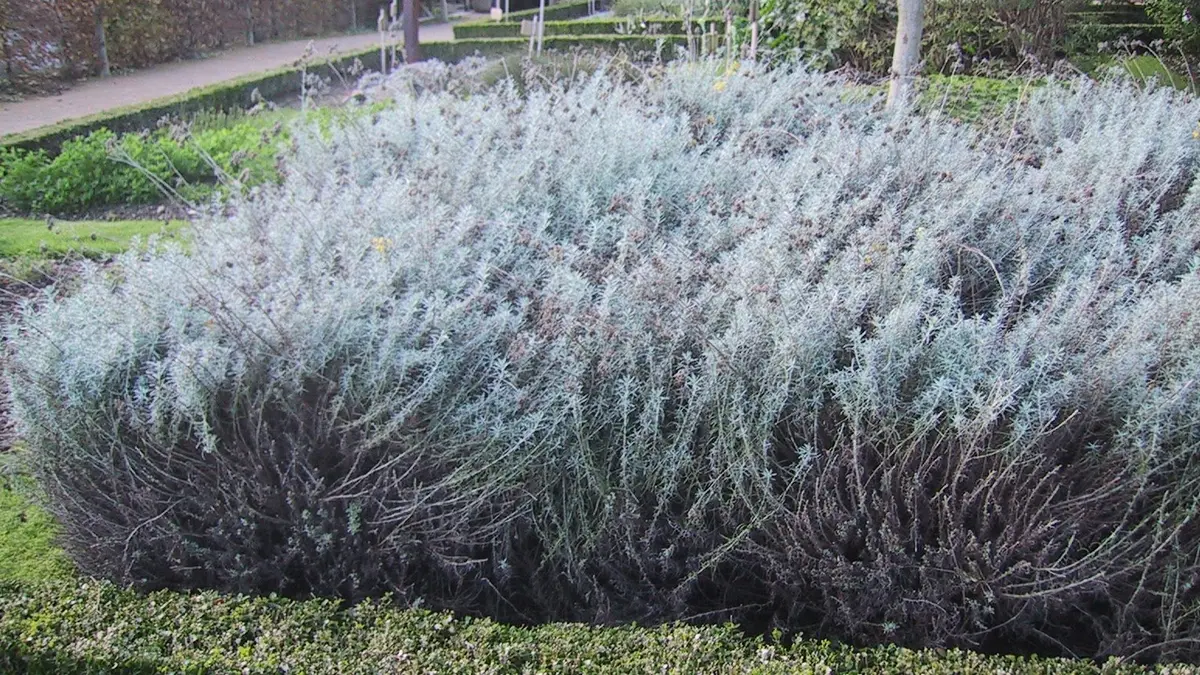
.JPG)
Helichrysum essential oil usually refers to a distilled oil from Helichrysum italicum. The species, subspecies, plant part and origin should appear on the product information.
Botanical identity
Kew’s Plants of the World Online lists Helichrysum italicum and its accepted infraspecific names. It is an aromatic Mediterranean member of the daisy family.
“Immortelle”, “everlasting” and “curry plant” are common names. They can also be used for other species or ornamental plants, so the Latin name matters.
How the oil is made
The essential oil is commonly steam distilled from flowering aerial parts. Harvest timing, location, subspecies and distillation conditions can change its chemical profile.
A 2023 review describes extraction, distillation and chemical variability in Helichrysum italicum. It also distinguishes essential oils from non-volatile extracts and isolated compounds.
Aroma and composition
The aroma is often herbaceous, warm and slightly honeyed. The principal constituents vary considerably between origins and studied samples.
That variation makes a batch-specific report more useful than a fixed online list. A report should still be matched to the species and batch on the bottle.
Traditional use is not clinical proof
Helichrysum is marketed for bruises, scars, inflammation and wound care. These claims are stronger than the available human evidence for ordinary consumer essential oil.
A review of traditional uses found that much of the research concerned laboratory studies, animals, extracts or isolated compounds. Those findings cannot establish a treatment effect for diluted essential oil on human skin.
Do not put essential oil on an open wound or use it instead of assessment for infection, significant injury or persistent skin changes.
Safety
Use only a product intended for the chosen route. Dilute for skin use according to the label and stop if redness, itching or swelling develops.
Do not swallow ordinary aromatherapy oil. Pregnancy, breastfeeding, childhood, allergies and regular medicines are reasons to check the exact product with a pharmacist or doctor.
Evidence scores for helichrysum
No Claim Review is currently linked to this oil. Traditional use or a marketing claim is not enough to assign an Evidence Score.
Bottom line
Choose helichrysum oil by its botanical identity and batch information. Treat broad skin-healing claims as unproven until suitable human trials test the same preparation and outcome.
Helichrysum and plantar heel pain
Helichrysum wound-healing findings come from formulated products in diabetic rats; they do not demonstrate repair of the human plantar fascia. See the detailed plantar-fasciitis comparison for the studies, limitations and care context.
Helichrysum and jaw pain
A mixed-product pelvic-pain pilot and wound-healing experiments in rats do not establish that helichrysum treats TMD or repairs the jaw joint. See the detailed evidence comparison for the studies, limitations and care context.
Helichrysum and tinnitus
Skin-wound healing in diabetic rats does not demonstrate regeneration of human auditory cells or treatment of tinnitus. See the detailed evidence comparison for the studies, limitations and care context.
Helichrysum and eczema
Helichrysum increased barrier-related markers in donated skin outside the body. This is not an eczema treatment trial, and an indexed report describes contact dermatitis from a helichrysum-containing cream. See the detailed eczema evidence comparison for the studies, limitations and care context.