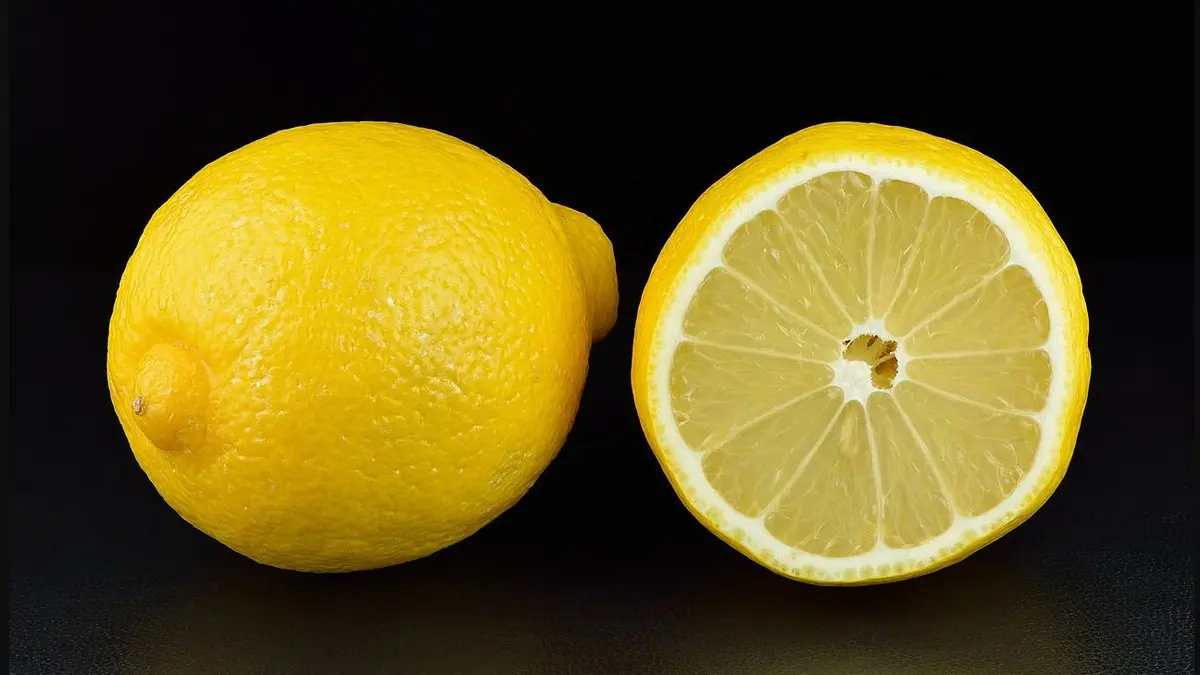

Short answer: lemon essential oil is normally expressed from the coloured peel of Citrus limon. Its clearest use is fragrance and flavouring in appropriately specified products. A small human trial suggests possible short-term help for pregnancy nausea, but broad detox, immunity and infection claims are not established.
Identity and extraction
Commercial lemon oil usually comes from the outer peel left during juice production. Mechanical expression preserves volatile aroma compounds and also allows some heavier peel constituents to enter the oil. Steam-distilled lemon oil is possible and differs in composition, particularly in relation to phototoxic furocoumarins.
A bottle should state Citrus limon, peel and the extraction method. Lemon juice, lemon peel extract, lemon flavour and lemon essential oil are different materials. Food use of the fruit does not establish that a concentrated retail oil is safe to swallow.
Aroma and chemistry
Limonene normally dominates lemon peel oil, with smaller aldehydes and terpenes shaping the recognisable fresh aroma. A review of citrus essential-oil chemistry and safety shows why species, extraction and storage matter. A result for one citrus oil or isolated limonene should not be applied to every complete oil.
Limonene-rich oils oxidise after repeated exposure to air, heat and light. Oxidation can alter the smell and increase allergy risk, so an old bottle is not merely a weaker version of a fresh one.
Nausea research
A double-blind randomised trial enrolled 100 pregnant women with nausea and vomiting. Participants inhaled lemon oil or placebo when nauseated over four days. Average symptom scores differed between groups on the second and fourth days, but not at every time point.
This is a relevant human study and a reason for further research. It remains one small, short trial with a subjective outcome. It does not establish the effect for severe pregnancy sickness, chemotherapy nausea, migraine, motion sickness or postoperative symptoms. Pregnancy nausea can also require clinical assessment and treatment, particularly when fluids cannot be kept down.
A later trial of combined lemon and peppermint inhalation reported improvement in mild to moderate pregnancy nausea. Because two oils were used together, it cannot isolate the effect of lemon.
Mood, alertness and “detox”
A bright citrus smell may feel clean or energising, and scent can influence expectation and immediate mood. Those experiences do not show that lemon oil treats depression, removes toxins, boosts immunity or changes metabolism.
“Detox” is especially difficult to assess when a claim does not name a substance, exposure, organ function or measurable outcome. The liver and kidneys do not need a room fragrance to perform their normal work.
Cleaning and antimicrobial claims
Citrus oils and limonene can affect microorganisms in laboratory systems. A surface disinfectant, however, needs a tested formulation, concentration, contact time and target organisms. A few drops in water do not recreate a laboratory method and oil does not mix evenly into water without a suitable formulation.
Use an authorised product for a task that genuinely requires disinfection. Lemon oil may contribute fragrance or solvent action to a household cleaner, but that is a different claim.
Phototoxicity
Expressed lemon peel oil can contain furocoumarins that increase skin sensitivity to ultraviolet light. Research identified oxypeucedanin and bergapten as phototoxic components of lemon oil. Further testing of cosmetic essential oils found that phototoxicity depended on photoactive constituents and the test conditions.
Steam-distilled oil and specially processed products may differ, but the label and supplier specification should support the distinction. Do not apply an uncertain expressed oil before sun exposure or a tanning device. Follow the finished product’s concentration and ultraviolet warning.
Other safety points
Avoid neat skin use, eyes, lips, damaged skin and ingestion. Keep the bottle tightly closed, cool and dark. Stop topical use after redness, itching or blistering, and stop diffusion after coughing, wheeze, headache or nausea. Store concentrated oils where children and pets cannot reach them.
Buying checks
- Citrus limon and peel are stated.
- The extraction is expressed or distilled.
- Topical directions address ultraviolet exposure.
- A batch number and storage guidance are present.
- The product is not presented as a drink merely because lemons are food.
- Claims do not extend a small nausea trial to unrelated diseases.
My assessment
Lemon oil is useful as fragrance and has limited human evidence worth discussing for one narrow nausea setting. Its broader wellness claims are largely extrapolations. Expressed-oil phototoxicity and oxidation are more firmly established than claims about detoxification or immunity.
Lemon oil and snoring
Human research has examined lemon aroma and mood. A positive mood result cannot establish less snoring, and a mixed-product study cannot identify lemon’s individual effect.
Primary research and its reported outcomes.
Read the lemon comparison in our snoring guide for the evidence limits, other formulations and signs that need assessment.
Targeted evidence update: 14 September 2026. This section does not represent a new review of every claim on this profile.
Lemon and fungal nails
A favourable mixed nail-oil study used lime, not lemon; laboratory lemon results were limited. See the detailed evidence comparison for the studies, limitations and appropriate care.
Lemon and sinus symptoms
Trials of standardised oral combinations or limonene-containing capsules cannot establish benefit from lemon essential oil alone; one chronic-disease trial missed its main endpoint. See the detailed sinusitis comparison for the preparations, findings and limitations.
Lemon and earache
Lemon-flavoured cod liver oil is not lemon essential oil. A nutritional pilot and a veterinary blend study do not establish lemon oil for human earache. See the detailed evidence comparison for the studies, limitations and care context.
Lemon and toothache
Lemon oil has animal caries and laboratory metabolism findings. These do not establish relief of human toothache or treatment of an already damaged tooth. See the detailed evidence comparison for the studies, limitations and care context.
Lemon and oily skin
The small human sebum study used sea buckthorn extract cream with lemon oil as fragrance. It cannot establish that lemon essential oil controls oily skin. See the detailed evidence comparison for the primary studies, limitations and care context.
Sources
- Review of citrus essential-oil activities and safety
- Randomised trial of lemon inhalation for pregnancy nausea
- Trial of combined lemon and peppermint inhalation
- Study of lemon-oil phototoxicity
- Phototoxicity testing of essential oils intended for cosmetics
- US National Library of Medicine: limonene
Lemon pregnancy research is brief and product-specific
Evidence update: 14 September 2026.
A 100-person lemon trial reported lower symptom scores on two of four treatment days. A lemon-and-peppermint trial cannot isolate either oil. These findings do not establish treatment for severe pregnancy sickness or safety across pregnancy.
Related evidence review: Lemon Oil for Nausea: Pregnancy Trials, Safety and What Remains Uncertain.