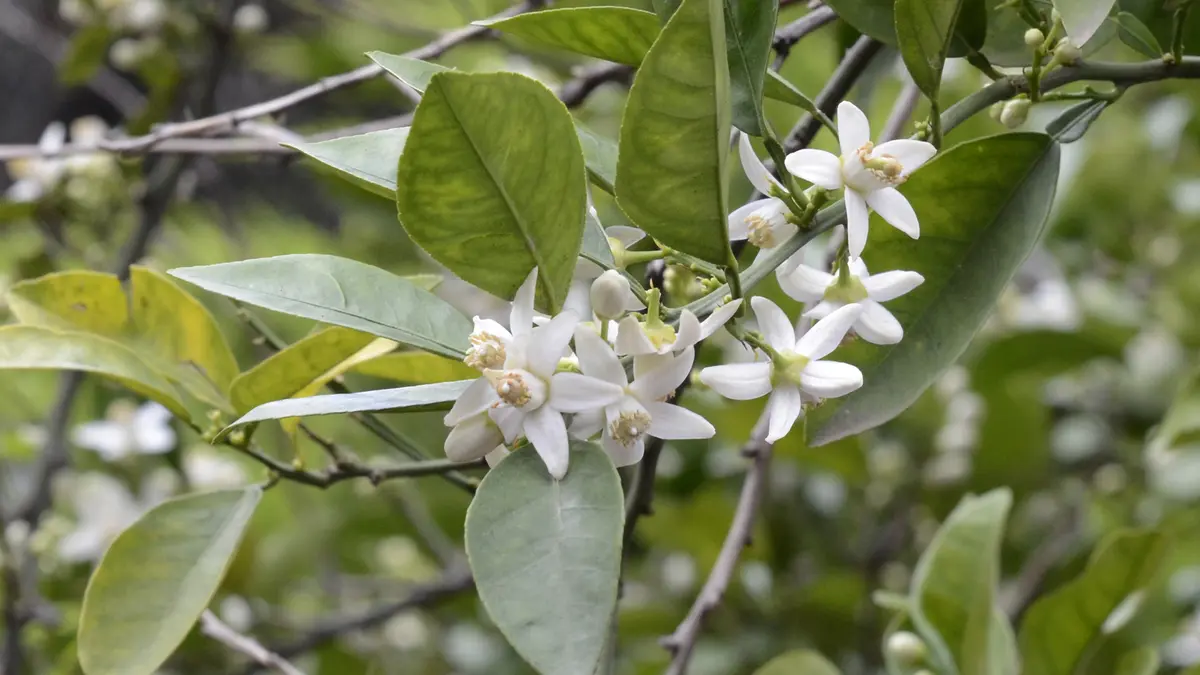

Short answer: neroli is the fragrant oil distilled from bitter-orange flowers, usually Citrus aurantium. Several small studies have examined inhaled neroli in stressful settings, including labour, but the findings do not establish treatment for an anxiety disorder, depression, insomnia or hormonal problems.
Flower, leaf and peel oils are different
Kew provides the botanical record for Citrus aurantium. Neroli comes from its flowers. Petitgrain normally comes from leaves and twigs, while bitter-orange peel oil is expressed or distilled from the fruit peel. Those products differ in composition and evidence.
Neroli is expensive because flower yield is limited and production is labour-intensive. “Orange blossom fragrance” may be a perfume composition rather than distilled neroli. A label should therefore name the species, flower as the plant part and steam distillation as the method.
What human studies suggest
A randomised study evaluated neroli inhalation during labour and reported differences in anxiety and pain measures. This is a defined, short-term setting. It does not show that the oil treats chronic anxiety, replaces obstetric pain relief or improves the safety of labour.
A small crossover study in postmenopausal women measured salivary oxytocin and psychological outcomes after neroli inhalation. Biomarker changes can be interesting, but a short laboratory response is not evidence that the oil “balances hormones” or treats menopausal symptoms.
A recent review of bitter-orange flowers brings together traditional use, chemistry and pharmacological research. Reviews can map the literature, yet their conclusions remain limited by the size, methods and heterogeneity of the underlying studies.
Aroma trials are especially hard to blind. Participants often know whether they received the recognisable scent, so expectation and preference may affect self-reported anxiety or comfort. Larger replicated trials with active aromatic controls would strengthen the evidence.
What the studies do not show
Short-term changes in a questionnaire, pulse or salivary marker do not demonstrate treatment of generalised anxiety disorder, major depression, insomnia or endocrine disease. Laboratory antimicrobial activity also does not show that a diffuser cleans indoor air or that topical neroli treats an infection.
Neroli may form part of a calming routine for someone who enjoys the fragrance. That personal use should be described as preference and context, not converted into a medical promise.
Reading aroma studies carefully
Look for the number of participants, the comparison scent, the timing of measurement and whether the outcome was chosen before the results were known. A statistically detectable change on a short anxiety scale may be modest in practice and may not persist after the aroma stops.
The surrounding care matters too. Labour studies take place alongside clinical observation and ordinary pain-management options. They do not support unsupported home use in place of maternity care. Likewise, a salivary oxytocin measurement is a biological observation, not proof of a lasting hormonal or mental-health benefit.
Safety
Neroli is not identical to expressed citrus peel oil, so peel-oil phototoxicity warnings should not be copied across without checking the actual product. It can still irritate skin or trigger fragrance allergy. A clinical review describes allergic contact dermatitis associated with essential oils.
- Do not swallow neroli or add it to water or capsules.
- Do not apply it neat or close to the eyes.
- Use a properly formulated cosmetic if applying it to skin.
- Diffuse sparingly with ventilation and stop after headache, nausea, coughing or wheeze.
- Seek individual advice during pregnancy, breastfeeding or for children and people with asthma.
Buying checklist
- The label names Citrus aurantium, flower and steam distillation.
- The product is not merely “orange blossom” fragrance.
- Neroli, petitgrain and peel oil are described separately.
- A batch analysis and lot number are available.
- Small stress studies are not presented as proof of treating an anxiety disorder.
My assessment
Neroli has more human aroma research than many essential oils, but the studies are small and context-specific. They support further study of short-term subjective effects, not broad psychiatric, hormonal or sleep claims. Identity is equally important: evidence about flowers must not be used to sell leaf, twig or peel oil.
Neroli and wrinkles
Neroli antioxidant assays and studies of other bitter-orange plant parts do not establish human wrinkle reduction. Contact allergy remains a relevant consideration. See the detailed evidence comparison for the primary studies, limitations and care context.
References
- Kew Plants of the World Online: Citrus aurantium
- Randomised study of neroli inhalation during labour
- Crossover study of neroli inhalation in postmenopausal women
- Review of bitter-orange flower chemistry and research
- Systematic review of neroli aromatherapy studies
- Clinical review of allergic contact dermatitis from essential oils