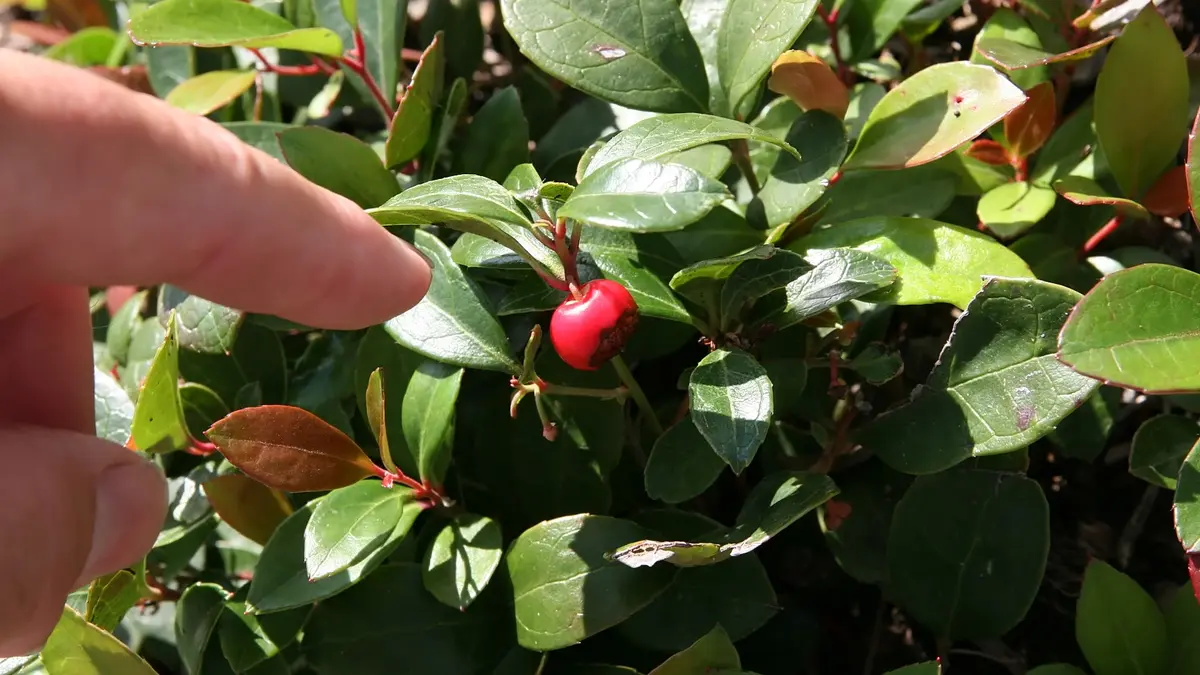

Short answer: wintergreen essential oil, commonly from Gaultheria procumbens, is composed largely of methyl salicylate. That aspirin-related chemical can be toxic when swallowed or overused on skin. The oil should not be treated as a harmless natural pain remedy.
Identity and chemistry
Kew records Gaultheria procumbens, the eastern teaberry or American wintergreen. Commercial oil is generally obtained from leaves after processing that releases methyl salicylate.
Analytical research on wintergreen oils shows the importance of authentication. Volatile-composition research describes methyl salicylate as the dominant material in wintergreen. A wintergreen smell can also be produced synthetically, so aroma alone does not establish botanical origin.
The close chemical similarity to sweet birch oil matters. Both can deliver concentrated methyl salicylate, though they come from different plants. They should not be combined casually or counted as separate harmless ingredients.
Why methyl salicylate can be dangerous
Methyl salicylate is related to aspirin and is absorbed through the digestive tract and skin. The amount in a small bottle can be hazardous, especially to a child. MedlinePlus describes methyl salicylate overdose as a medical emergency, with possible vomiting, rapid breathing, confusion, seizures and other serious effects.
A published fatal case illustrates that repeated or extensive topical exposure can also cause systemic poisoning. Risk can rise when products cover a large area, are used frequently, are applied under heat or occlusion, or are combined with other salicylates.
The European Commission’s Scientific Committee on Consumer Safety assessed methyl salicylate exposure in cosmetics. Limits for defined finished products do not mean that undiluted wintergreen oil is suitable for home formulation.
What about pain relief?
Methyl salicylate is used in some regulated or formulated topical rubs. Evidence and instructions for a finished medicine apply to that product, concentration and dose. They do not justify putting wintergreen essential oil directly on painful joints, teeth or muscles.
Pain can signal injury, infection or another condition requiring assessment. Masking it with repeated applications can delay appropriate care while increasing salicylate exposure.
Why dose is easy to underestimate
Essential-oil bottles encourage counting drops, but drop size varies and concentration remains high. Skin absorption also changes with the area covered, damaged skin, heat, repeated dosing and occlusion. A person may receive methyl salicylate from several products without recognising the combined exposure.
Finished medicines specify concentration, maximum frequency and who should not use them. Those limits are part of the product’s safety, not optional detail. A homemade mixture has no comparable dose control, stability assessment or child-resistant directions. Wintergreen’s pleasant smell does not warn reliably of the amount absorbed.
Allergy and interactions
A clinical report documented allergic contact dermatitis from wintergreen oil. A wider review covers essential-oil contact allergy. People with aspirin or salicylate sensitivity, bleeding problems, anticoagulant use, kidney disease or other relevant medical conditions require particular caution.
Safety rules
- Do not swallow wintergreen oil or add it to food, water, toothpaste or capsules.
- Do not apply the essential oil neat or use it in homemade pain rubs.
- Do not use it on children or leave the bottle where a child can reach it.
- Do not combine it with heating pads, tight bandages or other salicylate products.
- After ingestion or suspected excessive exposure, contact emergency or poison services immediately rather than waiting for symptoms.
Buying checklist
- The product names Gaultheria procumbens and states its methyl salicylate content.
- It carries prominent ingestion, child-safety and topical-use warnings.
- The supplier distinguishes essential oil from a regulated finished pain product.
- No claim suggests that “natural aspirin” means safer aspirin.
- A batch analysis and secure child-resistant storage advice are supplied.
My assessment
Wintergreen oil has a clear chemical identity and a clear hazard. Its inclusion in some formulated topical products should not be mistaken for permission to swallow it or make a home pain rub. The evidence supports treating concentrated wintergreen as a high-risk household substance, not a gentle wellness oil.
References
- Kew Plants of the World Online: Gaultheria procumbens
- Authentication and analysis of wintergreen essential oils
- Research on the volatile composition of wintergreen
- Review of wintergreen phytochemistry and research
- MedlinePlus: methyl salicylate overdose
- Scientific Committee on Consumer Safety opinion on methyl salicylate
- Fatal topical methyl salicylate poisoning case report
- Allergic contact dermatitis from wintergreen oil
- Clinical review of allergic contact dermatitis from essential oils
Related evidence review: Wintergreen Oil for Plantar Fasciitis: Pain Relief Evidence.