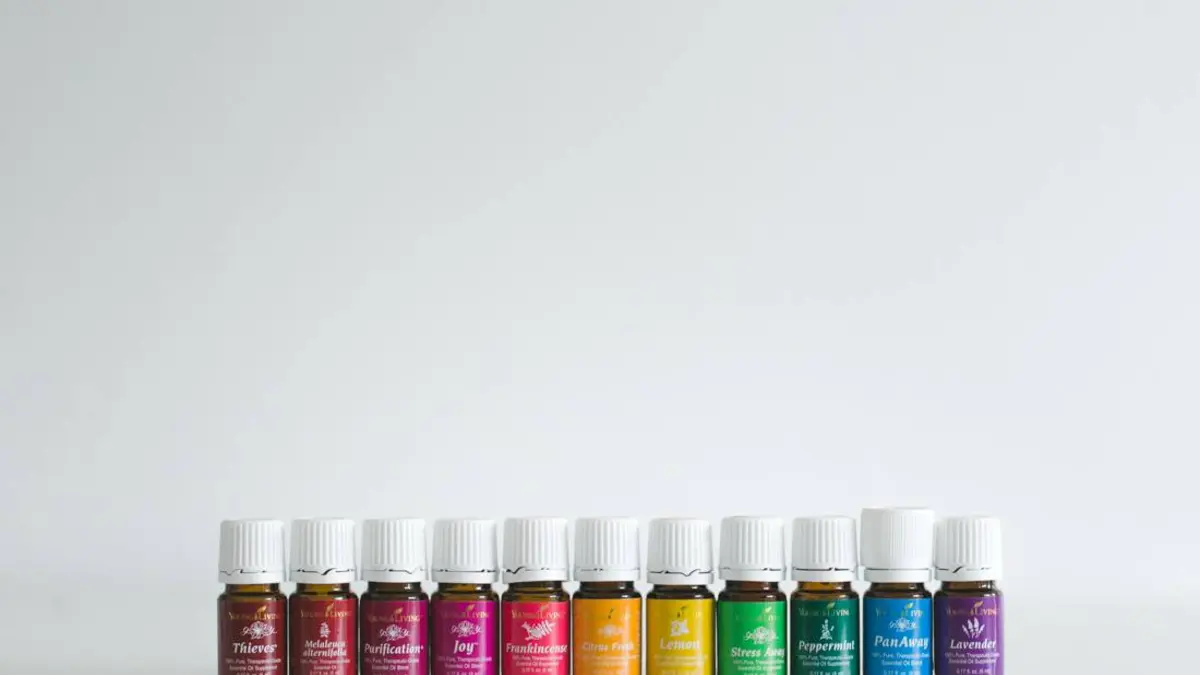

Essential oils can be used for fragrance, diluted skin products and some household purposes. The safe method depends on the exact oil, the product and the person exposed to it.
This guide covers ordinary consumer use. It does not turn an essential oil into a treatment, and it does not replace the instructions supplied with a regulated product.
Start with the label
Check the botanical name, ingredients, intended use and warnings before opening the bottle. A product may be a single essential oil, a blend, a fragrance oil or a ready-diluted cosmetic. Those are not interchangeable.
The US Food and Drug Administration explains that “natural” does not mean harmless. Plant-derived fragrance materials can irritate skin, cause allergic reactions or be toxic when used incorrectly.
Using essential oils in the air
For a diffuser, follow its water level, oil quantity, timer and cleaning instructions. Begin with a short session and stop when the room is comfortably scented. More oil does not make the use more effective.
Ventilate the room and do not aim mist towards a person’s face. Stop if anyone develops coughing, wheezing, headache, nausea or eye irritation. People with asthma or fragrance sensitivity may find even a low concentration uncomfortable.
A chamber study measured volatile organic compounds and particles from ultrasonic diffusers. It did not test every home or establish a universal safe dose, but it confirms that diffusers add substances to indoor air.
Using essential oils on skin
Do not assume a concentrated oil is suitable for direct application. Use a product already formulated for skin, or follow specific dilution instructions supplied for that oil and purpose.
Avoid eyes, inside the nose and mouth, broken skin and other sensitive areas. Wash the product off and stop using it if burning, swelling, blistering or a persistent rash develops.
Previous uneventful use does not guarantee that an allergy will never develop. Oxidised oils may also behave differently, so close the bottle, store it as directed and discard it when the supplier’s shelf-life guidance says to do so.
Do not improvise oral use
Food flavouring, a licensed medicine and an aromatherapy bottle are different products. Do not swallow an essential oil merely because the source plant is used in cooking.
If someone may have swallowed an essential oil, do not make them vomit. Follow NHS poisoning advice and seek medical help promptly. Call 999 for severe breathing difficulty, collapse, seizures or loss of consciousness.
Children, pregnancy and animals
Keep bottles, diffuser reservoirs and scented mixtures away from children and animals. Do not apply an adult product to a child or animal without advice suited to that product and species.
Pregnancy, breastfeeding, medicines, allergies and long-term conditions can change what is appropriate. A pharmacist, doctor or other suitably qualified professional can check the intended product and route of use.
Five questions before use
- What exactly is in the bottle?
- Is the product intended for the air, skin or another stated purpose?
- Does the label give a clear amount, duration and warning?
- Could a child, animal or sensitive person be exposed?
- Am I using fragrance for comfort, or trying to treat a symptom that needs proper care?
NCCIH describes aromatherapy as inhalation or diluted skin use, while noting that rigorous evidence remains limited for many promoted health outcomes.
Read the label before choosing a route
An oil sold for room fragrance is not automatically a cosmetic, food or medicine. Check the full botanical name, plant part, extraction, ingredients and intended use. A blend name such as “Breathe”, “Calm” or “Defence” is marketing information; it does not reveal the concentration or establish a medical effect.
Carrier oils, absolutes, carbon-dioxide extracts and fragrance oils may all sit beside essential oils in a shop. They differ in volatility and composition. Do not put a fixed carrier oil into an ultrasonic diffuser or assume an aromatic product can be swallowed because the source plant is edible.
Dilution is product-specific
There is no single dilution that makes every essential oil suitable for every person and body site. Chemical composition, intended area, frequency, age, damaged skin and the finished product all affect risk. Drop counts are also imprecise because droppers and viscosity differ.
A professionally formulated cosmetic gives an ingredient list, intended use and directions. If a supplier recommends home dilution, it should identify the exact oil and purpose and express the amount clearly. “Dilute to taste” or “apply where needed” is not adequate safety information.
Baths and water do not dilute oil
Essential oils do not dissolve evenly in bath water. Undispersed droplets can contact sensitive skin at high concentration, even when many litres of water are present. Adding them directly to a bath, hot tub, nasal rinse or drinking water is not a reliable dilution method.
Water-based home sprays also present formulation problems: shaking does not create lasting solubility, and a stored mixture can support microbial growth unless it is properly formulated and preserved. Make only products for which you have sound, product-specific instructions.
Ventilation and duration matter
Chamber research shows that ultrasonic diffusion releases volatile compounds and particles. Indoor measurements also show that fragrance-compound concentrations rise during diffusion. These findings support short, controllable use and fresh air rather than continuous operation.
Do not judge exposure by smell alone. People adapt to an odour, while somebody entering the room may find it strong. Check every occupant, and remember that an animal cannot choose to leave a closed room if its cage or bed is there.
What to do after a reaction or spill
Move away from inhaled exposure and allow fresh air. Remove contaminated clothing and wash affected skin with soap and water. Rinse an exposed eye with clean lukewarm water and obtain urgent advice. For a large spill, ventilate, prevent access and follow the product safety information; concentrated oil can also damage surfaces and create a fire load.
Keep the original labelled bottle when seeking advice. The exact name, ingredients, amount, route and time are more useful than the broad phrase “essential oil”.
References
- The US Food and Drug Administration explains that “natural” does not mean harmless
- Schwartz-Narbonne and colleagues: Volatile organic compound and particulate matter emissions from an ultrasonic essential oil diffuser
- Follow NHS poisoning advice and seek medical help promptly
- NCCIH describes aromatherapy as inhalation or diluted skin use
- Indoor measurements also show that fragrance-compound concentrations rise during diffusion
Editorial responsibility and correction note
Editor: John Hamlen. This article has not been independently reviewed by a clinician.
Reference correction, 12 September 2026: Changes in this check: Add a consolidated list of sources already cited in the article. This was a targeted correction, not a comprehensive new review of every claim in this article.
Read our editorial policy, evidence method and corrections policy, including how to report an error.
Related evidence review: Lemongrass Oil for Relaxation: Human Studies and Their Limits.
Related evidence review: Turmeric Oil for Psoriasis: Why Curcumin Trials Do Not Prove the Oil Works.