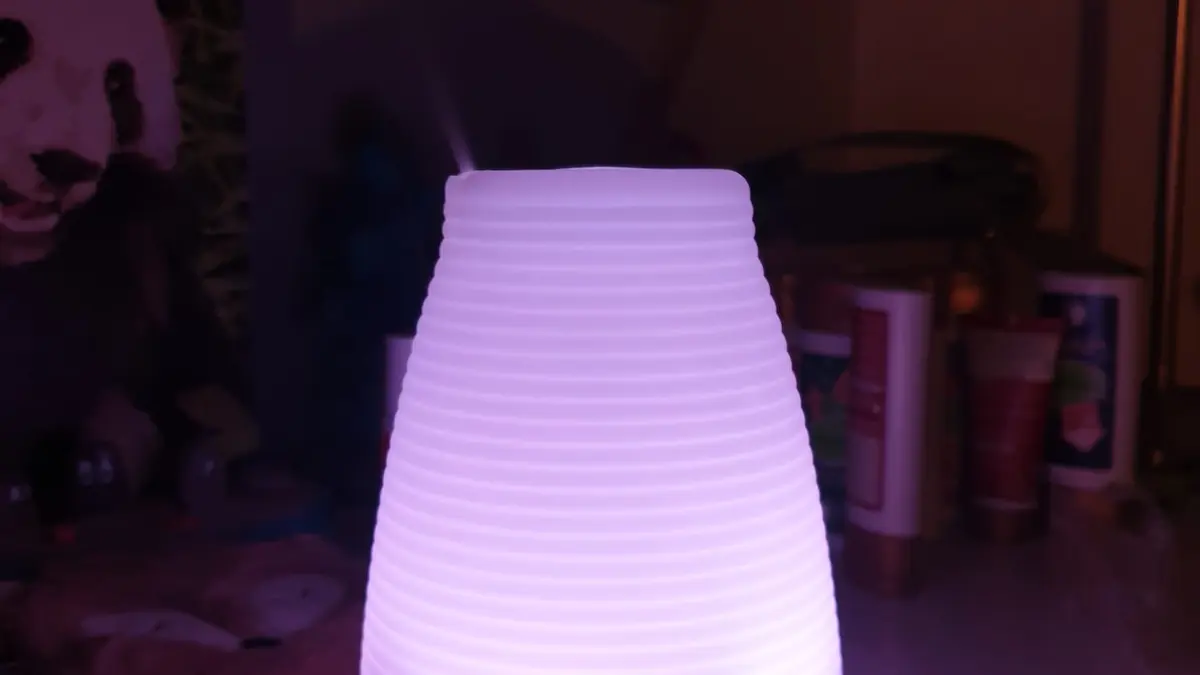

Short answer: the best diffuser is the simplest one that suits the room and the amount of scent you want. For most homes, that means a small ultrasonic model with an easy-to-clean reservoir, a timer and an automatic shut-off. A passive diffuser is the quieter, lower-output option.
This guide compares diffuser types rather than pretending that a higher price, a bigger mist or a long list of wellness claims makes one machine better.
Which type should you choose?
| Type | How it works | Best suited to | Main drawback |
|---|---|---|---|
| Ultrasonic | A vibrating plate turns water and oil into a fine mist. | Short, timed use in an ordinary room. | The tank needs regular cleaning, and it adds fragrance compounds and small particles to the air. |
| Nebulising | Moving air disperses undiluted oil without water. | People who deliberately want a strong aroma for a short period. | It uses oil quickly and can produce a much stronger exposure. |
| Passive | Oil evaporates from reeds, ceramic, wood or another porous surface. | A quiet, subtle background scent. | Output is difficult to control and continues until the source is removed. |
| Heat | Gentle heat speeds evaporation. | Simple fragrance use where a device is designed for that purpose. | Heat can change the aroma, and candle-powered products add a flame risk. |
My buying checklist
- A timer with short intervals. Continuous output is rarely necessary. A timer makes it easier to stop once the room is scented.
- Automatic shut-off. An ultrasonic model should stop when its reservoir is empty.
- A tank you can reach and wipe. Decorative shapes are less useful if residue collects in inaccessible corners.
- Clear capacity and cleaning instructions. Follow the water level, oil quantity and descaling method supplied for that model.
- No medical promises. A diffuser is a scent-delivery device, not an air purifier, disinfectant, humidifier or medical treatment.
- A return route and electrical details. For a mains-powered product, look for a traceable seller, a suitable plug and straightforward warranty information.
Why more mist is not necessarily better
Diffusers deliberately put volatile compounds into indoor air. A chamber study of ultrasonic diffusers measured volatile organic compound and particulate emissions, while a separate indoor study found that diffusion increased the measured concentration of fragrance compounds. Neither paper shows that normal use will harm every user, but both are good reasons to prefer controllable output and ventilation over filling a room continuously.
People with asthma, fragrance sensitivity, young children or animals may need more caution. Stop using a diffuser if anyone develops coughing, wheezing, headache, nausea or irritation. Keep oils and reservoirs where children and pets cannot drink or spill them.
Diffuser versus humidifier
An ultrasonic diffuser uses water to carry a small amount of fragrance, but its purpose is not to control room humidity. A humidifier is designed to add a specified amount of moisture and normally has a much larger tank. Do not put essential oils into a humidifier unless its manufacturer explicitly says the machine is designed for them.
What I would buy
I would choose a modest ultrasonic diffuser for occasional, timed use, or a passive ceramic diffuser where only a faint scent is wanted. I would avoid paying extra for unsupported health claims, coloured lights I did not want or an output large enough to make the room uncomfortable.
The result still depends on the oil and the person using it. Read the safety information for the particular oil, ventilate the room and treat discomfort as a reason to stop, not a sign that the product is working.
Cleaning is part of the buying decision
A water reservoir that is awkward to empty will eventually be left wet. Choose a model whose lid, tank and mist outlet can be reached without dismantling the electronics. Empty and dry it after use, then follow the manufacturer’s cleaning and descaling instructions. Do not immerse the base or substitute a stronger chemical because a social-media cleaning recipe looks thorough.
Standing water and residue are not merely cosmetic issues. US Environmental Protection Agency advice on portable humidifiers explains why water-containing devices need regular emptying and cleaning to limit microbial growth and mineral dispersal. A small diffuser is not a humidifier, but the same basic lesson applies to a tank that stores water.
Coverage claims need context
A square-metre figure is not a regulated measure of safe or even scent. Perceived strength changes with ceiling height, doors, ventilation, oil composition and personal sensitivity. A device that can make a large open room smell strong may be excessive in a bedroom. Adjustable output and a timer are more useful than the largest advertised coverage.
Look at noise, indicator-light controls and the ability to disable decorative lights if the device will be used near sleep. These are practical product features. Claims about deeper sleep require separate evidence about the oil, route and outcome; they are not properties of the machine.
What I would not pay for
I would not pay extra for ionising, “oxygenating”, detoxifying or germ-killing language without independent testing of the complete device. The EPA warns that some ionising air-cleaner technologies can generate ozone. A diffuser does not need an added air-treatment claim to perform its ordinary function.
I would also avoid a model whose seller omits an identifiable business address, electrical information or compatible replacement parts. Reviews can reveal awkward lids and leaks, but testimonials cannot establish health benefits or long-term electrical safety.
Final checklist
Before ordering, check the reservoir access, shortest timer, shut-off behaviour, plug, warranty, cleaning method and whether the output can be reduced. Then decide whether you want visible mist at all. For a faint occasional fragrance, a passive ceramic product may meet the need with less complexity.