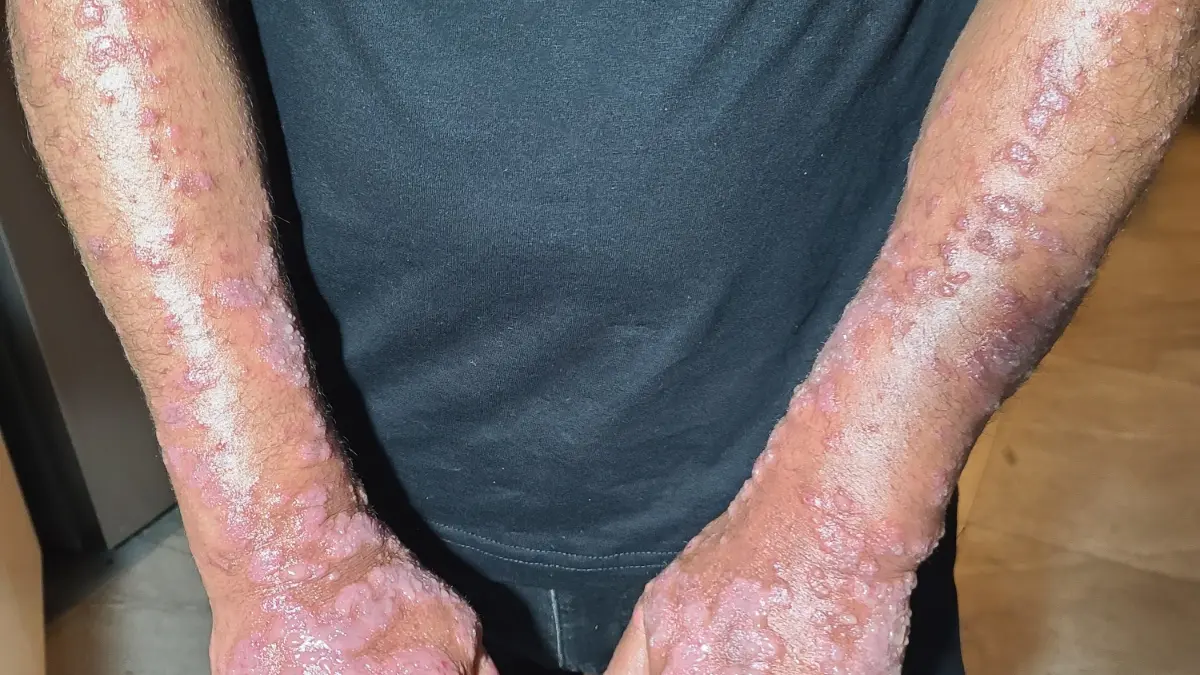

Bottom line: A rash is a symptom, not one diagnosis. Essential oils are not a safe general treatment because the wrong product may irritate the skin, trigger allergy or obscure an infection that needs different care.
Call 999 for a rash with breathing difficulty, swelling of the mouth or throat, collapse or severe confusion. Seek urgent advice for a non-fading rash with fever or a rapidly worsening, painful or blistering rash.
Why the cause matters
Rashes can result from eczema, contact allergy, infection, medicines, heat, bites, autoimmune disease and many other causes. Their treatments are not interchangeable.
Contact dermatitis often produces itchy, dry, cracked or blistered skin after contact with an irritant or allergen. The NHS recommends assessment when symptoms are persistent, recurrent or severe.
Ringworm needs antifungal treatment. Hives may respond to an antihistamine. A painful spreading bacterial infection can need antibiotics. Adding fragrance before identifying the problem may make both diagnosis and treatment harder.
What research on essential oils can and cannot show
Tea tree, lavender and chamomile are frequently promoted for rashes. Laboratory anti-inflammatory or antimicrobial activity may justify further research, but it does not establish treatment for an unexplained human rash.
One small experiment tested tea tree oil on nickel-induced contact reactions in 27 volunteers. It reported reduced skin response, but this artificial model was not a trial of eczema, infection or an undiagnosed rash.
The result also sits beside evidence that tea tree oil can cause dermatitis. A substance may have an effect in one controlled experiment and still be unsuitable as a general skin treatment.
Clinicians have reported allergic contact dermatitis after tea tree products were used on lips and toenails. A case report cannot measure risk, but it demonstrates the opposite of a universally soothing effect.
Another report describes a widespread allergic eruption after a tea tree lotion was applied to a wart. The reaction resolved after the product was stopped and medical treatment was given.
Fragrance allergy is relevant
Many essential oils contain limonene, linalool and related fragrance compounds. Exposure to air can create oxidation products that are more likely to sensitise susceptible skin.
A 2024 review of fragrance contact allergy explains why oxidised terpenes matter in patch testing. The evidence concerns allergy diagnosis, not proof that every user will react.
A broader review found that many essential oils have caused contact allergy. Tea tree, citronella, ylang-ylang, sandalwood, clove and orange were among oils with notable patch-test reactions.
DermNet advises against applying neat essential oils to skin. It also notes that allergic dermatitis may extend beyond the area where the product was applied.
What to do with a new rash
Stop any new fragranced oil, cosmetic, detergent or topical remedy that might be involved. Avoid repeatedly testing the suspected product on already inflamed skin.
Use gentle washing and avoid scratching. A pharmacist can advise about simple symptom relief, but the treatment depends on the likely cause and the part of the body affected.
NHS contact-dermatitis guidance prioritises avoiding the trigger and using suitable emollients. A clinician may prescribe a topical corticosteroid when appropriate.
Take clear photographs if the appearance changes. Note new medicines, illnesses, foods and skin products. Do not stop prescribed medicine without professional advice.
Record where the rash started and whether it moves, scales, blisters or fades under pressure. Timing after a new exposure can help, although timing alone cannot identify the cause.
If a clinician suspects allergic contact dermatitis, patch testing may identify a specific allergen. This formal test is different from applying a consumer product to irritated skin at home.
When a rash needs urgent assessment
Call 999 if a rash accompanies breathing difficulty, throat tightness, swelling of the tongue or lips, severe dizziness or collapse. These may be signs of anaphylaxis.
Use a clear glass to check a red or purple rash that may not fade under pressure. A non-fading rash with fever or illness needs urgent medical help.
Seek prompt advice for extensive blistering, skin peeling, severe pain, fever, facial swelling or a rash following a new medicine. Babies and immunocompromised people may need earlier assessment.
A rash around the eyes, inside the mouth or on the genitals may require tailored treatment. Do not place essential oils on these sensitive areas.
My verdict
There is no evidence-based essential-oil treatment for “rashes” as a group. A narrow experimental result cannot overcome the fact that different rashes have different causes and some oils are established allergens.
Identify the likely cause, stop possible irritants and use condition-specific advice. If the rash is severe, spreading or accompanied by systemic symptoms, seek medical help rather than adding another topical product.
References
- NHS: Contact dermatitis
- NHS: Treating contact dermatitis
- British Association of Dermatologists: Contact dermatitis
- DermNet: Allergic contact dermatitis to essential oils
- Wallengren: Tea tree oil in experimental contact dermatitis
- de Groot and Schmidt: Essential oils and contact allergy
- Sukakul and colleagues: Fragrance contact allergy review
- Lauriola and colleagues: Tea tree oil contact dermatitis
- Ambrogio and colleagues: Widespread tea tree oil dermatitis
- Posadzki and colleagues: Adverse effects of aromatherapy